Premières Impressions
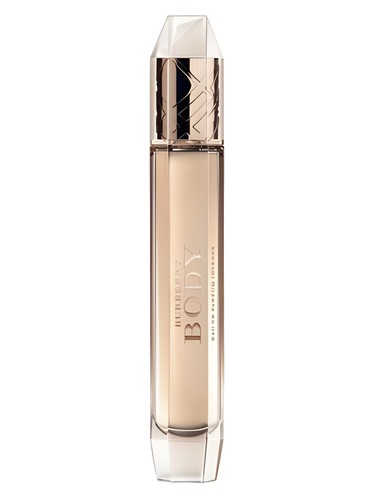
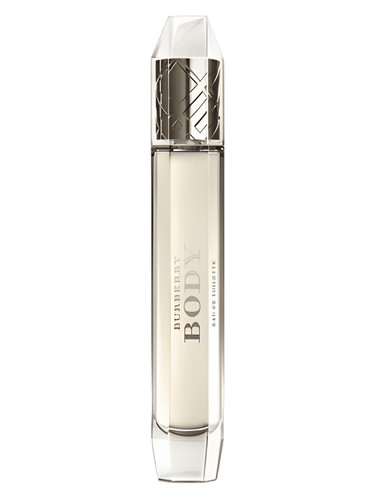
Le premier vaporisateur de Burberry Body Eau de Toilette livre une contradiction immédiate—une qui fonctionne étonnamment bien. Votre nez capte la pomme verte brillante, croquante et presque acidulée, aux côtés de la douceur floue de la pêche. Mais quelque chose de plus sombre traverse ce panier de fruits : l''absinthe, prêtant une amertume herbacée qui empêche le sommet de basculer dans le territoire des bonbons. C''est l''équivalent olfactif de croquer dans une pêche juste mûre dans un jardin anglais où les herbes poussent sauvagement le long des bordures. Ce n''est pas un parfum timide, mais il ne s''annonce pas non plus avec fanfare. Au lieu de cela, il s''installe autour de vous comme un chemisier de soie bien coupé—remarquable, élégant, délibérément sans prétention.
Le Profil Olfactif
Ces notes de tête de pomme verte et de pêche créent une introduction indéniablement fruitée, bien que l''absinthe fournisse une arête intellectuelle qui distingue ceci des parfums fruités plus simples. La pomme se lit particulièrement verte plutôt que sucrée comme un bonbon, apportant une fraîcheur croquante qui semble plus sophistiquée que ludique.
Dans les vingt minutes, le cœur commence à se révéler, et c''est ici que Body Eau de Toilette montre son vrai caractère. La rose émerge—non pas la rose humide et fraîchement coupée des variétés de jardin, mais quelque chose de plus doux et plus abstrait. Elle s''accompagne de notes de thé qui ajoutent une qualité tannique subtile, une sécheresse qui tempère les fruits. Le bois de santal fait une apparition précoce ici aussi, créant un pont entre les notes de tête brillantes et la base plus profonde. Cette phase médiane est l''endroit où le parfum s''installe dans son identité : une composition rose musquée avec des reflets fruités plutôt qu''un parfum fruité qui se trouve contenir des florales.
La base est l''endroit où réside le confort. Le musc domine—lisse, semblable à la peau, le type qui plane près et se sent intime plutôt que projectif. Le bois de cachemire ajoute une douceur luxueuse, presque semblable à un tissu, tandis que la vanille apporte une douceur subtile sans devenir gourmande. L''ambre fournit la chaleur et l''arrondi, créant cette qualité poudrée qui donne au parfum sa finition douce et accessible. Ce n''est pas un parfum boisé qui s''affirme par le cèdre ou le vétiver ; au lieu de cela, les bois ici sont doux, flous aux bords, enveloppés dans le musc et la vanille comme le cachemire lui-même.
Caractère et Occasion
Les données racontent une histoire claire, et porter Body Eau de Toilette le confirme : c''est sans équivoque un parfum de jour. Son ouverture fruitée fraîche et sa finition douce et musquée créent quelque chose d''approprié au bureau, poli et distinctement professionnel. L''évaluation de 100 % jour contre seulement 25 % nuit n''est pas surprenante—ceci manque de l''intensité ou du drame que le port du soir exige souvent.
Saisonnièrement, Body Eau de Toilette brille le plus au printemps (78 %) et à l''automne (69 %), ces saisons de transition où vous voulez quelque chose qui fait le pont entre la chaleur et la fraîcheur. La pomme verte et les notes de thé ont du sens pour le renouveau du printemps, tandis que le bois de cachemire et l''ambre fournissent assez de confort pour l''automne. La portabilité estivale se situe à 47 %—possible en climatisation, bien que le musc et la poudre pourraient sembler lourds dans la vraie chaleur. L''hiver, à 38 %, semble la maison la moins naturelle pour ce parfum, qui manque de la richesse et de la projection que le temps froid appelle souvent.
C''est un parfum pour les femmes qui veulent de la présence sans projection, de la sophistication sans raideur. Il convient aux environnements professionnels, aux occasions sociales de jour, le type de parfum que vous porteriez à un vernissage ou à un brunch du week-end. Il n''essaie pas de séduire ou d''intimider—il est simplement là, agréable, bien composé, facile à côtoyer.
Verdict de la Communauté
Avec une évaluation de 3,85 sur 5 de 1 269 votes, Body Eau de Toilette se situe confortablement dans le territoire « très bon » sans prétendre au statut de chef-d''œuvre. C''est un parfum solide et bien aimé qui résonne clairement avec un public substantiel. Plus d''un millier de votes suggèrent un engagement communautaire authentique plutôt qu''une obscurité de niche, et cette évaluation indique une satisfaction constante plutôt qu''une polarisation.
Les chiffres suggèrent un parfum qui tient ses promesses sans nécessairement les dépasser—fiable, agréable, portable, mais peut-être pas révolutionnaire. Pour une sortie de 2012, maintenir ce niveau d''intérêt communautaire sur une décennie témoigne de son attrait durable.
Comment Il Se Compare
La liste des parfums similaires offre un contexte utile. Naturellement, le Body original de Burberry partage l''ADN, bien que cette concentration Eau de Toilette offre une interprétation plus légère. Chance Eau Tendre de Chanel opère dans un territoire fruité-musqué similaire avec une élégance comparable, bien qu''elle commande généralement un prix plus élevé. Noa de Cacharel et Narciso Rodriguez For Her explorent tous deux cette féminité musquée et poudrée, tandis que Lacoste Pour Femme partage le caractère frais et accessible de jour.
Body Eau de Toilette se positionne comme l''option accessible dans ce groupe—marque reconnaissable, composition agréable, polyvalence de jour sans l''investissement requis par certains de ses voisins. Il ne repousse pas les limites ou ne redéfinit pas les catégories, mais ce n''est pas son ambition.
Le Verdict Final
Burberry Body Eau de Toilette réussit à être exactement ce qu''il semble être : un parfum fruité-musqué de jour avec assez de complexité pour rester intéressant et assez de retenue pour rester approprié. Cette évaluation de 3,85 reflète une appréciation honnête plutôt qu''une dévotion passionnée, et il y a de la valeur dans cette franchise.
L''ouverture de pomme verte reste distinctive même dans un marché encombré, et la base de bois de cachemire fournit un vrai confort. La performance est modérée—ne vous attendez pas à une projection toute la journée—mais pour le port de jour, c''est souvent une caractéristique plutôt qu''un défaut. Le prix se situe généralement dans la gamme accessible pour une Eau de Toilette de designer.
Qui devrait essayer ceci ? Les femmes cherchant une signature de jour fruitée et polie avec assez de profondeur pour éviter de sembler juvénile. Celles qui trouvent les parfums lourds accablants mais veulent plus que la simplicité citron-et-c''est-tout. Quiconque a apprécié les parfums similaires énumérés mais veut quelque chose de légèrement plus économique. Les garde-robes de parfums de printemps et d''automne bénéficient particulièrement de ce type d''option polyvalente et facile à porter.
Cela ne changera pas votre vie, mais cela pourrait rendre vos matins un peu plus agréables—et parfois, c''est exactement suffisant.
Critique éditoriale générée par IA