First Impressions
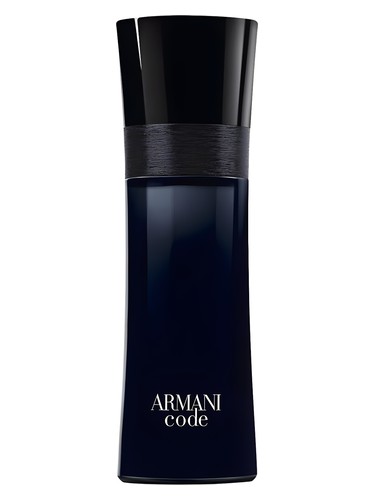
The first spray of Armani Code delivers a calculated contradiction: bright citrus that immediately surrenders to something darker, more deliberate. Lemon and bergamot burst forward with crystalline clarity, but they''re not here to linger—they''re an invitation, a handshake before the real conversation begins. Within moments, you sense the shadow beneath the shine, a leather-lined warmth that signals this fragrance''s true intentions. This is not a casual scent. It''s the olfactory equivalent of a perfectly tailored black suit—polished, purposeful, and utterly aware of its own effect.
The Scent Profile
Armani Code''s structure reads like a masterclass in strategic composition, even as it reveals its polarizing nature through wear. Those opening notes of lemon and bergamot provide the fragrance''s brightest moment, a citrus flash that registers at maximum intensity according to its accord profile. But this luminosity is fleeting—a deliberate misdirection.
The heart is where Code reveals its complexity and, for many wearers, its controversy. Star anise emerges with its distinctive licorice-tinged sweetness, creating that 75% anise accord that defines the fragrance''s character. It''s an unusual choice for masculine perfumery, softened somewhat by the delicate olive blossom—a Mediterranean whisper that adds an unexpected floral quality (63% floral accord). Guaiac wood anchors this middle phase with its smoky, slightly medicinal warmth, setting the stage for what follows.
The base is where Armani Code plants its flag firmly in evening territory. Leather dominates at 81% intensity, creating a supple, worn-in texture rather than harsh or aggressive. Tonka bean adds its characteristic almond-vanilla sweetness, while tobacco weaves through with a 58% presence—not overwhelming, but unmistakably there, adding depth and a subtle smokiness. This combination creates the soft spicy character (68%) that rounds out the composition, resulting in a scent that''s simultaneously familiar and distinctive.
Character & Occasion
The data tells an unambiguous story: Armani Code is an evening fragrance, full stop. With 100% night suitability versus 46% day appropriateness, this isn''t a scent for boardrooms or casual brunches. It thrives in low light, in close quarters, in situations where projection becomes presence.
Seasonally, Code reveals itself as a cold-weather companion. Winter claims 86% suitability, with fall close behind at 84%. Spring drops to 47%, and summer barely registers at 26%—this is decidedly not a warm-weather fragrance. The leather and tonka bean base would feel suffocating in heat, but wrapped in a winter coat, catching the cold night air, it transforms into something magnetic.
The original formulation targeted the sophisticated man comfortable with attention, someone navigating social situations where making an impression matters. Nearly twenty years after its 2004 launch, that positioning remains intact, though the fragrance now carries the weight of being both a classic and, to some, a reminder of an earlier era in masculine perfumery.
Community Verdict
The Reddit fragrance community''s 6.5/10 sentiment score tells the story of a fragrance that divides opinion sharply. Based on 78 opinions, the feedback reveals a pattern: impressive performance shadowed by concerns about wearability.
On the positive side, enthusiasts praise the strong opening with explosive projection and impressive longevity. Multiple users note improved performance compared to the original Armani Code formulation, and its compliment-pulling ability remains a consistent theme. For those who connect with the scent, it delivers exactly what it promises.
The criticisms, however, are equally emphatic. The heavy middle notes—particularly that star anise and the mentioned nutmeg—register as choking or nauseating for some wearers. The excessive projection that some praise, others condemn as work-inappropriate. There''s notable mention of inferior longevity compared to older batches, suggesting the reformulation complaints that plague many mainstream fragrances.
The consensus advice? Try before buying. The community repeatedly emphasizes that this works best for clubbing, nightlife, winter evenings—specific contexts where its intensity becomes an asset rather than a liability. The powdery drydown wins converts, but the journey there isn''t for everyone.
How It Compares
Armani Code exists in conversation with early 2000s masculine stalwarts. Its listed similarities—The One for Men by Dolce&Gabbana, various Versace offerings, L''Eau d''Issey Pour Homme, and Fahrenheit—sketch a landscape of masculine fragrances that balance freshness with warmth, accessibility with distinction.
Against The One, Code reads slightly darker, more anise-forward. Compared to the aquatic freshness of Versace Pour Homme, it''s substantially heavier. Where L''Eau d''Issey leans yuzu-bright, Code commits to its leather-tobacco depths. It occupies a space between easy-wearing crowd-pleasers and more challenging compositions—not quite safe, not quite avant-garde.
The Bottom Line
With 4.18 stars from 11,406 votes, Armani Code sits comfortably in "very good" territory—not universally beloved, but respected and widely appreciated. That rating reflects its reality: this is a competent, well-constructed fragrance that delivers on its specific promise, even if that promise isn''t for everyone.
The value proposition depends entirely on your needs. If you''re seeking a signature evening scent with proven performance and compliment-generating ability, Code deserves serious consideration. If you work in close quarters, prefer subtlety, or live in warm climates, look elsewhere.
Who should try it? Men comfortable with projection, those building a rotation that includes dedicated cold-weather evening options, anyone drawn to citrus-leather combinations with sweet undertones. Sample it first—that community warning is worth heeding. On the right person, in the right context, Armani Code still cracks its intended case. On the wrong person, or worn at noon in July, it''s a beautiful suit worn to the beach: technically impressive, contextually baffling.
Critique éditoriale générée par IA