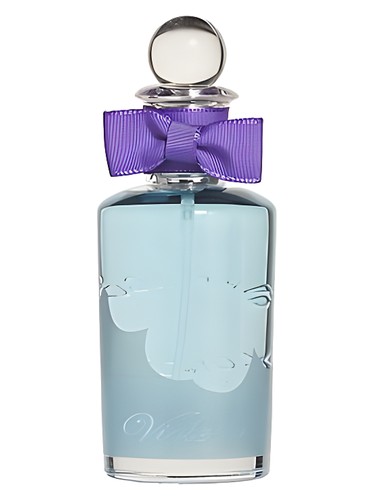
First Impressions
The first spray of Violetta transports you to an English garden after rain, where violet petals cluster in dewy corners and geranium leaves release their green sharpness at the slightest touch. There''s an immediate contradiction here—brightness meets softness, citrus clarity collides with floral surrender. This is Penhaligon''s 1976 masterwork, and it announces itself not with a shout but with a whisper that somehow fills the room. Within moments, that distinctive powdery signature begins to emerge, like dusting off an antique vanity table and discovering something precious underneath.
What strikes you most is the unabashed femininity of it all. This isn''t a fragrance that hedges its bets or tries to appeal to everyone. Violetta knows exactly what it is: a love letter to the violet flower, written in the elegant script of traditional British perfumery.
The Scent Profile
The opening is surprisingly vibrant for a violet-centered composition. Geranium leads the charge with its minty-rosy bite, while citruses provide a fleeting sparkle—think lemon zest rather than juice, a bright flash that clears the air before the main act. This top note phase is brief but essential, serving as the curtain-raiser for what''s to come.
Then the violet arrives, and it arrives completely. The heart of Violetta is an uncompromising celebration of this most nostalgic of flowers. It''s not the candied, makeup-counter violet you might expect; instead, it walks a fascinating line between the flower''s natural green-tinged delicacy and that classic powdery interpretation that dominated mid-century perfumery. There''s something both authentic and stylized about it, like a botanical illustration rendered by a master artist—true to life yet somehow more beautiful than reality.
As the fragrance settles into its base, the woody trio of musk, sandalwood, and cedar creates a surprisingly substantial foundation. The sandalwood brings creamy warmth, the cedar adds pencil-shaving dryness, and the musk—that crucial element—amplifies the powdery quality that defines this composition. This isn''t a heavy or dense base; rather, it''s like a soft cashmere blanket that the violet rests upon. The wood notes never compete with the star ingredient; they simply provide elegant scaffolding for the violet to shine.
The evolution is remarkably linear in the best possible way. Violetta doesn''t undergo dramatic transformations or reveal shocking surprises. Instead, it presents its thesis statement early and then elaborates on that theme with consistency and grace for hours.
Character & Occasion
With spring claiming 86% preference in seasonal votes, Violetta''s true calling is obvious. This is a fragrance that belongs to renewal, to lengthening days and gardens coming back to life. It captures that particular spring magic when flowers bloom but retain their cool freshness, before summer''s heat transforms everything into heady sweetness. Summer receives a respectable 45% vote, though you''d want to reserve it for cooler mornings or air-conditioned spaces. Fall and winter registrations drop to 30% and 26% respectively—understandable given the fragrance''s delicate nature.
The day versus night data tells an even clearer story: 100% day, a mere 20% night. Violetta is resolutely a daylight creature. It''s for morning meetings softened by femininity, for lunch dates in sun-dappled restaurants, for afternoon walks through parks. Attempting to wear this to evening events would be like wearing a garden party dress to a gala—charming but mismatched.
This is a fragrance for women who appreciate vintage sensibilities without being trapped by them, who can wear something unmistakably feminine without irony or apology. It suits those who find beauty in restraint, who understand that power doesn''t always announce itself with volume.
Community Verdict
A rating of 3.98 out of 5 from 555 votes speaks to a fragrance with clear appeal but perhaps some limitations. This isn''t a crowd-pleasing blockbuster, nor is it trying to be. The near-four-star rating suggests a well-crafted perfume that deeply satisfies its target audience while acknowledging it won''t convert those who don''t already have affection for powdery violets. That''s a respectable position for a nearly 50-year-old fragrance to occupy—neither forgotten nor universally adored, but consistently appreciated by those who understand what it offers.
How It Compares
The comparison fragrances read like a masterclass in French perfumery: Guerlain''s Après l''Ondée, L''Heure Bleue, and Samsara, alongside Frédéric Malle''s Lipstick Rose and Chanel No. 5. Violetta holds its own in this distinguished company by offering perhaps the purest violet experience of the group. Where Après l''Ondée balances violet with anise and hawthorn, and L''Heure Bleue veers into iris territory, Violetta remains committed to its namesake flower. It''s less complex than Chanel No. 5, less opulent than Samsara, but more focused than any of them on capturing a single floral note in all its powdery glory.
The Bottom Line
Violetta won''t convert those who find powdery violet fragrances old-fashioned or overly sweet. But for those who love this genre, Penhaligon''s has created something genuinely special—a fragrance that honors tradition while maintaining wearability nearly five decades after its creation. The 3.98 rating reflects honest appreciation rather than hype, which is exactly what you want from a heritage fragrance.
This is for the violet devotee, the collector of vintage-inspired scents, the woman who owns her femininity completely. Try it on a spring morning and let it remind you why some fragrance families never go out of style—they simply wait for the right wearer to rediscover them.
Reseña editorial generada por IA