First Impressions
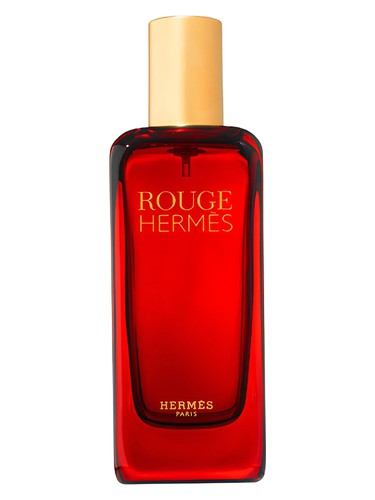
The first spray of Rouge Hermès is like stepping into a Parisian apartment at dusk—all damask curtains, antique furnishings, and the lingering trace of iris-scented face powder. This is not the Rouge of lipstick stains or dramatic declarations. Instead, it''s the rouge of a subtle flush, the warmth that rises beneath pale skin when entering from winter cold into candlelit warmth. Rose and ylang-ylang bloom immediately, but they''re softened by iris into something almost tactile—velvety, expensive, hushed. There''s an instant understanding here: this is a fragrance that whispers rather than announces, one that demands intimacy rather than projection.
Released in 2000, Rouge Hermès arrived during an era when perfumery was polarizing into loud fruity florals and crystal-clean aquatics. It chose neither path. Instead, it doubled down on something increasingly rare: grown-up femininity rendered in powder and precious woods, a fragrance that trusts its wearer to bring the personality while it provides the backdrop of impeccable taste.
The Scent Profile
The opening trio of rose, ylang-ylang, and iris sets an immediate tone of sophisticated restraint. The rose here isn''t dewy or garden-fresh; it''s been pressed between the pages of a leather-bound book, dried and concentrated into its essential character. The ylang-ylang adds a creamy, slightly narcotic sweetness that prevents the composition from becoming too austere, while iris works its signature magic—that cool, rooty, almost mineral quality that creates the powdery veil for which Rouge Hermès has become known.
As the fragrance settles into its heart, the woods begin their slow emergence. Sandalwood and cedar form the architectural bones of the composition, creating a structure that''s unmistakably woody—the data shows this accord dominating at 100%, and your nose confirms it within the first hour. But these aren''t raw, sawdust woods. They''re polished, warm, almost edible in their smoothness. Vanilla and amber weave through the wood grain like golden threads, adding sweetness without sugar, warmth without heaviness. This is where Rouge Hermès truly reveals its character: not as a floral perfume that happens to have woods, but as a woody perfume that blooms with florals.
The base extends this warm-wood reverie with unexpected accents. Spices emerge—never identified specifically, which gives them an intriguing anonymity—adding gentle heat that enhances rather than transforms. Myrtle brings an aromatic, slightly medicinal green note that cuts through the sweetness, preventing the composition from becoming too comfortable, too easy. It''s a masterful final touch that maintains interest through the long drydown.
Character & Occasion
The data tells a clear story about Rouge Hermès'' natural habitat: this is a cold-weather creature through and through. Both winter and fall register at 100% seasonality, and this makes perfect sense. The woody-powdery warmth that defines this fragrance would feel stifling in summer heat but becomes a second skin when temperatures drop. With only 36% for spring and a mere 21% for summer, Rouge Hermès knows exactly what it is—and more importantly, what it isn''t.
Interestingly, while it performs adequately during the day (66%), it truly comes alive at night (94%). This is a fragrance that thrives in low light, in intimate settings, in moments that call for quiet sophistication rather than bold statements. Picture it at gallery openings rather than garden parties, at dinner reservations rather than brunch, in cashmere and wool rather than linen and cotton.
This is decidedly mature femininity—not in terms of age, but in terms of sensibility. Rouge Hermès asks its wearer to appreciate nuance, to value the spaces between notes as much as the notes themselves. It rewards patience and punishes those seeking immediate gratification or loud projection.
Community Verdict
With a solid 4.03 out of 5 rating across 940 votes, Rouge Hermès has earned its place as a quietly beloved classic. This isn''t a blockbuster rating that suggests universal adoration, nor is it a niche darling with a tiny but fanatical following. Instead, it''s the kind of score that indicates genuine appreciation from those who understand what it''s trying to achieve. Nearly a thousand voters have spoken, and their verdict is clear: this is quality, even if it''s not for everyone.
How It Compares
The list of similar fragrances reads like a roll call of sophisticated femininity: Guerlain''s Samsara and L''Heure Bleue, Dior''s Dune, Chanel''s Coco, Cacharel''s LouLou. These are the grand dames of perfumery, fragrances that helped define what elegant femininity could smell like. Rouge Hermès sits comfortably in this company, distinguished by its particular balance of powder and wood. Where Samsara leans more heavily into sandalwood opulence and L''Heure Bleue emphasizes its anisic-powdery violet heart, Rouge Hermès finds its identity in that rose-wood marriage, with iris providing the powdery through-line that keeps it in the same olfactive family.
The Bottom Line
Rouge Hermès is not a fragrance that will convert those who prefer fresh, bright, or overtly modern compositions. It makes no apologies for its old-world sensibility, its preference for warmth over brightness, complexity over simplicity. But for those who appreciate woody-powdery florals, who understand that projection isn''t the same as presence, who want their fragrance to be discovered rather than announced—this is absolutely worth exploring.
At 4.03/5, it''s a fragrance that delivers on its promise without pretending to be something it''s not. In an era of increasingly literal, trend-chasing releases, there''s something deeply satisfying about a perfume that simply is—confident, accomplished, unwilling to raise its voice to be heard. For cold weather, for evenings, for moments that deserve more than the ordinary, Rouge Hermès remains a velvet embrace worth experiencing.
Reseña editorial generada por IA