First Impressions
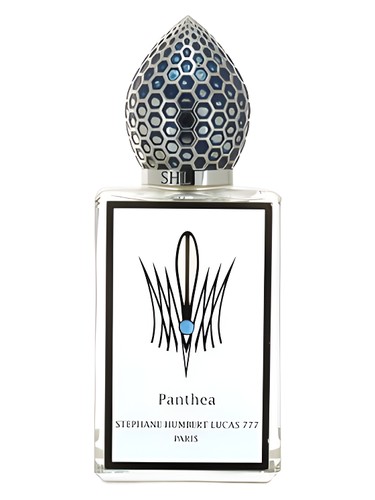
The first spray of Panthea feels like stepping into a perfectly preserved powder room from another era—but one flooded with unexpected spring sunlight. That initial burst of tangerine and bergamot arrives not as the bright, juicy citrus you might anticipate, but rather as something already softened, diffused through layers of gauzy powder. It's as if someone squeezed citrus fruit through silk, leaving only the most refined essence behind. This is Stéphane Humbert Lucas operating in his signature territory: the space between old-world sophistication and modern wearability, where seemingly contradictory elements merge into something entirely coherent.
Within moments, that powdery character—which dominates this composition at 100% intensity—begins asserting itself. This isn't the sneeze-inducing baby powder of amateur compositions, but rather the luxurious, almost tactile sensation of vintage face powder, iris root, and violet petals crushed together into something both nostalgic and strangely contemporary.
The Scent Profile
Panthea's opening gambit with tangerine and bergamot is deliberately brief, a citrus prelude that never quite leaves but instead transforms. These top notes don't explode and fade as citrus typically does; they hover, creating a luminous halo around what's really the star of this show: the heart.
The floral heart is where Panthea reveals its true architecture. Iris takes center stage, bringing that characteristic rooty, almost metallic coolness that iris lovers recognize immediately. It's joined by violet, which amplifies the powdery impression while adding a subtle sweetness, and jasmine, which provides just enough white floral richness to prevent the composition from becoming too austere. This isn't a floral bouquet in the traditional sense—you won't find yourself buried in petals. Instead, these three notes create a complex, abstract floral impression that reads more as "the memory of flowers" than flowers themselves.
The genius of this heart accord lies in its restraint. The violet and iris play together at 58% and 56% intensity respectively, creating a shimmering effect without overwhelming. The white floral aspect, measured at 52%, provides structure without stealing focus. It's a masterclass in balance.
As Panthea settles into its base, the composition takes an unexpectedly warm turn. White musk (contributing to that 59% musky accord) provides a soft, skin-like foundation, while sandalwood adds creamy woodiness. Tonka bean introduces a subtle sweetness with hints of vanilla and hay. But the most intriguing element here is tobacco leaf—not the smoky, heavy tobacco of oriental fragrances, but a dry, papery interpretation that adds depth and a touch of androgyny to an otherwise feminine composition.
This base doesn't dramatically transform the fragrance so much as ground it, giving weight and longevity to those ethereal top and heart notes. The overall effect is seamless, a continuous evolution rather than distinct phases.
Character & Occasion
The data tells a clear story about Panthea's natural habitat: this is overwhelmingly a spring fragrance (100%), though it carries beautifully into summer (76%) and remains relevant through fall (67%). Winter sees it scoring only 33%, which makes perfect sense. This is not a fragrance that projects warmth in cold weather; rather, it captures the specific quality of spring air—that mix of cool freshness and emerging warmth.
The day/night split is even more definitive: 92% day versus 34% night. Panthea is a daylight creature, designed for sunlit hours, leisurely afternoons, and early evening occasions that haven't yet turned formal. Picture it at garden parties, spring brunches, museum visits, or simply as your signature for days when you want to feel polished without announcement.
This is marketed as feminine, and the powdery-floral character certainly leans that direction, but the tobacco leaf and iris give it enough edge that confident wearers of any gender could pull it off. It's sophisticated without being stuffy, approachable without being forgettable.
Community Verdict
With 459 votes landing at a solid 4.01 out of 5, Panthea has earned respectable recognition within the niche community. This isn't a polarizing fragrance—the rating suggests broad appreciation rather than fierce devotion from a small group. That consistency speaks to Panthea's wearability and craftsmanship. It's the kind of fragrance that earns respect more than obsession, which is perhaps exactly what Stéphane Humbert Lucas intended: a beautiful, well-executed composition that doesn't demand attention but certainly rewards it.
How It Compares
The similar fragrances list reads like a who's who of elegant, powdery compositions. L'Eau d'Hiver by Frederic Malle is perhaps the closest cousin, sharing that honeyed-iris quality. Guerlain's Angélique Noire offers more darkness, while Byredo's Bal d'Afrique goes more aggressively citrus. Xerjoff's XJ 1861 Naxos emphasizes the tobacco-tonka connection, and Kilian's Moonlight in Heaven plays up the citrus-iris pairing.
Where Panthea distinguishes itself is in its particular balance—the way the powdery aspect dominates without becoming cloying, how the citrus persists without becoming sharp, the subtle warmth that never turns heavy. It occupies a sweet spot in this category: more interesting than safe designer florals, more wearable than aggressively artistic niche creations.
The Bottom Line
Panthea represents Stéphane Humbert Lucas 777 working in a refined, accessible mode—and the result is genuinely lovely. This isn't a groundbreaking composition that will redefine perfumery, but it's an exceptionally well-crafted example of powdery citrus-florals done right. The 4.01 rating reflects its quality: very good, occasionally great, consistently satisfying.
If you're drawn to iris, violet, or powdery fragrances in general, Panthea deserves a test. If you're building a spring-summer wardrobe and need something elegant for daytime wear, this is worth serious consideration. If you loved L'Eau d'Hiver but found it too sweet, or Angélique Noire but wanted more brightness, Panthea might be your goldilocks solution.
The biggest caveat? Its concentration is listed as unknown, which makes it difficult to assess value or set expectations for performance. Sample first, as with any niche purchase, but know that you're sampling from a house that understands how to build beautiful, wearable fragrances that honor tradition while remaining firmly contemporary.
Reseña editorial generada por IA