First Impressions
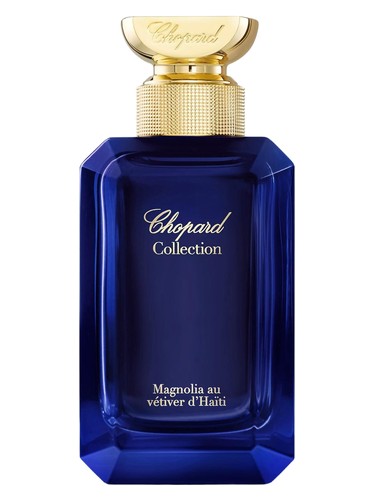
The first spray of Magnolia Au Vetiver du Haiti announces itself with a whisper rather than a shout. There's an immediate green freshness—violet leaf lending its cucumber-like coolness—punctuated by the gentle heat of pink pepper. But this opening is merely a prelude. Within moments, you sense something more substantial building beneath: an earthy backbone that promises this won't be just another spring floral. The combination feels like standing in a greenhouse on a crisp morning, where condensation clings to glass and soil-dusted roots lie exposed beside pristine white blooms.
This is Chopard's 2017 entry into their Gardens of Paradise collection, and it takes an unusual route. Rather than letting magnolia take center stage as the name might suggest, this fragrance positions the flower as one element in a larger, more complex conversation with Haitian vetiver—that smoky, rootsy note that can either ground a composition or dominate it entirely.
The Scent Profile
The violet leaf and pink pepper opening is brief but essential, creating a crisp, slightly peppery halo that prevents the fragrance from feeling heavy from the start. Violet leaf brings that distinctive green, almost metallic quality—more stem than petal—while pink pepper adds just enough warmth to keep things interesting without veering into spicy territory.
As the top notes recede, the heart reveals the fragrance's true character. Here, Haitian vetiver takes its position as the dominant force, bringing that characteristic earthy, woody, slightly smoky quality that distinguishes this particular variety. But Chopard has employed it with a surprisingly light touch. Rather than the dense, dark vetiver found in more masculine compositions, this version feels aerated, almost translucent. The magnolia weaves through it—creamy, soft, with that characteristic lemony-floral freshness that magnolia blooms possess. Amber appears here too, adding a subtle warmth and roundness that helps the floral and woody elements coexist rather than compete.
The base extends this woody-floral dialogue with white woods and sandalwood creating a soft, musky foundation. The sandalwood brings its creamy, slightly milky quality, while the white woods (likely a synthetic accord) add a clean, modern finish. This base keeps the fragrance from feeling too earthy or too botanical, maintaining that balance between natural and polished that makes it wearable rather than challenging.
Throughout its evolution, the fragrance maintains what community data identifies as its overwhelmingly woody character—rated at 100% in that accord—while the floral aspects contribute just over half of the overall impression. There's an aromatic quality that emerges as well, likely from the interplay of vetiver and violet leaf, along with surprising ozonic and aquatic undertones that give the whole composition an airy, open quality.
Character & Occasion
This is decisively a daylight fragrance, with community data showing a 92% preference for daytime wear versus just 41% for evening. That makes perfect sense given its fresh, woody-floral profile. It's too polite for a dramatic night out, but perfect for situations where you want to smell composed and interesting without announcing your presence across a room.
Seasonally, Magnolia Au Vetiver du Haiti shines brightest in spring (100% preference) and maintains strong appeal through summer (84%). The combination of green freshness, airy woods, and those ozonic qualities makes it ideal for warmer weather. That said, it transitions reasonably well into fall (62%), though winter (42%) seems less natural territory—the fragrance simply doesn't have the weight or warmth that cold weather often demands.
While marketed as feminine, the woody dominance and prominent vetiver give it an androgynous quality that could easily work for anyone drawn to sophisticated, nature-inspired scents. This is for someone who appreciates subtlety over projection, who wants something distinctive but not difficult, who finds poetry in the contrast between delicate florals and earthy roots.
Community Verdict
With a rating of 4.02 out of 5 stars from 415 votes, Magnolia Au Vetiver du Haiti has earned solid appreciation from its audience. That's a respectable score—not the overwhelming enthusiasm reserved for instant classics, but a clear indication that this fragrance delivers on its promise. The number of votes suggests a somewhat niche following rather than mass-market appeal, which aligns with its sophisticated, somewhat unconventional profile. This isn't a crowd-pleaser in the traditional sense, but those who connect with it seem genuinely pleased.
How It Compares
The fragrance finds itself in interesting company. Community comparisons place it alongside Byredo's Bal d'Afrique and Gypsy Water—both known for their sophisticated, slightly bohemian woody-floral profiles. The mention of Essential Parfums' Bois Impérial suggests a similar quality-to-price proposition and modern woody elegance. More surprisingly, Baccarat Rouge 540 and Musk Therapy appear as comparisons, perhaps indicating a shared transparent, airy quality despite very different compositions.
Where Magnolia Au Vetiver du Haiti distinguishes itself is in its specific focus on Haitian vetiver as a central element rather than just a supporting note. While many fragrances use vetiver as a generic woody accent, Chopard puts it front and center, creating something more distinctive than a typical magnolia soliflore yet more approachable than a hardcore vetiver fragrance.
The Bottom Line
Magnolia Au Vetiver du Haiti represents Chopard's thoughtful approach to botanical luxury—it's refined without being precious, distinctive without being difficult. The 4.02 rating reflects what it is: a well-executed woody floral that does something slightly different with its ingredients. It won't revolutionize your fragrance wardrobe, but it fills a specific niche beautifully.
This is worth exploring if you're drawn to green, woody fragrances but want something softer than traditional vetiver scents. It's ideal for those who appreciate the natural smell of a well-tended garden—roots, stems, and blooms together—rather than just the prettiest flowers in isolation. For spring and summer daytime wear, particularly in professional or refined casual settings, it's quietly excellent. Just don't expect powerhouse projection or marathon longevity; this fragrance succeeds through subtlety rather than strength.
Reseña editorial generada por IA