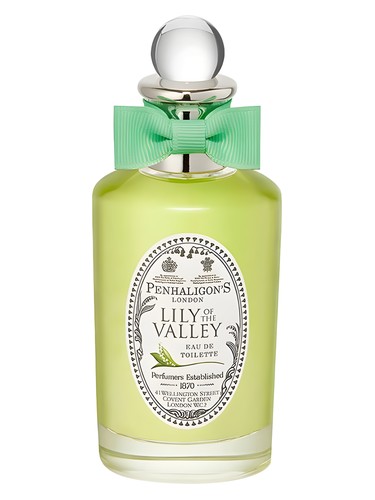
First Impressions
The first mist of Penhaligon's Lily of the Valley is like pushing open a conservatory door on an April morning. There's an immediate brightness—a citrus-kissed freshness from Amalfi lemon and bergamot that feels both crisp and slightly green. The geranium adds an unexpected dimension here, lending a subtle spiciness that keeps the opening from veering into predictable territory. This isn't the syrupy sweetness some might expect from a fragrance named after one of spring's most delicate flowers. Instead, it's remarkably clean, almost effervescent, with a sophisticated restraint that speaks to its 1976 heritage when florals were allowed to breathe without being smothered in fruit or vanilla.
The Scent Profile
Those bright citrus notes don't linger long before the heart reveals itself—and what a heart it is. The lily-of-the-valley takes center stage with its characteristic soapy-green freshness, that particular clean quality that's both innocent and surprisingly complex. Penhaligon's has surrounded this central player with a supporting cast of ylang-ylang, jasmine, and rose, creating a white floral bouquet that reads as 100% white floral in its main accord profile, yet never feels heavy or cloying.
The ylang-ylang contributes a creamy, slightly narcotic sweetness, while the jasmine adds indolic depth. The rose serves as a familiar anchor, softening the entire composition with its timeless elegance. Together, these florals create something genuinely spring-like—not the concept of spring in marketing terms, but the actual smell of being surrounded by blooming flowers in an English garden where dampness still clings to the air.
As the fragrance settles, the base notes of oakmoss and sandalwood emerge with quiet authority. The oakmoss—that hallmark of vintage perfumery that's become increasingly rare in modern formulations—provides an earthy, slightly bitter contrast to the florals above. It accounts for the 31% mossy accord that grounds this composition and prevents it from floating away into pure sweetness. The sandalwood adds a smooth, woody warmth that gives the fragrance just enough weight to last through the day without overwhelming its essentially fresh character.
Character & Occasion
This is unequivocally a spring fragrance—the data shows it scores 100% for spring wearability, and one spray makes it immediately clear why. It captures that specific moment when winter loosens its grip and the first tender shoots push through the soil. Summer comes in as a secondary season at 52%, which makes sense for cooler summer days or air-conditioned environments where its fresh green quality can shine without wilting in the heat.
The 90% daytime rating tells you everything you need to know about when to reach for this bottle. This is a perfume for morning meetings, garden parties, lunch dates, and afternoon errands. It's polite without being forgettable, present without demanding attention. The 11% night rating isn't necessarily a criticism—it simply acknowledges that if you're looking for evening drama or seductive allure, you'll want to look elsewhere in your collection.
Who is this for? Women who appreciate classic perfumery, certainly. Those who find modern fruity florals too loud or sweet will discover a refuge here. It's sophisticated in the truest sense—not because it's expensive or exclusive, but because it demonstrates restraint and balance. This is a fragrance for someone who wants to smell elegant rather than trendy, fresh rather than provocative.
Community Verdict
With a rating of 3.89 out of 5 from 877 votes, Lily of the Valley sits in that interesting territory of being well-liked without quite achieving cult status. This is respectable—very respectable, actually—for a fragrance that's been around since 1976. It suggests a perfume that delivers on its promises without necessarily converting every wearer into a devotee. Some will find their signature scent here; others will appreciate it without feeling compelled to own it. The nearly 900 votes indicate this isn't some forgotten relic but rather a fragrance that continues to find new admirers decades after its release.
How It Compares
The comparison to Diorissimo is inevitable—both are legendary lily-of-the-valley interpretations from respected houses. Diorissimo leans slightly greener and more soliflore, while Penhaligon's version embraces a fuller white floral bouquet. The mentions alongside Pure Poison and Alien are more surprising, suggesting that wearers find some shared DNA in the white floral intensity, even if those modern fragrances take the concept in dramatically different directions. La Chasse aux Papillons makes perfect sense as a comparison—both capture a light, garden-fresh sensibility. Organza shares the vintage elegance, though it ventures into spicier territory.
The Bottom Line
Penhaligon's Lily of the Valley isn't trying to revolutionize perfumery, and that's precisely its strength. Nearly fifty years after its creation, it remains a thoroughly competent, beautifully executed white floral that does exactly what it sets out to do. The 3.89 rating reflects a fragrance that won't disappoint but might not electrify—and for a spring daytime scent, that's often exactly what's needed.
Should you try it? Absolutely, if you're drawn to fresh florals, appreciate vintage-style compositions, or find yourself reaching for lily-of-the-valley scents each spring. It's particularly worth exploring if modern perfumes feel too sweet or synthetic to your nose. This is real perfumery—thoughtfully blended, elegantly proportioned, and refreshingly free of gimmicks. Just understand you're buying grace and wearability, not groundbreaking innovation, and you'll find much to love in this enduring English classic.
Reseña editorial generada por IA