First Impressions
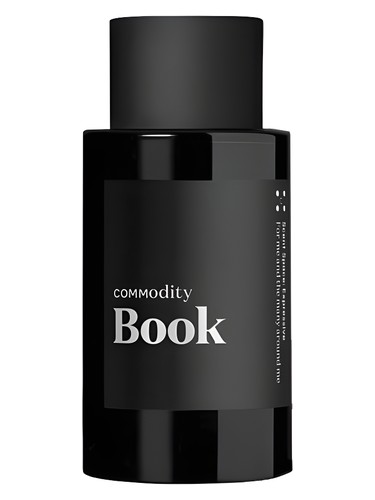
The first spray of Commodity''s Book announces itself with an unexpected freshness—not the leather-bound tome or musty library you might anticipate from the name, but something greener, more alive. Virginia cedar and eucalyptus create an opening that feels like stepping into a well-ventilated reading room where someone''s just cracked open a window to let in spring air. There''s a crispness here, amplified by bergamot''s citric brightness and the subtle spice of palisander rosewood. It''s an interpretation of "book" that leans toward the tree rather than the printed page, and that choice defines everything that follows.
The Scent Profile
Book''s evolution reads like a walk from forest floor to woodshop, with some interesting detours along the way. The opening quartet of Virginia cedar, eucalyptus, palisander rosewood, and bergamot creates what the community accurately describes as a "fresh, green grass" experience. That eucalyptus note, in particular, adds a medicinal clarity that some find invigorating and others find too sharp—it''s polarizing in the best sense, demanding you form an opinion.
As the fragrance settles, cypress and amyris join the composition''s heart, deepening the woody character that dominates at 100% of Book''s accord profile. The amber here isn''t the heavy, resinous amber of oriental fragrances; it''s more subtle, providing warmth without weight. This middle phase is where Book finds its most comfortable voice—aromatic (31% of the accord profile) without being aggressive, with a powdery softness (27%) that begins to emerge and hint at the base to come.
The foundation rests on sandalwood, musk, and the somewhat mysterious note listed as "velvet"—presumably a synthetic accord meant to evoke tactile softness. This is where that powdery quality fully blooms, creating a skin-like finish that''s pleasant but, as many users note, frustratingly brief. The sandalwood never quite achieves the creamy richness you''d hope for, and the musk remains polite rather than assertive.
Character & Occasion
The data tells a clear story about Book''s ideal habitat: this is primarily a fall fragrance (100% seasonal suitability), with strong showings in winter (70%) and spring (62%). Summer wearers should proceed with caution—only 30% seasonal suitability suggests those woody, aromatic notes may feel heavy in heat, despite the fresh opening.
Book skews heavily toward daytime wear, with 81% day suitability versus 51% for evening. This tracks with the community''s experience using it for office settings and everyday casual occasions. It''s the kind of fragrance that works for professional environments precisely because it won''t announce your presence before you enter the room—though whether that''s by design or due to performance issues is debatable.
While marketed as feminine, Book''s dominant woody character and lack of traditionally "feminine" florals or fruits make it thoroughly unisex in practice. This is a fragrance for someone who wants to smell clean, natural, and approachable rather than mysterious or seductive.
Community Verdict
The Reddit fragrance community''s relationship with Book is best described as complicated, reflected in a sentiment score of 6.8/10—neither enthusiastic endorsement nor outright dismissal. The positives are genuine: users appreciate the fresh, green character and the nostalgic quality it evokes. The availability in different concentrations (Personal and Bold versions) offers some flexibility, and the phthalate-free, paraben-free formulation appeals to those concerned about ingredient transparency.
But the criticisms cut deep. Poor longevity and projection emerge as the most consistent complaint, particularly galling given the price point. Multiple users note that the fragrance seems to have undergone reformulation over the years, with earlier versions performing better. Most damning is the consensus that cheaper alternatives—specifically Pacifica''s Montana Sky—deliver essentially the same scent experience for a fraction of the cost. When a niche fragrance can be successfully duped by a mass-market brand, questions of value become unavoidable.
The 3.48/5 rating from 1,026 votes reflects this ambivalence: Book has its admirers, but not enough to overcome the performance-to-price ratio concerns.
How It Compares
Book finds itself in interesting company among its similar fragrances. The comparison to Le Labo''s Santal 33 is both flattering and problematic—Book shares some of that fragrance''s woody, slightly medicinal quality but lacks the projection and staying power that help justify Santal 33''s premium pricing. The connection to other Commodity fragrances like Milk + makes sense within the brand''s aesthetic of clean, modern minimalism.
References to Gris Charnel, By the Fireplace, and Baccarat Rouge 540 feel more aspirational than accurate—those fragrances occupy different olfactory territories with significantly more presence and complexity. Book is quieter, simpler, more straightforward in its woody intentions.
The Bottom Line
Commodity Book is a fragrance caught between competing identities. It wants to be a sophisticated, literary-inspired scent while also serving as a fresh, wearable daily option. It wants niche credibility while being accessible enough for the mainstream. These aren''t necessarily contradictory goals, but Book doesn''t quite reconcile them successfully.
The 3.48 rating feels fair. This isn''t a bad fragrance—the opening is genuinely pleasant, and for short-distance wear in appropriate seasons, it delivers a clean woody scent that many will enjoy. But longevity issues at this price point are difficult to overlook, especially when cheaper alternatives exist.
Who should try Book? Those who prioritize natural ingredients and clean formulations over performance, anyone seeking an office-appropriate woody scent for fall and winter, and perhaps those curious about the Commodity aesthetic before committing to pricier bottles. But if longevity matters to you, or if you''re looking for your money to go further, exploring those frequently mentioned dupes might be the wiser chapter in your fragrance story.
Reseña editorial generada por IA