First Impressions
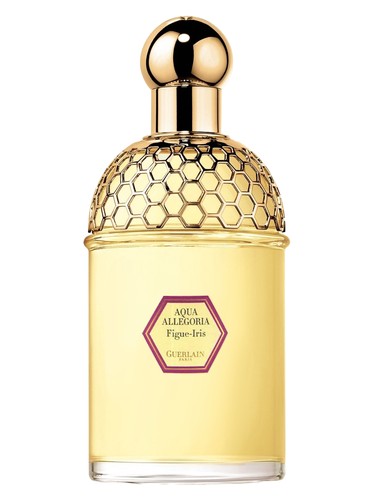
The first spray of Aqua Allegoria Figue-Iris delivers an immediate contradiction that somehow makes perfect sense: a rush of violet so pronounced it feels almost candied, yet simultaneously green and alive. This isn''t the shy, retiring violet of grandmother''s drawer sachets. Instead, Guerlain has conjured something more complex—a violet that carries the metallic tang of crushed leaves and the brightness of citrus zest. The bergamot and grapefruit announce themselves not as distinct players, but as illuminators, backlighting that dominant violet accord with a flash of Mediterranean sunshine. Within moments, you understand this fragrance''s unusual proposition: it will be both powdery and verdant, soft and sharp, demure and utterly distinctive.
The Scent Profile
The opening citrus duet of bergamot and grapefruit serves primarily to activate that remarkable violet note, which sits at 100% dominance in the fragrance''s accord structure. But this violet doesn''t linger alone for long. As the top notes begin their graceful exit, something unexpected emerges: the milky-green sap of fig leaf, that most Mediterranean of aromatic experiences, entwined with the cool, rooty elegance of iris.
This heart stage is where Figue-Iris earns its hyphenated name and reveals its true character. The fig leaf—not the fruit, but the leaf—brings an almost almond-like lactonic quality alongside its unmistakable green bite. It''s the scent of sitting beneath a fig tree on a warm afternoon, crushing a leaf between your fingers. The iris, meanwhile, contributes its signature powdery-earthy facets, that peculiar combination of lipstick and root cellar that makes iris one of perfumery''s most sophisticated ingredients. Together, they create a 99% powdery accord that somehow maintains an 86% green character—a balancing act that speaks to Guerlain''s technical mastery.
The base is surprisingly restrained for a house known for opulent foundations. Vanilla appears as a whisper rather than a statement, offering just enough sweetness to soften the composition''s more austere elements. Vetiver provides a woody backbone (contributing to that 57% woody accord) without overwhelming the delicate interplay above. The overall effect is fresh and airy—a fragrance that settles close to skin rather than projecting aggressively, maintaining that 70% fresh accord throughout its wear.
Character & Occasion
The data tells a clear story about Figue-Iris''s natural habitat: this is a daylight fragrance, scoring 100% for day wear and a mere 16% for evening occasions. It''s not hard to understand why. This is a scent that thrives in natural light, where its violet-green complexity can shimmer and shift. Artificial light and evening formality would feel at odds with its breezy, almost insouciant character.
Seasonally, Figue-Iris finds its sweet spot in spring (71%) and summer (67%), dropping dramatically for fall (30%) and winter (18%). This is definitively warm-weather territory—a fragrance for garden parties, weekend brunches, gallery openings, and long walks through blooming parks. Its 70% iris and 70% fresh accords make it particularly suited to those transitional spring days when winter''s heaviness has lifted but summer''s heat hasn''t yet arrived.
While marketed as feminine, the fragrance''s green-woody foundation and sophisticated iris heart give it an androgynous quality that transcends traditional gender boundaries. This is for anyone who appreciates the tension between powder and verdancy, softness and structure.
Community Verdict
With a rating of 3.98 out of 5 from 556 votes, Aqua Allegoria Figue-Iris occupies interesting territory. It''s clearly well-regarded—nearly reaching the four-star threshold—but it''s not generating the passionate devotion that drives ratings above 4.2. This suggests a fragrance that''s more admired than obsessed over, more "excellent" than "transcendent."
That rating feels fair. Figue-Iris is a beautifully executed, highly wearable fragrance that does exactly what it sets out to do. It won''t revolutionize your fragrance wardrobe, but it fills a specific niche with grace and sophistication. The respectable number of votes indicates a solid base of appreciation, even if it hasn''t achieved cult status.
How It Compares
The comparison to Prada''s Infusion d''Iris is particularly apt—both fragrances showcase iris in its cool, sophisticated glory, paired with fresh, clean supporting notes. Where Prada leans more minimalist and modern, however, Guerlain''s offering brings that distinctive violet-green twist that makes it more distinctive, if slightly less versatile.
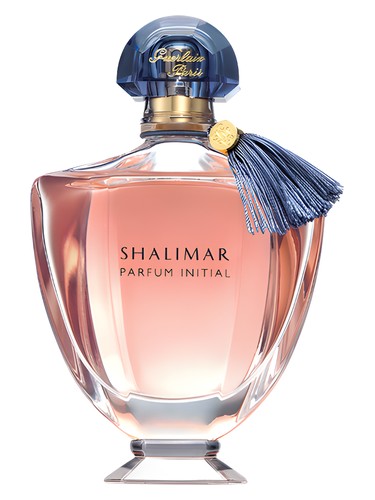
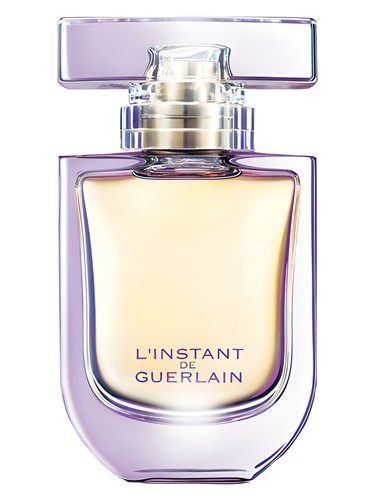
The three Guerlain siblings on the similar list—L''Instant Magic, Samsara Eau de Parfum, and Shalimar Parfum Initial—share DNA in their powdery sophistication, but Figue-Iris is notably lighter and greener than any of them. It''s the spring breeze to their more substantial seasonal presence. Lolita Lempicka''s appearance on the list speaks to that shared violet-iris powderiness, though Lempicka veers sweeter and more overtly gourmand.
The Bottom Line
Aqua Allegoria Figue-Iris succeeds as a refined, unusual take on the violet-iris theme. Its nearly 4-star rating reflects genuine quality and wearability without claiming breakthrough status. For the price point of an Aqua Allegoria—typically more accessible than Guerlain''s prestige lines—this represents solid value, particularly for someone seeking a sophisticated spring and summer signature that won''t broadcast from across the room.
Who should seek this out? Anyone captivated by violet who wants more complexity than a simple soliflore. Iris devotees looking for a warmer-weather expression of their favorite note. Those who find most fig fragrances too fruity or milky and want the leaf''s green bite instead. And Guerlain collectors who appreciate the house''s ability to balance classical refinement with contemporary freshness.
It''s a fragrance that rewards close attention and appropriate context. Wear it in the wrong season or setting, and it might feel wan or out of place. But spray it on a April morning or a June evening at dusk, and Figue-Iris reveals itself as a small, elegant masterpiece—proof that restraint and nuance can be just as memorable as bold projection.
Reseña editorial generada por IA