First Impressions
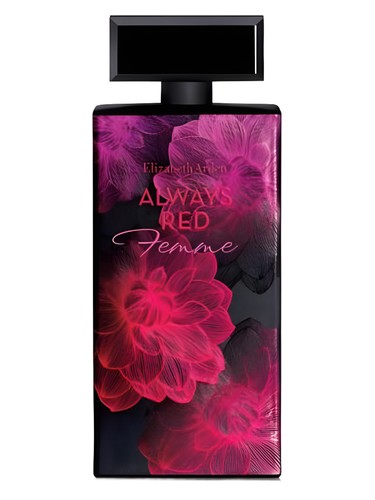
The first spray of Always Red Femme arrives with an unapologetic burst of fruit—but not the saccharine, candied variety that dominates the contemporary market. Instead, Elizabeth Arden''s 2016 release opens with a tart sophistication: cassis and pear dancing alongside a bright squeeze of lemon. It''s the scent equivalent of biting into a perfectly ripe pear while standing in a summer orchard, the fruit''s juice mingling with the green sharpness of leaves and stems. This isn''t a fragrance that whispers; it announces itself with confidence, though never crossing into aggressive territory.
What surprises most is the aromatic undercurrent running through that fruity opening—a hint of something herbal and unexpected that immediately signals this won''t be another predictable fruit cocktail. Always Red Femme wears its name boldly, but the liquid inside the bottle reveals a more complex personality than any single color could capture.
The Scent Profile
The cassis-pear-lemon trio that opens this fragrance establishes a dominance that never fully retreats. The fruitiness registers at full intensity, creating a juicy, mouth-watering introduction that feels both playful and polished. The lemon adds crucial brightness, preventing the darker berries and orchard fruit from settling into heaviness.
As the fragrance develops, the heart reveals its multifaceted nature. Peach blossom brings a soft, powdery sweetness—less about the fruit itself and more about the delicate florals that precede it. Jasmine adds its indolic richness, while lily-of-the-valley contributes a green, almost soapy cleanliness. But the wild card here is artemisia, that aromatic herb that injects an unexpected edge into what could have been a straightforward floral-fruity composition. This is where Always Red Femme earns its 70% aromatic accord rating—the herbal quality weaves through the sweeter elements, creating tension and interest.
The base is where this fragrance truly distinguishes itself from the crowd. Vanilla appears, as expected in a modern feminine release, but it''s tempered by a woody framework of patchouli, moss, and cedar. The patchouli isn''t the dark, incense-heavy variety; instead, it reads as earthy and grounding. Cedar brings pencil-shaving dryness, while moss adds an almost chypre-like quality—unusual in a fragrance that leads with such exuberant fruit. This woody-aromatic foundation explains why Always Red Femme manages to feel fresh (69%) while simultaneously registering substantial woody (62%) and vanilla (61%) accords.
Character & Occasion
Here''s where Always Red Femme breaks conventional wisdom. With a name suggesting passionate evenings and dramatic moments, you might expect a heavy, sensual night scent. Instead, this fragrance positions itself as an all-season performer, refusing to be boxed into a single time or temperature. The fruity-fresh opening makes it perfectly viable for spring and summer wear, while the woody-vanilla base provides enough warmth for autumn and winter outings.
The community data shows no strong preference for day or night wear, and testing confirms why: Always Red Femme occupies a middle ground, that increasingly rare territory of fragrances appropriate for late afternoon meetings, dinner dates, or weekend brunches alike. It''s dressed up enough for evening but never so heavy that it feels out of place in daylight.
This is a fragrance for someone who wants presence without pretension—the woman who appreciates fruity notes but has grown tired of one-dimensional fruit bombs. It suits those who find purely gourmand fragrances too sweet but aren''t ready to commit to the austerity of minimalist scents. Age-wise, it skews modern and youthful without being juvenile.
Community Verdict
With 386 votes landing at a solid 3.88 out of 5, Always Red Femme has earned respectable approval without achieving cult status. This rating suggests a fragrance that delivers competently on its promises—it''s well-composed and pleasant, though perhaps lacking that ineffable magic that pushes a scent into the 4.5+ stratosphere. The vote count itself indicates steady interest; this isn''t a forgotten release, but neither has it sparked the fervent devotion that creates thousands of ratings.
That middle-ground assessment feels accurate. Always Red Femme is a fragrance worth exploring, particularly if you''re drawn to the fruity-aromatic hybrid it represents. It won''t revolutionize your collection, but it might fill a specific gap.
How It Compares
The comparisons to Si, J''adore, La Vie Est Belle, Light Blue, and Black Opium reveal how Always Red Femme straddles multiple categories. It shares the fruity-floral accessibility of La Vie Est Belle and the aromatic freshness of Light Blue, while incorporating some of the woody depth found in Si. Unlike J''adore''s exclusive florals or Black Opium''s heavy sweetness, Always Red Femme maintains a lighter touch—more versatile, perhaps, but also less distinctive.
In the Elizabeth Arden lineup, it represents a modern interpretation of approachable femininity, more contemporary than the house''s classics but not chasing every trend. It''s competently positioned in the competitive designer market without breaking significant new ground.
The Bottom Line
Always Red Femme succeeds as a versatile, well-balanced fruity-aromatic fragrance that defies the limitations its name might suggest. The 3.88 rating reflects its quality: this is a solid performer that will please those seeking something between a fresh daytime citrus and a heavy evening vanilla. It won''t inspire passionate devotion or heated debate, but it will serve reliably across seasons and occasions.
The value proposition depends on your collection needs. If you''re hunting for a gap-filler that works year-round and doesn''t demand specific styling, Always Red Femme delivers. Those seeking a signature scent with fierce originality should continue their search. But for someone drawn to fruit-forward fragrances with enough aromatic and woody character to feel grown-up, this 2016 release deserves a test wear. Elizabeth Arden created something more nuanced than the name implies—and sometimes, that pleasant surprise is enough.
Reseña editorial generada por IA