First Impressions
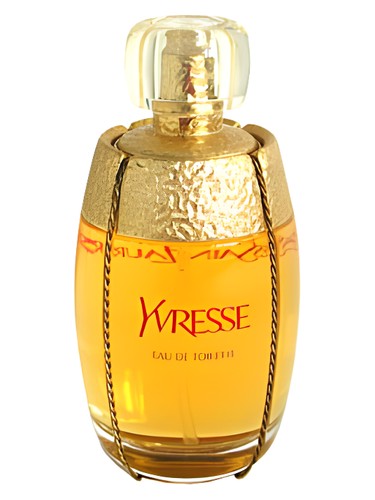
The first spray of Yvresse hits like the effervescent burst of champagne bubbles—fitting, given this fragrance''s original (and legally contested) name. But this isn''t a delicate mimosa spritz. Instead, you''re greeted by an explosion of sun-ripened stone fruits: peach, nectarine, and apricot tumbling over one another in reckless abundance. Then comes the surprise—a cooling thread of mint weaving through the sweetness, while caraway and anise add an herbal, almost liqueur-like complexity. It''s immediately recognizable as a product of the early ''90s, that golden era when perfumes weren''t afraid to be loud, unabashedly feminine, and gloriously excessive.
The Scent Profile
Yvresse opens with what can only be described as a fruit basket tipped into a cocktail shaker. The peach, nectarine, and apricot trinity dominates, each note distinct yet harmonious, creating that signature fruity accord that registers at full intensity. But Sophia Grojsman—the legendary nose behind this composition—knew better than to let this become a simple fruit salad. The caraway and anise lend a subtle spiced edge, while mint provides an unexpected freshness that keeps the opening from veering into cloying territory.
As the fragrance settles into its heart, the fruit recedes just enough to reveal a complex floral bouquet. Cinnamon dusts across litchi, creating a warm-spicy accord that perfectly bridges the gap between the exuberant opening and the more sophisticated middle. Rose and rose oil form the floral centerpiece, supported by carnation''s clove-like spiciness and violet''s soft powderiness. Iris adds a refined, almost makeup-like quality—this is where that prominent powdery accord (rated at 70%) begins to assert itself. Jasmine and lily-of-the-valley round out the composition with their classic white floral beauty, though they''re more supporting players than stars.
The base is where Yvresse reveals its true architecture. Oakmoss provides that essential chypre backbone—a green, earthy foundation that grounds all that fruit and florescence. Amber, benzoin, and vanilla create a warm, resinous sweetness that reads as both comforting and sensual. Patchouli adds depth and a touch of earthiness, while styrax and cedar contribute woody facets that keep the sweetness in check. Musk and vetiver provide subtle animalic and grassy undertones, and there''s even a whisper of coconut that adds to the overall creamy quality. This base is what transforms Yvresse from a simple fruity floral into something more substantial—a perfume with genuine staying power and evolution.
Character & Occasion
Yvresse is unquestionably a cold-weather fragrance. The data speaks clearly: it scores perfectly for fall (100%) and nearly as high for winter (92%), while summer trails at a modest 38%. This makes perfect sense—the rich fruit, warming spices, and resinous base notes were designed for crisp autumn days and cozy winter evenings. Spring wearability sits at 50%, suggesting it can work during transitional weather but might feel too heavy once temperatures truly rise.
The day-to-night breakdown is particularly telling: 82% for day versus 98% for night. While you can certainly wear Yvresse during daylight hours—it has enough brightness and that fruity exuberance to work for daytime occasions—it truly comes alive after dark. This is a perfume for celebrations, dinner parties, evening events where you want to leave an impression without apology. The sillage is generous, the presence undeniable.
This is a fragrance for someone who appreciates vintage femininity without irony, who understands that "subtle" isn''t always superior, and who has enough confidence to wear a perfume that announces your arrival. It skews mature—not in years, but in attitude.
Community Verdict
With a solid 4.12 out of 5 stars from 2,513 votes, Yvresse has earned its place as a beloved classic. This rating reflects a fragrance that has weathered changing trends and maintained a devoted following for three decades. It''s not a perfect score, which is honest—this style of fruity chypre isn''t for everyone, especially in our current era of sheer musks and minimalist compositions. But for those who connect with it, Yvresse clearly delivers something special and enduring.
How It Compares
Yvresse exists in illustrious company. Its similar fragrances read like a who''s who of ''90s blockbusters: Trésor by Lancôme, Dolce Vita by Dior, Poison by Dior, LouLou by Cacharel, and Angel by Mugler. These are the heavy-hitters that defined feminine perfumery for a generation—polarizing, powerful, and utterly unapologetic.
Where Yvresse distinguishes itself is in that champagne-inspired effervescence, that particular combination of stone fruits with mint and spice that gives it a brighter, more celebratory character than the gothic intensity of Poison or the gourmand revolution of Angel. It''s perhaps closest in spirit to LouLou, sharing that fruity-powdery DNA, but Yvresse feels more sophisticated, more built for grown-up revelry than youthful rebellion.
The Bottom Line
Yvresse deserves its 4.12 rating—it''s a well-crafted, complex fragrance that delivers exactly what it promises. Whether you seek it out under its original Champagne name or the rechristened Yvresse, you''re getting a masterclass in ''90s perfumery from one of the era''s most talented perfumers.
Is it for everyone? Absolutely not. If your tastes run to minimalist, skin-like scents or aquatic freshness, Yvresse will feel like too much perfume. But if you mourn the passing of big, bold, beautiful fragrances that don''t apologize for their presence, this is essential smelling. It''s particularly worth exploring if you loved that era''s aesthetic but found some offerings too sweet (Angel) or too heavy (Poison). Yvresse strikes a balance—exuberant yet refined, sweet yet grounded by that oakmoss backbone.
For vintage fragrance lovers, this is a must-try. For the curious, it''s a fascinating time capsule of when perfumes were meant to be noticed, celebrated, and remembered long after you''ve left the room.
KI-generierte redaktionelle Rezension