First Impressions
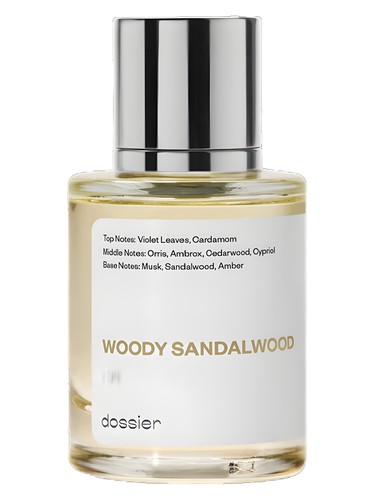
The first spray of Woody Sandalwood announces itself with an unexpected brightness—violet leaves and cardamom collide in a green-spicy embrace that feels both crisp and oddly medicinal. There''s an immediate woody presence, but not the creamy, incense-laden sandalwood you might expect from the name. Instead, this opens with a sharp, almost astringent quality that some describe as fresh sawdust meeting dried herbs. It''s an unorthodox introduction that sets the tone for what proves to be Dossier''s most contentious creation: a fragrance that inspires equal parts devotion and derision, rarely leaving anyone feeling neutral.
The Scent Profile
The violet leaves lead the charge in those opening moments, bringing a verdant, slightly metallic edge that''s amplified by cardamom''s warm spice. This isn''t the sweet, gourmand cardamom of oriental perfumes—it''s more herbal, almost medicinal, lending an ozonic quality that explains why 30% of wearers detect that accord.
As the fragrance settles into its heart, the composition becomes more complex and, frankly, more controversial. Cedar and cypriol oil (nagarmotha) form a woody alliance that veers decidedly dry and dusty. The orris contributes a pronounced powdery effect—evident in that 47% powdery accord rating—while ambroxan attempts to smooth the rough edges with its mineral warmth. This is where opinions fracture dramatically: some perceive this phase as luxuriously woody and sophisticated, while others detect an unfortunate soapy quality reminiscent of institutional bathrooms.
The base is where sandalwood finally makes its promised appearance, though it''s a supporting player rather than the star. Musk and amber create a warm foundation, but the sandalwood here reads more austere than creamy, more pencil shavings than silk. The 100% woody accord dominance is undeniable—this is wood in its least romanticized form, raw and unvarnished, with the warm spicy (40%) and amber (30%) notes providing just enough comfort to keep things wearable.
Character & Occasion
Woody Sandalwood shows remarkable seasonal versatility, rating highest for fall wear (100%) but maintaining strong credentials across all seasons—winter (77%), spring (76%), and even summer (69%). This adaptability stems from its primarily dry, non-cloying character. The ozonic freshness prevents it from becoming oppressive in warmth, while the woody-spicy core provides enough substance for cooler months.
The fragrance skews heavily toward daytime wear (92%) versus evening (65%), which makes perfect sense given its clean, workplace-appropriate profile. This isn''t a date-night seductress or a bold evening statement. Instead, it positions itself as a professional companion—something to wear to the office, weekend errands, or casual gatherings where you want presence without drama.
Marketed as feminine, Woody Sandalwood actually reads quite unisex due to its woody dominance. It''s best suited for those who appreciate perfumes that challenge traditional gender boundaries and favor structure over sensuality. Budget-conscious shoppers seeking designer alternatives will find the price compelling, while those who love dry, dusty woody profiles might genuinely prefer this approach over sweeter interpretations.
Community Verdict
The fragrance community''s response to Woody Sandalwood is decidedly mixed, landing at a 5.2 out of 10 sentiment score across 37 Reddit opinions—a telling indicator of its polarizing nature. The 3.8 out of 5 rating from 432 votes suggests mild approval overall, but the comments reveal a more complicated story.
Champions of the scent praise its affordability compared to the Le Labo original it attempts to emulate. Some wearers genuinely find it fresh, bright, and luxurious, particularly when layered with other Dossier offerings to add depth or sweetness. A subset of reviewers even claim to prefer it to Santal 33 or find it comparable.
The detractors, however, don''t mince words. The most frequent complaint centers on an "offensive soapy, bathroom-like quality" that many find off-putting. Descriptions of unpleasant woody, sawdust, and dill notes appear repeatedly. Critics specifically call out the noticeable leather note that makes it smell distinctly different from its inspiration. Perhaps most concerning are reports of inconsistent quality and performance across different batches, suggesting production control issues.
The community frequently recommends alternatives from Oakcha and Montagne as superior Santal 33 dupes, positioning Woody Sandalwood as a "try at your own risk" option rather than a safe bet.
How It Compares
Being positioned alongside Santal 33 by Le Labo is both Woody Sandalwood''s blessing and curse. While it shares the woody-spicy-dry DNA, the execution differs markedly—more angular where Santal 33 is smooth, more soapy where the original is creamy. The comparison to Encre Noire by Lalique feels more apt in some ways, given both fragrances'' commitment to challenging, uncompromising woody dryness.
The mentions of Baccarat Rouge 540 and By the Fireplace in the similar fragrances list seem aspirational rather than accurate—those occupy entirely different olfactive territories. This speaks to Dossier''s broader positioning as an affordable alternative brand rather than a true match for any single scent.
The Bottom Line
Woody Sandalwood represents everything complicated about the dupe fragrance market. At its best, it''s an affordable entry point into woody, unisex perfumery—a respectable 3.8-star performer that genuinely resonates with some wearers. At its worst, it''s an inconsistent bathroom soap that misses the mark on its inspiration while costing less.
Should you try it? If you''re curious about woody fragrances but unwilling to invest in Le Labo prices, and you understand you''re getting an interpretation rather than a copy, it might be worth sampling. Those who actively enjoy dry, dusty, unconventional woody scents may find unexpected satisfaction here. However, if you''re seeking a faithful Santal 33 experience or have limited tolerance for synthetic-leaning compositions, the community suggests looking elsewhere—perhaps to Oakcha or Montagne''s alternatives.
The batch inconsistency remains the most serious concern. Even supporters acknowledge quality variations, which means your experience may differ dramatically from bottle to bottle. For a fragrance sitting at this price point, that inconsistency is harder to forgive.
KI-generierte redaktionelle Rezension