First Impressions
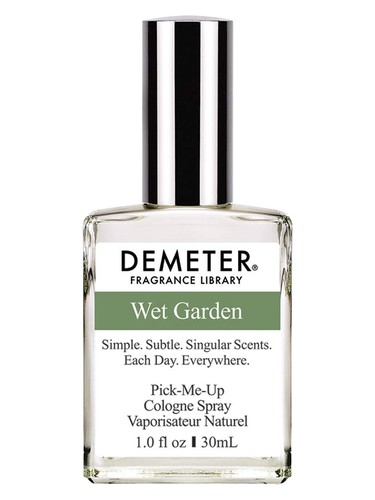
The first spray of Wet Garden delivers exactly what its name promises—no metaphor, no abstraction, just the olfactory equivalent of stepping into your backyard after a spring thunderstorm. There''s an immediate wetness here that goes beyond typical aquatic fragrances. This isn''t ocean spray or clean laundry; it''s the specific scent of water meeting soil, dampening flower petals, and releasing all those green, earthy molecules into cool air. Demeter has built its reputation on these hyperrealistic scent snapshots, and Wet Garden might be one of their most successful attempts at bottling a complete sensory memory.
The opening is dominated by that floral-aquatic marriage, which registers at 100% and 92% respectively in its accord profile. But unlike many floral aquatics that lean synthetic or soapy, there''s an authenticity here—a muddiness, even—that grounds the composition in something recognizably natural.
The Scent Profile
Without specified note breakdowns, Wet Garden reveals its structure through pure impression rather than perfumer''s formula. The experience begins with that wet floral quality—imagine roses, lilies, and jasmine not in full bloom under hot sun, but heavy with moisture, their fragrance muted and transformed by water. There''s a subtle greenness threading through, the scent of stems and leaves rather than just blossoms.
As the fragrance settles, the earthy accord (registering at 75%) becomes more prominent. This is where Wet Garden distinguishes itself from cleaner aquatic florals. There''s actual dirt here—not the refined "soil tincture" of niche perfumery, but the accessible smell of garden earth, slightly mineral, slightly organic, with that characteristic petrichor quality that makes rain on dry ground so instantly recognizable.
The freshness (46%) acts more as a supporting player than a lead. This isn''t a sharp, ozonic freshness but rather the coolness of air after rainfall, the sense of renewal without the screech of citrus or the bite of mint. The fragrance maintains a soft, almost humid quality throughout its wear, never quite drying down to something conventionally "dry" or powdery. It simply quiets, the way a garden does as water soaks into the ground and the world returns to stillness.
The composition''s lack of traditional base notes in the data reflects the wearing experience—there''s no dramatic shift to amber or musk, no vanilla safety net. Wet Garden stays true to its concept from beginning to end, which makes it brief but consistent.
Character & Occasion
This is a spring fragrance first and foremost, with the data showing 100% seasonal appropriateness for those months when gardens actually experience this phenomenon most frequently. Summer follows at 76%, which makes sense for early mornings or after-storm wear when temperatures cool. The dramatic drop to 23% for fall and 8% for winter reflects an obvious truth: this scent needs context. Wearing Wet Garden in January would feel disconnected, a memory out of season.
The day/night split (96% day versus 16% night) tells you everything about its character. This is morning light through wet leaves, weekend gardening, outdoor cafés under clearing skies. It''s too literal, too casual for evening wear, lacking the depth or sensuality that nighttime fragrance typically demands.
Who is this for? The feminine designation feels accurate but not restrictive—anyone drawn to fresh florals without sweetness, anyone who finds traditional perfume too loud or abstract. This is for minimalists, for those who prefer scent as atmospheric detail rather than personal statement. It''s refreshingly unpretentious.
Community Verdict
With a rating of 3.97 out of 5 from 622 votes, Wet Garden sits comfortably in "very good" territory without claiming masterpiece status. This is appropriate for what it offers. The Demeter approach—delivering specific, recognizable scents at accessible prices—doesn''t aim for the complexity that earns perfect scores, but the near-4 rating suggests the community appreciates successful execution of concept.
The solid vote count indicates this isn''t a hidden gem but rather a fragrance that''s been discovered and discussed, tested and considered. That near-four rating, held across hundreds of opinions, suggests consistency: people generally get what they expect and appreciate it for what it is.
How It Compares
The list of similar fragrances reveals interesting company. Chloé Eau de Parfum and Noa by Cacharel make sense—both are floral fragrances with aquatic or fresh elements that avoid heavy sweetness. Un Jardin Sur Le Nil by Hermès is perhaps the most apt comparison, another fragrance that attempts to capture a specific garden experience with green, fresh, and aquatic notes.
The inclusion of Black Orchid by Tom Ford and Dune by Dior seems more puzzling until you consider the earthy component. Both fragrances feature unusual earthy or mineral qualities beneath their other accords. Still, those are far more complex, expensive, and evening-appropriate than Wet Garden''s daytime simplicity.
Where Wet Garden stands apart is in its photorealistic approach and presumed accessibility. While Hermès charges premium prices for poetic garden impressions, Demeter offers literal scent memories at drugstore prices.
The Bottom Line
Wet Garden won''t be your signature scent, your special occasion perfume, or your cold-weather comfort. What it will be is exactly what it promises: a remarkably accurate recreation of a rain-soaked garden, wearable and pleasant, best appreciated in appropriate context.
The 3.97 rating reflects reasonable expectations met with competence. For the price point (typically budget-friendly for Demeter), it''s excellent value if this particular scent memory appeals to you. Sample first—either you''ll recognize and love this specific smell, or it won''t resonate. There''s no middle ground with something this literal.
Try Wet Garden if you love fresh florals but find most too sweet, if you garden and want to carry that experience with you, or if you appreciate fragrance as environmental detail rather than personal advertisement. Skip it if you need longevity, complexity, or year-round versatility. But on the right spring morning, stepping outside after rainfall, you might find it perfect.
KI-generierte redaktionelle Rezension