First Impressions
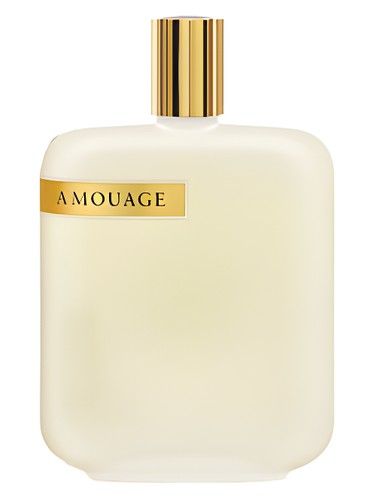
The first whisper of The Library Collection Opus III is deceptive in its softness—a cloud of mimosa dusted with nutmeg that feels both vintage and utterly contemporary. This is powder reimagined, not the cloying sweetness of a makeup compact, but something more cerebral and intentional. The opening spices—clove and thyme alongside that nutmeg—add an almost medicinal precision, as if you''ve stumbled into an apothecary where dried flowers hang from ancient beams. There''s an intellectual quality here, befitting the "Library Collection" name, yet beneath the scholarly exterior pulses genuine warmth. Within moments, you understand why this 2010 release earned its 4.04 rating from over a thousand evaluations: this is Amouage operating at the height of its powers, crafting something that demands contemplation.
The Scent Profile
The genius of Opus III lies in its architectural complexity, building layer upon intricate layer without ever collapsing into chaos. Those opening notes—mimosa, nutmeg, clove, dyer''s greenweed, and thyme—create an unexpectedly herbal-spicy entrance. The mimosa provides the powdery foundation that will anchor the entire composition, while the spices add warmth without veering into oriental territory. The dyer''s greenweed, a rarely-used note, contributes a subtle greenness that keeps the powder from feeling too nostalgic.
As the composition settles into its heart, the florals emerge with remarkable refinement. Violet takes center stage, explaining why it registers as a distinct accord at 61% in the overall profile. But this isn''t violet played solo—it''s supported by a quartet of ylang-ylang, jasmine, and African orange flower that adds creaminess and depth. The yellow floral accord (76%) becomes apparent here, that particular warmth that mimosa and ylang-ylang create together, like sunlight filtered through aged parchment. These florals never scream; they whisper in perfectly modulated tones.
The base is where Opus III reveals its true ambitions. This is a woody fragrance (77% woody accord) dressed in powdery clothing. Benzoin and vanilla provide sweetness, but they''re grounded by an impressive array of woods: sandalwood, guaiac wood, papyrus, and Virginia cedar. The musk and ambrette add skin-like intimacy, while the woods create a structure that could support a cathedral. The guaiac wood, in particular, brings a smoky, almost incense-like quality that elevates the entire composition beyond typical floral territory. As hours pass, the powder-and-wood duality becomes hypnotic, each element enhancing the other in perfect balance.
Character & Occasion
Opus III is fundamentally a transitional fragrance, equally at home in spring (100%) and fall (99%), those liminal seasons that exist between extremes. It makes perfect sense—this is neither a light floral for summer heat nor a heavy oriental for deep winter, though it can certainly be worn in winter (64%) for those who appreciate its warmth. Summer wearability drops to just 34%, likely because the powdery-woody density feels too substantial when temperatures soar.
The day/night split tells an interesting story: 99% day-appropriate versus 72% for evening wear. This isn''t a perfume that demands a formal occasion, yet it possesses enough sophistication to carry you through dinner and beyond. Picture it in quiet museums, art galleries, literary salons, afternoon tea that extends into evening conversation. It''s intellectual without being austere, refined without being unapproachable.
Marketed as feminine, Opus III transcends conventional gender boundaries through its woody backbone and herbal-spicy complexity. This is for the woman who reads poetry, collects vintage textiles, and understands that true elegance requires no announcement. It suits those who appreciate the powdery violet family but want something with more substance than typical violet soliflores.
Community Verdict
With 1,009 votes yielding a 4.04 out of 5 rating, Opus III has achieved something significant: broad appreciation without compromise. This isn''t a crowd-pleaser that dumbed itself down to achieve consensus. The rating suggests a fragrance that rewards those who seek it out, that reveals more with each wearing. It''s not perfect for everyone—those seeking fresh, light, or overtly sensual scents will find it too cerebral—but for its intended audience, it hits the mark with precision.
The number of votes itself indicates sustained interest nearly fifteen years after release, suggesting this isn''t a forgotten experiment but a quietly beloved entry in Amouage''s experimental Library Collection.
How It Compares
Opus III exists in distinguished company. Its closest relatives include Amouage''s own Lyric Woman and Journey Woman, both sharing that house''s commitment to complex, uncompromising compositions. The mention of Tom Ford''s Black Orchid as a similar fragrance might seem surprising given Black Orchid''s gothic intensity, but both share a willingness to embrace powder and woods in unconventional ways.
The comparison to Guerlain''s Shalimar is particularly telling—both fragrances understand that powder can be powerful, that vanilla and benzoin can coexist with more austere elements. Yet Opus III feels more modern, less explicitly seductive than Shalimar''s golden warmth. Where Shalimar invites, Opus III contemplates. The reference to Ubar, another Amouage creation, suggests family DNA: that blend of florals and resins that the house does so masterfully.
The Bottom Line
The Library Collection Opus III represents Amouage at its most experimental and successful—a fragrance that justifies the "Opus" designation. The 4.04 rating reflects genuine quality recognized by a substantial community, while the strong accord structure (100% powdery, 77% woody) indicates a perfume with clear artistic vision executed with precision.
This isn''t an everyday fragrance for most, nor is it trying to be. It''s a statement piece for those whose wardrobes already contain the basics and who seek something that challenges while it comforts. The price point of Amouage fragrances means this is an investment, but for lovers of sophisticated powder-violet-wood compositions, it''s one worth making.
Try Opus III if you''ve ever felt that most floral fragrances lack backbone, or if you love woody scents but want something softer than pure masculines. Sample it during spring or fall, wear it during the day, and give it time. This is a fragrance that reveals itself slowly, like a book you''ll want to read again.
KI-generierte redaktionelle Rezension