First Impressions
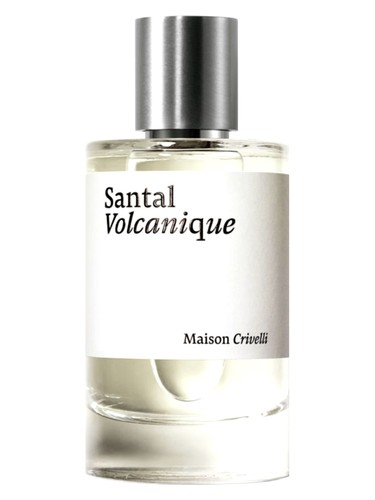
The name itself is a paradox: sandalwood, that most serene and meditative of materials, colliding with volcanic heat. When you first spray Santal Volcanique, this tension becomes immediately apparent. There''s a cool, powdery quality that arrives first—unexpected given what''s to come—before the composition reveals its true nature. This is sandalwood that''s been subjected to extreme temperatures, transforming the familiar creamy sweetness into something altogether more confrontational. Some describe it as immediately captivating; others recoil from what they perceive as a scorched, almost burnt quality. There''s no middle ground with this fragrance, and that''s precisely the point.
The Scent Profile
While Maison Crivelli hasn''t disclosed the specific note breakdown for Santal Volcanique, the main accords tell a vivid story. The composition is overwhelmingly woody at its core—a full 100% dominance that leaves no question about this fragrance''s identity. But this isn''t the gentle, incense-wreathed sandalwood of meditation rooms or spa treatments.
That initial cool powdery impression gives way quickly to the volcanic heart of the fragrance. Warm spices register at 69%, creating a heated, almost molten quality that justifies the "volcanique" descriptor. What''s fascinating is the 57% citrus accord that weaves through the composition—not bright and cheerful, but rather adding a certain sharpness, like sunlight reflecting off volcanic glass. The fresh spicy accord at 52% adds another layer of complexity, preventing the sandalwood from becoming too heavy or one-dimensional.
As the fragrance settles into its base, that 47% powdery quality resurfaces, now transformed by the heat it''s traveled through. The 31% aromatic accord provides an herbal counterpoint, grounding the composition and preventing it from veering into pure gourmand territory despite its creamy warmth. This is a fragrance that wears differently on everyone who tries it—a characteristic that accounts for both its devoted following and its detractors.
Character & Occasion
Designated as all-season wear, Santal Volcanique proves surprisingly adaptable despite its intensity. The woody-spicy dominance might suggest autumn and winter exclusivity, but that citrus brightness and fresh spicy quality allow it to transition into warmer months for those bold enough to wear it. This isn''t a timid fragrance—it commands attention and requires confidence.
Marketed as feminine, Santal Volcanique has sparked considerable debate about its gender positioning. The community consensus suggests it skews masculine or firmly unisex, making it particularly appealing to women who gravitate toward traditionally masculine scents. There''s nothing delicate or conventionally pretty about this composition—it''s powerful, assertive, and unapologetically bold.
The fragrance works best in contexts where you want to make an impression without saying a word. Evening wear feels natural for this intensity, though the cooler months might be its true home. Those who love gourmands and oriental fragrances will find familiar comfort in its warmth, while sandalwood devotees will either be thrilled by this volcanic interpretation or scandalized by the departure from tradition.
Community Verdict
With a sentiment score of 6.2 out of 10 based on 41 opinions from the Reddit fragrance community, Santal Volcanique occupies genuinely divisive territory. The rating of 3.79 out of 5 from 858 votes confirms this isn''t a crowd-pleaser—but that''s not necessarily a criticism.
Fans describe the fragrance as uniquely creamy with that distinctive volcanic warmth, praising its versatility for both men and women despite the feminine marketing. They appreciate how it transitions from that interesting cool powdery opening into its warm base, creating an evolution that rewards patience. For lovers of gourmands and orientals, it hits a sweet spot that few fragrances reach.
The cons are equally vocal. Some find the scent genuinely unpleasant, with that scorched quality reading as a flaw rather than a feature. Others describe it as overly masculine or disappointingly showergel-like—hardly the exotic experience they expected from a niche house. The limited discussion around the fragrance suggests it hasn''t captured widespread attention, remaining firmly in niche territory even within niche perfumery circles.
How It Compares
Santal Volcanique shares DNA with several notable contemporaries. Ani by Nishane offers similarly bold, spicy warmth, while Gris Charnel by BDK Parfums explores woody-spicy territory with its own distinctive character. Essential Parfums'' Bois Impérial provides another point of reference in the woody category, and interestingly, Maison Crivelli''s own Papyrus Moleculaire appears as a comparison—suggesting the house has a particular affinity for transforming classic woody notes. Hacivat by Nishane rounds out the list, another polarizing fragrance that divides opinion.
What sets Santal Volcanique apart is that specific tension between creminess and heat, powder and spice. It occupies a unique position—not quite gourmand, not purely woody, but something that bridges categories in ways that either fascinate or frustrate.
The Bottom Line
Santal Volcanique isn''t a fragrance for everyone, and it doesn''t pretend to be. At 3.79 out of 5 with 858 votes and a community sentiment score of 6.2, the numbers tell a story of division rather than universal acclaim. But for the right wearer, this could be precisely what they''ve been searching for—sandalwood reimagined through volcanic heat, creamy yet intense, powdery yet spicy.
This is a must-try for women who reject traditionally feminine fragrances in favor of masculine or unisex compositions, for lovers of oriental and gourmand scents who want something with more edge, and for anyone intrigued by the idea of sandalwood pushed to its limits. Sample before committing, because this is a fragrance that reveals whether you''re its person within minutes of wearing it. When it works, it''s described as sexy and powerful. When it doesn''t, it''s unwearable. There''s poetry in that polarization—not every fragrance needs to be loved by everyone.
KI-generierte redaktionelle Rezension