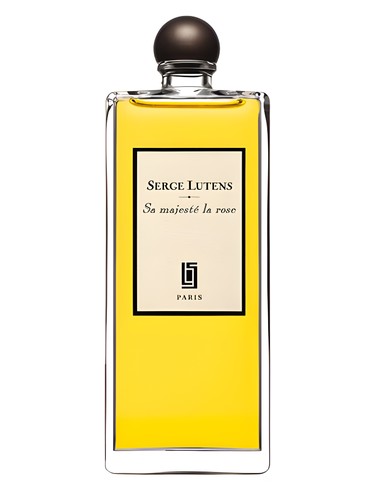
First Impressions
When you first encounter Sa Majeste la Rose, you''re confronted with a truth about roses that most perfumers prefer to hide: they don''t exist in isolation. Serge Lutens'' 2000 creation announces itself with the full, unapologetic reality of rose in all its facets—not the sanitized, pretty-in-pink version favored by mainstream houses, but something far more complex and, frankly, confrontational. The opening is immediate and uncompromising, a rose accord so dominant it registers at 100% intensity according to fragrance analyses. But this is no simple floral portrait. Within seconds, honey-tinged sweetness and an animalic musk begin to emerge, creating a composition that will either captivate you or send you scrambling for the nearest sink.
The Scent Profile
Without specified top, heart, or base notes in its official documentation, Sa Majeste la Rose presents as a more holistic experience than a traditional pyramid structure. The rose—clearly the star and singular focus—unfolds immediately and maintains its throne throughout the wear. This isn''t a demure tea rose or a fresh garden variety; it''s a densely petaled, slightly browned rose with edges that curl and darken.
The floral accord, registering at 42%, provides context rather than competition, likely bringing in supporting white florals that add depth and texture. Here''s where things get interesting, and polarizing. The honey element at 41% brings a sticky, animalic sweetness that bridges into the musky accord (31%), creating an effect that some describe as intensely sensual and others as problematic. This honey-musk combination, when combined with indolic compounds common in white florals, produces what chemistry calls phenethyl alcohol—a substance that can read as everything from lush and narcotic to unmistakably urinous, depending on your nose''s particular receptors.
The sweet accord at 24% and woody undertones at 23% round out the composition, providing grounding and preventing the fragrance from floating into pure floral abstraction. This is a rose with roots, with earthiness, with bodily reality.
Character & Occasion
Spring claims this fragrance overwhelmingly, with a 95% seasonal match that makes perfect sense—this is a rose for when flowers are actually blooming, when nature shows both beauty and decay simultaneously. Fall follows at 64%, suggesting the fragrance''s honeyed, woody warmth translates well to cooler weather. Summer at 54% seems ambitious given the intensity, though die-hard rose lovers might brave it. Winter''s 45% showing indicates this isn''t primarily a cold-weather rose despite its richness.
The day/night split tells a revealing story: 100% day-appropriate versus only 44% for evening. This positions Sa Majeste la Rose firmly in the realm of bold daytime statement-making rather than seductive nighttime wear. It''s the fragrance equivalent of wearing exactly what you want to brunch, consequences be damned. This is for the woman who doesn''t adjust her personality for the room she''s in—though she should probably be aware that the room will definitely have opinions.
Community Verdict
With 1,842 votes averaging 3.89 out of 5 stars, Sa Majeste la Rose sits in that fascinating middle ground where passion and revulsion meet. The Reddit fragrance community''s sentiment score of 5.5 out of 10 reveals a more conflicted picture than the rating alone suggests, and their specific feedback is illuminating.
Multiple users report detecting what they describe as a prominent urinous or dried-urine smell that fundamentally undermines their ability to wear or enjoy the fragrance. This isn''t subtle criticism—for those who smell it, it''s a deal-breaker. The culprit appears to be indolic jasmine or phenethyl alcohol compounds common in white florals, which some noses interpret as deeply unpleasant.
The pros cited include a genuinely complex and interesting composition that appeals to those seeking something challenging, and pleasant floral notes for wearers who don''t detect the problematic aromatic. But that''s the crucial caveat: if you don''t detect it. This fragrance has become an inadvertent litmus test, separating those whose olfactory receptors register certain indolic compounds from those who experience the same molecules entirely differently.
The community consensus? This is for fragrance collectors willing to tolerate polarizing notes, niche enthusiasts exploring Serge Lutens'' more experimental compositions, and specifically for those who simply don''t smell what others are complaining about.
How It Compares
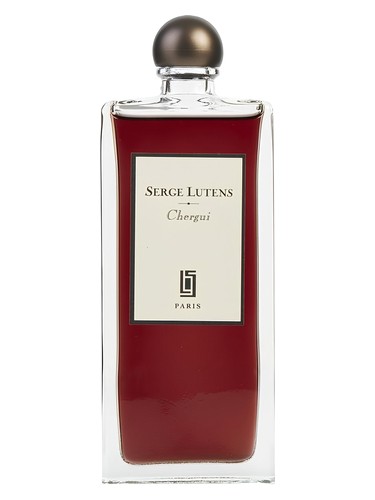
Among its similar fragrances, Sa Majeste la Rose keeps interesting company. La Fille de Berlin, another Serge Lutens creation, shares that house''s willingness to push boundaries. The inclusion of Chanel stalwarts—Coco Eau de Parfum, Coco Mademoiselle, and No. 5 Parfum—suggests a classical femininity that Sa Majeste echoes, even if it distorts that elegance through a more challenging lens. Chergui, also by Lutens, indicates shared DNA in honeyed, spiced warmth. Where this rose stands apart is in its uncompromising nature—it refuses to smooth its rough edges for broader appeal.
The Bottom Line
Sa Majeste la Rose demands an honest conversation about what we mean when we praise "interesting" or "complex" fragrances. This is undeniably both, but complexity means nothing if the result is unwearable for a significant portion of the population. The 3.89 rating and mixed community sentiment reflect a fragrance that successfully achieves its artistic vision while simultaneously alienating a substantial audience.
Should you try it? Absolutely—but only if you''re prepared for the possibility that your nose will rebel. Sample before committing to a bottle. If you''re among the lucky ones whose receptors interpret those indolic compounds as lush rather than revolting, you''ll discover a rose of uncommon depth and character. If not, you''ll understand why Serge Lutens'' work inspires such devotion and division in equal measure. Sometimes Her Majesty''s subjects simply aren''t prepared for her unvarnished reality.
KI-generierte redaktionelle Rezension