First Impressions
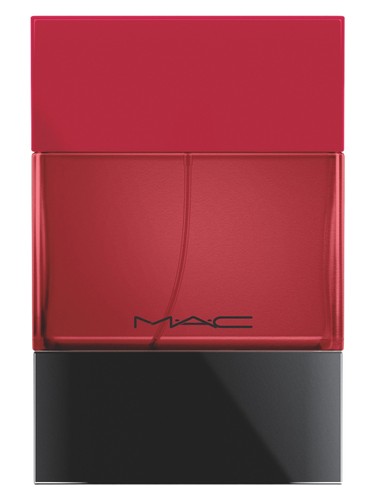
The first spray of Ruby Woo announces itself with an audacious collision: tart cherry meets supple leather, spiked with the golden warmth of saffron and a whisper of pink pepper heat. It''s a deliberate provocation, a scent that seems to channel the bold, blue-red confidence of its namesake lipstick into olfactory form. This isn''t the jammy, edible cherry of gourmand fantasies—it''s synthetic in character, almost plasticky, like biting into a maraschino cherry while wearing vintage leather gloves. The opening is unapologetically theatrical, a red-curtain moment that either captivates or confounds depending on your tolerance for artificial fruit notes.
What saves this introduction from veering into novelty territory is the grounding presence of leather, which dominates the composition at full strength. It''s not the raw, animalic leather of biker jackets, but something more refined—closer to the buttery softness of a well-loved handbag. The saffron adds a metallic, almost bloody undertone that bridges the gap between fruit and hide, creating an unexpected harmony that feels both modern and slightly off-kilter.
The Scent Profile
As Ruby Woo settles into its heart, the cherry recedes from its spotlight position (though it maintains a 47% presence in the overall accord structure), making room for a powdery floral quartet. Suede joins the leather narrative, adding a napped, velvety texture that softens the composition considerably. Violet and orris root contribute that distinctive lipstick-powder quality—a deliberate nod, surely, to the cosmetic inspiration behind the fragrance. These notes bring a retro femininity, the kind found in vintage compacts and art deco vanity tables.
May rose emerges subtly, never blooming into full-throated romanticism but instead lending a petal-soft sweetness that registers at 28% in the overall composition. The powdery accord sits at 46%, nearly matching the cherry, which creates an interesting tension: fruit versus cosmetic, edible versus wearable. This is where Ruby Woo finds its signature character—in this deliberate ambiguity between lipstick and fruit, between bold statement and intimate secret.
The base brings woody stability through mahogany and sandalwood, both of which anchor the composition in warm, burnished tones. The mahogany adds depth without heaviness, while sandalwood provides its characteristic creamy smoothness. At this stage, the animalic accord (31%) becomes more apparent—a musky skin-scent quality that, combined with the woods at 39% presence, creates a surprisingly intimate finale. This is where the fragrance whispers rather than shouts, pulling close to the skin in those final hours.
Character & Occasion
Ruby Woo is unequivocally a cold-weather companion. The data confirms what the nose suspects: this is a fall fragrance first and foremost (100%), with winter following closely at 86%. The leather-cherry combination simply feels right against crisp air and layered clothing, where its moderate projection won''t get lost outdoors but will create an intriguing scent trail in enclosed spaces.
While it performs adequately during the day (66%), Ruby Woo truly comes alive at night (97%). This is a fragrance for dimly lit wine bars, gallery openings, intimate dinners—settings where proximity matters and loud projection would feel crass. The spring viability drops to 31%, and summer barely registers at 16%, which makes sense given the heavy leather presence and powdery density.
This is decidedly feminine in its expression, designed for someone who appreciates the synthetic-chic aesthetic of modern niche fragrances but wants something tied to an iconic beauty product. It speaks to the person who treats their signature red lipstick as armor, who understands that artifice can be its own form of authenticity.
Community Verdict
The fragrance community approaches Ruby Woo with measured appreciation, awarding it a 6.5 out of 10 sentiment score across 55 opinions—a rating that reflects genuine ambivalence rather than mediocrity. The 3.8 out of 5 stars from 406 votes tells a similar story: this is a fragrance that satisfies a specific craving but doesn''t achieve universal acclaim.
The praise centers on that leathery-sweet cherry combination, which fans describe as enjoyable and genuinely unique in its synthetic character. For those who collect cherry fragrances, Ruby Woo offers something distinct from the usual suspects—not a photorealistic cherry, but an interesting interpretation that cherry enthusiasts find worth exploring.
The criticisms, however, are consistent and significant. Poor sillage and projection emerge as the primary complaints, with longevity also disappointing those expecting all-day performance. The synthetic quality that some find intriguing reads as cheap or artificial to others. The consensus suggests Ruby Woo works best as a close-skin fragrance for personal appreciation—a scent for you rather than for the room.
How It Compares
Ruby Woo finds itself in distinguished company among the similar fragrances cited: Guerlain''s Shalimar Eau de Parfum, Lolita Lempicka, Calvin Klein''s Euphoria, Narciso Rodriguez For Her, and Tom Ford''s Black Orchid. What these share is a willingness to embrace powdery, sweet, or unconventional notes—they''re not safe, fresh, or crowd-pleasing in the traditional sense.
However, Ruby Woo sits at the more accessible end of this spectrum, lacking the complexity and performance of Black Orchid or the historical significance of Shalimar. It occupies a curious middle ground: too synthetic for traditional tastes, too weak for those seeking statement fragrances.
The Bottom Line
Ruby Woo is best understood as an olfactory experiment rather than a daily driver. At a 3.8 rating from over 400 votes, it sits comfortably in "decent but flawed" territory—worth exploring if the note combination intrigues you, but unlikely to become anyone''s desert island scent.
The value proposition depends entirely on expectations. If you''re seeking a cherry-leather curiosity for close encounters and personal enjoyment, Ruby Woo delivers exactly that. If you want projection, longevity, or natural-smelling ingredients, look elsewhere. This is a fragrance that rewards those who appreciate synthetic artistry and don''t mind reapplying throughout the evening.
Who should try it? Cherry fragrance collectors, MAC devotees curious about the brand''s perfume offerings, and anyone drawn to the idea of wearing their boldest lipstick as a scent. Just know that this particular shade of red doesn''t project beyond your personal space—which might be exactly the point.
KI-generierte redaktionelle Rezension