First Impressions
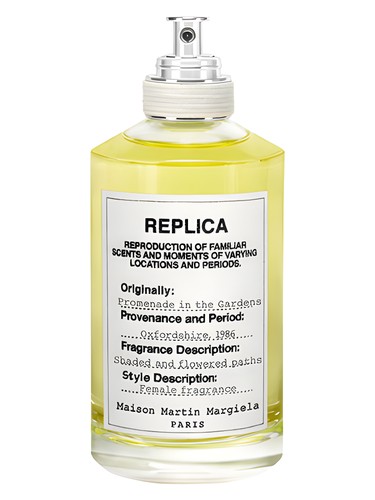
The first spray of Promenade In The Gardens transports you to that liminal moment just after dawn, when dew still clings to petals and the garden hasn''t yet surrendered to the full heat of day. There''s an immediate crispness—green notes mingling with freesia''s watery transparency—cut through with coriander''s peculiar spiciness. It''s not the manicured formality of Versailles you''re entering, but something more alive, more verdant. Maison Martin Margiela''s 2013 creation announces itself as distinctly woody from the outset (that dominant 100% woody accord isn''t deceiving), yet there''s a floral luminosity hovering just beneath, waiting for its moment to bloom.
This is a fragrance that wears its duality openly: it''s green without being sharp, floral without tilting into sweetness, woody without becoming austere. The opening feels like pushing through garden gates where wild roses climb wooden trellises weathered by seasons past.
The Scent Profile
The journey begins in verdant territory. Those green notes arrive with conviction, accompanied by freesia''s delicate, almost soapy freshness. But it''s the coriander that proves most intriguing here—a subtle herbal punctuation that prevents the opening from becoming too predictable. This isn''t simply "fresh"; it''s alive with complexity, like crushing herb stems between your fingers while walking garden paths.
As the fragrance settles, the heart reveals Maison Margiela''s true intention. Turkish rose takes center stage alongside peony and jasmine sambac, creating a floral composition that reads as sophisticated rather than traditionally feminine. The rose accord (scoring 76% in community perception) is rich but grounded, never veering into the syrupy territory of conventional rose perfumes. The jasmine sambac adds an indolic whisper—just enough to suggest night-blooming flowers without overwhelming the composition''s daylight sensibility. Peony brings a soft, slightly peppery quality that bridges the green opening with the deeper elements to come.
Then comes the transformation that defines this fragrance''s character. The base notes introduce patchouli, vetiver, and Australian sandalwood in a trio that shifts everything earthward. This isn''t a clean fadeout; it''s a deliberate descent into the garden''s foundation—the soil, the wood chips, the roots beneath roses. The patchouli (registering at 63% in accord prominence) is earthy rather than hippie-sweet, while vetiver adds its characteristic woody-smoky depth. Australian sandalwood, creamier than its Indian cousin, softens the edges without diluting the composition''s woody conviction.
What emerges is a fragrance that refuses simple categorization—97% floral yet 100% woody, with earthy undertones (54%) grounding everything in reality.
Character & Occasion
The community has spoken clearly on this point: Promenade In The Gardens is spring incarnate (100% seasonal alignment). This is the fragrance equivalent of that perfect April afternoon when winter''s harshness has finally broken but summer''s humidity hasn''t yet arrived. Summer wears it well too (65%), particularly in the morning hours before heat intensifies.
With an 88% daytime rating versus just 16% for evening, this is decidedly a daylight composition. It suits garden parties, outdoor lunches, museum visits, studio time—moments that call for presence without dominance. Fall (37%) and winter (13%) are less hospitable seasons, though on a mild autumn day, that earthy patchouli-vetiver base could find its place.
This is marketed as feminine, yet the woody dominance gives it a sophisticated androgyny that could work beautifully for anyone drawn to green-floral compositions with backbone. It''s for those who want florals without sweetness, who appreciate rose that doesn''t announce itself from across a room, who understand that elegance often speaks in measured tones.
Community Verdict
A rating of 3.8 out of 5 from 526 voters tells a nuanced story. This isn''t a crowd-pleaser chasing universal approval, nor is it a polarizing experimental work. It''s a well-executed composition that delivers on its premise—a garden walk captured in liquid form—without necessarily breaking new ground. The solid vote count suggests steady interest rather than viral enthusiasm, which actually suits this fragrance''s contemplative character.
Those seeking complexity and natural-feeling development will rate it higher. Those wanting either pure floral prettiness or bold woody intensity might find it occupying an in-between space that doesn''t fully satisfy either craving.
How It Compares
The similar fragrances list reads like a who''s who of sophisticated rose-woody compositions: Tom Ford''s Noir de Noir, Frederic Malle''s Portrait of a Lady, Chanel''s Coco Noir. This places Promenade In The Gardens in serious company—fragrances that reimagine rose through darker, woodier, more contemporary lenses.
Where it distinguishes itself is in that green opening and overall lighter hand. While Portrait of a Lady drowns you in rose-patchouli opulence and Noir de Noir leans heavily into truffle-laden darkness, Margiela''s creation maintains an airiness, a literal garden-walk feeling versus those perfumes'' more abstract interpretations. Byredo''s Bal d''Afrique and La Tulipe share that sophisticated floral-with-attitude approach, positioning this firmly in modern niche territory despite the Margiela house''s fashion pedigree.
The Bottom Line
Promenade In The Gardens succeeds at exactly what it attempts: translating the experience of a spring garden stroll into wearable form. It won''t make you weep with emotion or turn heads dramatically, but it will make you feel polished, grounded, and effortlessly put-together during daylight hours when spring or summer air calls for something both fresh and substantial.
At 3.8 stars, this is a fragrance worth exploring if you''re drawn to woody florals that favor sophistication over sweetness. It''s particularly compelling for those who find traditional florals too light but heavy orientals too much—it occupies that Goldilocks zone with confidence. Whether it deserves permanent collection status depends on how often you need a refined daytime spring signature, but it certainly merits a test wear when garden season arrives.
KI-generierte redaktionelle Rezension