First Impressions
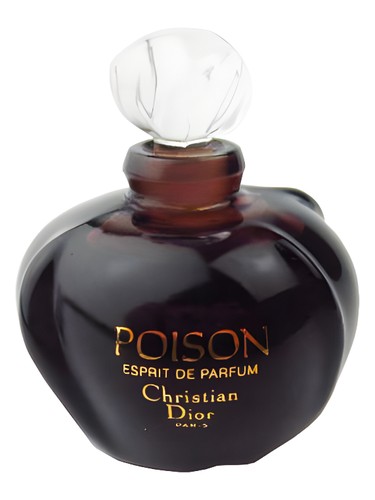
The first spray of Poison Esprit de Parfum feels like stepping into a velvet-draped boudoir where the air itself seems to shimmer with intention. This isn''t a fragrance that whispers—it announces. The opening bursts forth with an unexpected juxtaposition: plum and forest fruits collide with the licorice-sharp bite of anise, while palisander rosewood adds an aromatic, almost medicinal edge. Pepper and coriander provide a spicy scaffolding that keeps the sweetness from tipping into cloying territory. Within seconds, you understand this is Poison taken to its logical, uncompromising conclusion—everything that made the original notorious, now concentrated into something even more formidable.
The Scent Profile
The evolution of Poison Esprit de Parfum is less a gentle unfolding and more a calculated seduction that grows richer and more enveloping with each passing hour.
Those opening moments, dominated by the dark fruit and spice combination, give way relatively quickly to a heart that can only be described as opulent excess. Tuberose—that most polarizing of white florals—takes center stage, its creamy, almost narcotic quality amplified by honey''s golden viscosity. But Dior doesn''t let this become a straightforward white floral bomb. Instead, incense smoke weaves through the composition, adding mystery and depth, while cloves and cinnamon inject a warm spiciness that borders on the gourmand without ever fully crossing that line.
The presence of opoponax (sweet myrrh) adds a balsamic sweetness that bridges the gap between the floral elements and the resins, while classic rose, jasmine, and orange blossom provide traditional perfumery elegance. Yet these florals don''t read as fresh or green—they''re steeped in shadow, candied in honey, veiled in incense smoke.
As the fragrance settles into its base—and with parfum concentration, this can take several hours—the amber accord that defines this scent''s DNA emerges in full force. It''s a rich, almost edible amber, sweetened by vanilla and softened by heliotrope''s almond-like powder. Musk provides warmth and skin-like intimacy, while a trinity of woods (sandalwood, vetiver, and cedar) keeps the composition from becoming too sweet or too soft. This base has remarkable tenacity; expect it to linger on skin and clothing for well over twelve hours.
Character & Occasion
Make no mistake: Poison Esprit de Parfum is a winter and fall fragrance first and foremost. The community data reflects this decisively, with 97% rating it ideal for winter and 85% for fall. Those spring and summer numbers (25% and 22% respectively) tell you everything you need to know about its weight and intensity. This is a fragrance for cold weather, for evenings when the temperature drops and the air feels heavy with possibility.
The day versus night breakdown is even more revealing: 35% day, 100% night. This is evening wear, pure and simple. It''s too rich, too intense, too deliberately seductive for most daytime contexts. Think opera openings, intimate dinner parties, winter weddings after dark. It''s for moments when you want to be remembered, when subtlety would be a missed opportunity.
Who wears this? Someone confident in their choices, unafraid of making an impression. The feminine classification is there, but this transcends simple gender boundaries—it''s for anyone who appreciates bold, statement-making fragrances with old-school DNA and modern intensity.
Community Verdict
With a rating of 4.56 out of 5 from 888 votes, Poison Esprit de Parfum has earned serious respect from those who''ve experienced it. This isn''t a niche curiosity with a handful of devotees—nearly 900 people have weighed in, and the overwhelming majority find it exceptional. That rating suggests a fragrance that delivers on its promises, that lives up to the Poison legacy while offering something distinct enough to warrant its existence alongside the original.
The high rating combined with the smaller vote count (compared to mainstream bestsellers) also suggests this is somewhat of a connoisseur''s choice—known and loved by those who seek it out, perhaps less discovered by casual fragrance buyers.
How It Compares
The comparison list reads like a who''s-who of legendary powerhouse fragrances: the original Poison, Chanel''s Coco Eau de Parfum, Cacharel''s LouLou, the 1977 Opium, and Tom Ford''s Black Orchid. These are the heavy hitters, the fragrances that defined and continue to define the oriental and amber categories.
Where Poison Esprit de Parfum distinguishes itself is in its particular balance of accords. While the original Poison leans more aromatic and spicy, this esprit version amplifies the amber and sweet elements (100% and 96% respectively) while maintaining serious woody depth (91%). It''s warmer and more enveloping than its predecessor, closer perhaps to Opium''s spiced richness but with more prominent white florals. Against Black Orchid, it trades some of the chocolate-patchouli earthiness for honey-soaked incense and fruit.
The Bottom Line
Poison Esprit de Parfum occupies a particular space in the fragrance landscape—it''s for those who miss (or never stopped loving) the unapologetic powerhouses of decades past, but who want parfum-level intensity and longevity. At 4.56 out of 5, it''s clearly succeeding at what it sets out to do.
This isn''t an everyday fragrance for most people, nor should it be. It''s too special, too intense, too deliberately crafted for maximum impact. But for cold-weather evenings, for moments when you want a fragrance that matches your boldest mood, it delivers magnificently.
Should you try it? If you love any of the fragrances in its comparison set, absolutely. If you appreciate amber, warm spice, and white florals that lean dark rather than fresh, yes. If you want something safe and universally appealing, look elsewhere. Poison Esprit de Parfum knows exactly what it is, and it makes no apologies.
KI-generierte redaktionelle Rezension