First Impressions
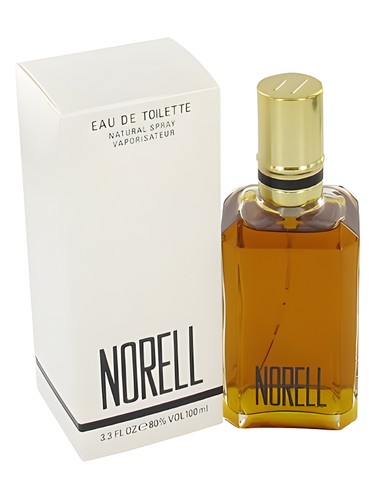
The first spray of Norell is a declaration, not a whisper. A burst of bitter-green galbanum collides with narcissus and hyacinth, creating an opening that feels less like a 1968 perfume and more like a manifesto. This is not the demure floral your grandmother might have dabbed politely behind her ears—though she very well may have worn it. Instead, it''s an aromatic force field, vibrant with crushed green stems and bright citrus accents from bergamot, lemon, and mandarin orange. There''s lavender too, adding a curious herbal dimension that keeps you from categorizing this as simply "floral." From the first moment, Norell makes clear it has no interest in being easy to love—only impossible to ignore.
The Scent Profile
The evolution of Norell reads like a masterclass in complexity. Those fierce green and aromatic opening notes—galbanum chief among them—gradually soften to reveal an opulent heart that could furnish an entire conservatory. Here, carnation takes center stage with its spicy, clove-like warmth, surrounded by a supporting cast that includes arum lily, rose, mimosa, iris, gardenia, ylang-ylang, jasmine, and orchid. But this isn''t a sweet, gauzy floral haze. The addition of coriander, cardamom, and cinnamon ensures that the 62% warm spicy accord weaves throughout, preventing any single flower from dominating and giving the composition an almost architectural quality.
The base is where Norell reveals its full vintage sophistication. Oakmoss arrives with all the earthy, bitter depth that makes chypres so compelling, while vetiver adds its characteristic smoky grassiness. Myrrh brings a resinous, slightly medicinal quality that feels both ancient and modern. Then come the warmer elements: musk, amber, cedar, sandalwood, and just a whisper of vanilla to round out the edges without sweetening the overall character. This woody, mossy foundation (60% woody accord) ensures Norell doesn''t just fade away—it transforms, settling into something deeper and more contemplative than its exuberant opening suggested.
Character & Occasion
With an 85% fall rating leading the seasonal pack, Norell clearly comes into its own as leaves begin to turn. The aromatic and green qualities that dominate (100% and 99% respectively) feel perfectly suited to crisp autumn air, while the warm spices and woody base notes provide comfort as temperatures drop. Spring follows closely at 67%, which makes sense—that aggressive green opening must feel like bottled renewal against March winds. Winter scores 61%, suggesting Norell has enough warmth to hold its own in cold weather, though summer''s modest 47% rating indicates this might be too much fragrance for genuine heat.
The day/night split is revealing: 100% day versus 77% night. This is fundamentally a daytime fragrance, one that commands attention in conference rooms and lunch meetings rather than candlelit dinners. It''s assertive without being seductive, sophisticated without being soft. The woman who wears Norell doesn''t need evening''s cover of darkness—she''s most herself in full daylight.
Community Verdict
Here''s where the story gets interesting: Norell has essentially vanished from contemporary conversation. Despite its solid 4.16 rating from 385 votes, it didn''t appear once in the Reddit community discussions analyzed. Not in threads about vintage favorites, not in conversations about family fragrance memories, not even in lists of scents that provoke strong reactions. This absence speaks volumes—not necessarily about quality, but about cultural memory. Norell exists in a strange liminal space, appreciated by those who know it (hence the respectable rating) but absent from the discourse that shapes modern fragrance culture.
The lack of specific community pros and cons leaves us without the usual insights into longevity, projection, or reformulation concerns. This silence could indicate several things: Norell may be difficult to find, it may appeal to a demographic less active on Reddit, or it may simply have been eclipsed by louder, more marketing-heavy releases.
How It Compares
The similar fragrances list reads like a who''s who of sophisticated 1970s and 1980s femininity: Fidji by Guy Laroche, Magie Noire by Lancôme, Miss Dior (presumably the original chypre), Paloma Picasso, and Aromatics Elixir by Clinique. These are all fragrances that share Norell''s unapologetic character—green, complex, built for women who didn''t need to smell sweet or approachable. Where Norell distinguishes itself is in that pronounced aromatic accord, the lavender and galbanum combination that gives it a sharper, more herbaceous quality than some of its floral-dominant contemporaries.
The Bottom Line
A 4.16 rating from 385 voters suggests Norell has genuine admirers, even if they''re not loudly championing it online. This is a fragrance for someone seeking an alternative to modern fruitiness and sugar—someone who wants to smell interesting rather than pretty, sophisticated rather than sexy. It''s not a safe blind buy. That opening can be polarizing, and the overall composition demands confidence to wear.
But for those drawn to green chypres, vintage-style complexity, and fragrances with genuine personality, Norell deserves investigation. It''s a piece of olfactory history from Norman Norell, the American fashion designer who understood that elegance doesn''t require softness. Track down a sample if you can. You might discover that what 1968 considered modern femininity still has something to say.
KI-generierte redaktionelle Rezension