First Impressions
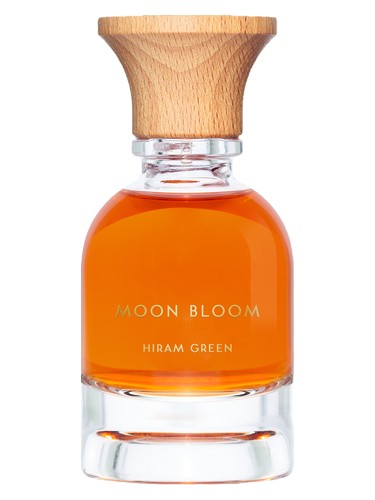
The first spray of Moon Bloom feels less like an introduction and more like an invasion. There''s no gentle handshake here, no polite small talk—this is tuberose at its most uncompromising, a creamy-green wave that announces itself before you''ve even capped the bottle. Hiram Green''s 2013 creation doesn''t whisper; it proclaims. The white floral presence is immediate and enveloping, with that characteristic tuberose intensity that can stop conversations mid-sentence. It''s the olfactory equivalent of walking into a hothouse at midnight, where blooms have been exhaling their perfume into humid darkness for hours.
What strikes you isn''t just the volume—though at a dominant 100% white floral accord, volume is certainly part of the story—but the naturalness of it all. This is tuberose rendered with what feels like botanical accuracy, Green''s commitment to all-natural ingredients translating into a fragrance that smells less like a perfume and more like an actual night garden come alive.
The Scent Profile
Without specified notes to guide us, Moon Bloom reveals itself through its accord architecture, and what an architecture it is. The white floral dominance is anchored by tuberose at 68%—not just present, but insistent. This isn''t tuberose playing supporting actress; it''s the star, the director, and half the crew.
The 40% green accord provides crucial counterbalance, offering a stem-snapping freshness that prevents the composition from collapsing into pure confectionery. You can almost smell the chlorophyll, the wet leaves, the living-plant aspect that reminds you these flowers grow from earth, not fantasy. This green quality weaves throughout the fragrance''s evolution, a thread of reality in what could otherwise become an exercise in pure hedonism.
Yellow florals emerge at 36%, likely adding nuance and complexity—perhaps jasmine or ylang-ylang lending their voices to the choir. The sweetness (29%) is notable but restrained enough to feel integral rather than additive, while a surprising 28% coconut accord brings an almost suntan-oil creaminess that both enhances the tropical feel and amplifies the composition''s already considerable richness.
The development is less about distinct phases and more about slow-burning intensity. This is a fragrance that establishes its character immediately and then simply persists, radiating outward with impressive tenacity. The all-natural construction means the evolution happens gradually, organically, without the sharp transitions you might find in fragrances built with synthetics.
Character & Occasion
Moon Bloom carries a paradox in its DNA: listed as suitable for all seasons yet possessing an intensity that feels decidedly selective. The 4.17 rating from 967 votes suggests broad appreciation, but the community data tells a more nuanced story. This is evening territory—the kind of fragrance that feels too substantial for office fluorescents but perfect for candlelight. Special occasions, absolutely. Cold weather provides the ideal backdrop, where the richness can unfold without becoming oppressive.
Despite the "feminine" designation, Moon Bloom''s boldness transcends conventional gender boundaries. This is for anyone who wants to be noticed, who appreciates tuberose in all its narcotic glory, who doesn''t flinch at fragrance that announces rather than suggests. It''s not a first-date perfume unless you''re very certain about the kind of impression you want to make. It''s a statement piece, the olfactory equivalent of a dramatic white dress or a perfectly cut tuxedo.
Community Verdict
The r/fragrance community approaches Moon Bloom with respect tinged with caution, reflected in that mixed 6.5/10 sentiment score from 61 opinions. The divide is clear and significant.
Supporters praise exactly what you''d expect: the projection and presence are described as "screams/loud," making it a notable entry in the white floral canon worth sampling. For tuberose devotees, this delivers the authentic, unfiltered experience they crave.
But the criticism is equally pointed and more prevalent. "Very heavy and headache-inducing for many wearers" appears as a consistent refrain. Those preferring softer or greener florals find themselves quickly overwhelmed. The intensity that makes it compelling to some renders it unwearable for others, with multiple mentions of it being too much in certain contexts—which, reading between the lines, seems to mean "most contexts."
The consensus positions it firmly in special occasion territory, particularly for evening wear and cold weather, suggesting that even admirers recognize this isn''t an everyday proposition.
How It Compares
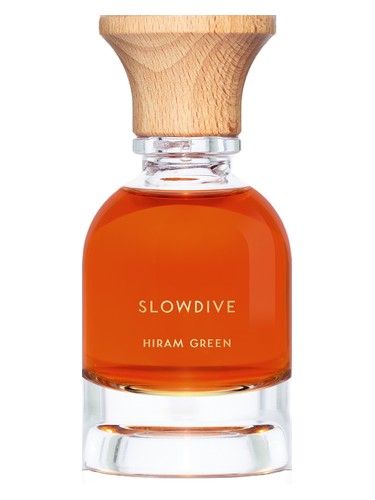
Moon Bloom sits comfortably among the heavy hitters of white floral perfumery. The comparisons to Fracas by Robert Piguet and Carnal Flower by Frederic Malle position it in distinguished company—these are the tuberose benchmarks against which others are measured. Narcotic Venus by Nasomatto shares similar intensity, while Slowdive, another Hiram Green creation, suggests a house style that favors bold, natural compositions. Fleurs d''Oranger by Serge Lutens rounds out the comparison set, though it leans more orange blossom than tuberose.
What distinguishes Moon Bloom is its uncompromising naturalism. Where some of these comparisons achieve their effects through careful synthetic enhancement, Green''s all-natural approach creates a different texture entirely—rawer, perhaps less refined, but arguably more authentic to the actual flower.
The Bottom Line
Moon Bloom is a fragrance of conviction, and it demands conviction from its wearer. The 4.17 rating suggests technical excellence and passionate admirers, but the community sentiment reveals the truth: this polarizes. If you''ve ever smelled a tuberose fragrance and thought "lovely, but I wish it were louder," Moon Bloom is your answer. If you approach white florals cautiously, this will confirm your worst fears.
Sample before committing. This is emphatically not a blind-buy fragrance, regardless of how compelling the notes sound on paper. For tuberose lovers and those who wear fragrance as armor rather than accessory, it''s worth every penny. For everyone else, it''s a masterclass in why intensity, however well-executed, isn''t universally appealing.
At its best, Moon Bloom captures something truly nocturnal and mysterious. At its most challenging, it reminds us that nature, in its full expression, doesn''t always play nice.
KI-generierte redaktionelle Rezension