First Impressions
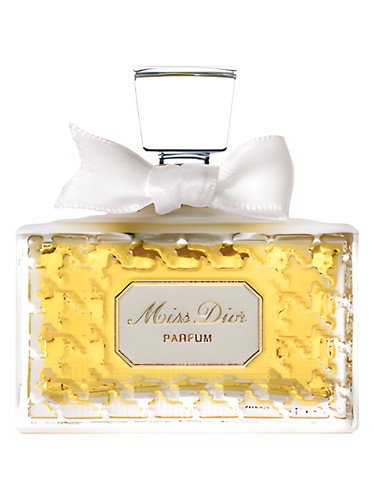
The first spray of Miss Dior Parfum is a revelation in green. Not the crisp, dewy green of cut grass or the bright zest of lime—this is galbanum in its full, unapologetic glory. It hits with an almost resinous intensity, a verdant declaration that transports you to a formal garden still wet with morning dew, where elegance isn''t soft or demure but bold and architectural. This is the scent that Christian Dior launched in 1947, named for his sister Catherine (whose Resistance code name was "Miss Dior"), and it wears its heritage with pride. There''s nothing coy here, nothing winking at current trends. This is old-school perfumery at its most confident.
The Scent Profile
The galbanum opening doesn''t merely introduce the fragrance—it dominates the first act entirely. With green registering at 100% in the accord profile, this isn''t a note that plays nicely with others initially. It''s sharp, slightly bitter, with that characteristic galbanum quality that smells somehow both natural and otherworldly. For those accustomed to sweet, fruity openings, this might feel stark, even austere. But give it time.
As the green subsides—and it does, though never entirely—jasmine emerges at the heart. This isn''t jasmine as a solo soprano; it''s jasmine woven into a complex floral tapestry that reads as "white floral" at 90% intensity. The jasmine here is indolic but refined, rich without being cloying. Some community members note a cooked strawberry compote quality that adds unexpected depth—a jammy, slightly caramelized sweetness that softens the composition''s severe edges without compromising its sophistication.
The base is where Miss Dior Parfum reveals its true character. Patchouli anchors everything at 90% intensity, but this isn''t the headshop patchouli of popular imagination. It''s earthy, yes, but also balsamic (57%) and woody (54%), creating a foundation that feels both grounded and elevated. There''s an aromatic quality (50%) that keeps the base from becoming too heavy, maintaining that thread of green that runs through the entire composition. This is a chypre in the classical sense—structured, balanced, and utterly timeless.
Character & Occasion
The data tells a compelling story about Miss Dior Parfum''s versatility. It scores 100% for fall wear, and you can understand why—that combination of green galbanum and earthy patchouli feels perfectly suited to crisp autumn air and the transitional mood of the season. But spring follows closely at 85%, which makes equal sense; this is fundamentally a garden fragrance, however formal that garden might be.
What''s particularly interesting is the day/night split: 92% day versus 76% night. This isn''t a fragrance that transforms dramatically from boardroom to ballroom—it remains consistent, elegant, and polished throughout. The community identifies it as ideal for office and professional settings, and the data supports this. There''s nothing overtly seductive here, nothing that demands attention. Instead, it commands respect.
The parfum concentration means longevity and sillage are significant. This isn''t a fragrance you''ll need to reapply at lunch, but neither is it a room-dominator. It creates a distinguished presence rather than an overwhelming one—perfect for everyday wear, as the community notes, without becoming monotonous.
Community Verdict
With a 4.39 out of 5 rating from 343 votes and a positive sentiment score of 7.5/10, Miss Dior Parfum enjoys genuine appreciation, though not without some caveats. The 34 community opinions reveal a fragrance that satisfies a specific desire: those seeking a floral, elegant composition prefer it over the EDP version. The parfum concentration delivers the complexity and depth that this formula deserves.
However—and this is crucial—anyone hoping to recapture the discontinued Miss Dior Cherie will be disappointed. The community is clear on this point: the current Miss Dior Parfum is notably different and considerably less sweet than that beloved iteration. Some find the current version lacks the sweetness of older formulations entirely, which depending on your perspective is either a drawback or a return to form.
There''s also a practical concern: formulation varies between spray and rollerball versions. For a parfum-concentration fragrance at this price point, consistency across formats should be a given. This inconsistency frustrates consumers who deserve reliability from a heritage house like Dior.
How It Compares
Miss Dior Parfum sits in distinguished company among green chypres. Its similarity to Chanel N°19 (and its EDP flanker) is notable—both embrace that assertive galbanum opening and sophisticated floral heart. Knowing by Estée Lauder occupies similar territory, though perhaps with more aldehydic sparkle. Interestingly, Coco Mademoiselle appears in the comparison list despite being sweeter and more patchouli-forward, suggesting that fans of one might appreciate the other''s structural sophistication even if the personalities differ.
Within Dior''s own Miss Dior line, the Parfum stands as the most classical expression, the one most faithful to the 1947 original''s spirit if not its exact formulation. It''s less approachable than the current EDT or EDP versions, but for many, that''s precisely the point.
The Bottom Line
Miss Dior Parfum isn''t trying to be your best friend—it''s too refined for that, too rooted in a particular aesthetic tradition. This is a fragrance for those who appreciate perfumery''s architectural potential, who understand that "wearable" doesn''t have to mean "easy," and who possess the confidence to carry a scent with this much presence.
At 4.39 out of 5, the rating reflects genuine quality and a devoted following, even if it''s not a crowd-pleaser in the contemporary sense. If you gravitate toward green fragrances, appreciate classic chypres, or simply want something that stands apart from current sweet-and-fruity dominance, Miss Dior Parfum deserves your attention. Just smell it first—preferably the actual format you intend to purchase—and go in understanding that this is decidedly not Miss Dior Cherie''s successor. It''s something more challenging, more rewarding, and ultimately more enduring.
KI-generierte redaktionelle Rezension