First Impressions
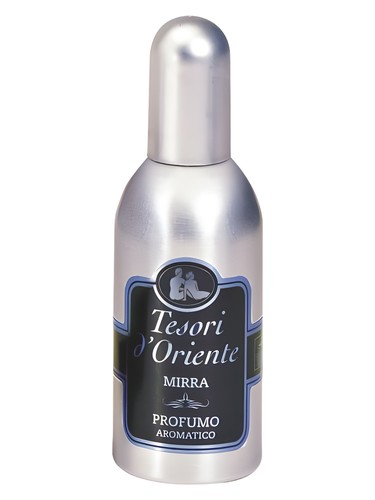
The first spray of Mirra reveals an intriguing paradox: sunshine filtering through an incense-filled temple. Orange and bergamot burst forth with Mediterranean brightness, their citrus sparkle immediately tempered by the delicate softness of peony. But this cheerful opening is merely a veil—within minutes, you sense the weight of something ancient stirring beneath. The resinous heart announces itself quickly, transforming what could have been a simple floral-citrus into something far more complex and brooding. This is Tesori d''Oriente''s signature approach: accessible orientalism that doesn''t underestimate its wearer''s sophistication.
The Scent Profile
Mirra''s evolution tells the story of its namesake—myrrh, that biblical resin synonymous with ceremony and transformation. The opening duo of orange and bergamot provides just enough luminosity to keep the composition from diving immediately into its amber-dominant soul. Peony adds a whisper of fresh floralcy, soft and slightly soapy, creating a buffer zone between bright and brooding.
The heart is where Mirra truly reveals its character. Myrrh takes center stage alongside amber, benzoin, and opoponax—a quartet of resins that creates a balsamic warmth so enveloping it borders on hypnotic. This isn''t the sharp, medicinal myrrh of pure essential oil; instead, it''s rounded and sweetened, almost honey-like, with benzoin''s vanilla-tinged softness mellowing any austere edges. Opoponax adds a subtle spiciness and depth, that warm, slightly animalic quality that makes oriental fragrances feel alive on skin rather than simply applied to it.
The base extends this resinous reverie with vanilla, sandalwood, musk, and cedar. The vanilla here isn''t gourmand or dessert-like; it functions more as a binding agent, a sweet undertone that harmonizes with the amber rather than competing for attention. Sandalwood provides creamy woodiness while cedar adds structure—a gentle backbone that prevents all that balsamic sweetness from becoming cloying. Musk rounds everything out with skin-like warmth, that barely-there intimacy that makes oriental fragrances feel like second skins.
The accord breakdown confirms what your nose tells you: this is amber first and foremost (100%), followed by balsamic (37%), warm spicy (36%), vanilla (34%), woody (34%), and powdery (32%) characteristics. It''s a masterclass in balance—intensely amber-focused yet nuanced enough to avoid single-note monotony.
Character & Occasion
With winter scoring 100% and fall at 93% in seasonal preferences, Mirra is unambiguously a cold-weather companion. This is a fragrance that blooms in crisp air, its warmth providing olfactory comfort when temperatures drop. Spring scores a modest 48%, suggesting it can transition into milder weather for those who prefer their fragrances on the warmer side, but summer''s 27% makes clear this isn''t pool-party material.
The day/night split is revealing: 81% day to 70% night suggests remarkable versatility. Mirra possesses enough brightness and powder to feel appropriate for professional settings and daytime wear, yet its balsamic depth and oriental structure carry it confidently into evening. This dual nature makes it particularly valuable—one bottle that transitions from desk to dinner without feeling mismatched to either context.
This is a fragrance for those who appreciate warmth without heaviness, complexity without confusion. The feminine designation fits its soft powdery elements, but anyone drawn to amber-forward orientals will find it compelling.
Community Verdict
A 3.82 out of 5 rating from 677 votes places Mirra firmly in "very good" territory—not a universal masterpiece, but clearly resonating with a substantial audience. This isn''t a niche darling with 47 reviews from devotees; nearly 700 people have weighed in, giving this assessment genuine statistical weight.
The rating suggests a fragrance that delivers on its promises without necessarily revolutionizing the oriental category. Some may find it too sweet, others might wish for more complexity, but the solid score indicates consistent quality and broad appeal. For a brand operating at accessible price points, these numbers represent genuine success.
How It Compares
The similar fragrances list reads like a greatest-hits of amber orientals: Obsession by Calvin Klein, Shalimar Eau de Parfum by Guerlain, LouLou by Cacharel, and Poison by Dior. This is exalted company—iconic fragrances that defined the category. That Mirra draws comparisons to Shalimar, arguably the most influential oriental ever created, speaks volumes about its ambition and character.
Where does Mirra stand among these legends? It''s softer than Poison''s bombastic spice, less overtly sensual than Obsession, and more linear than Shalimar''s complex evolution. Within the Tesori d''Oriente range, the similarity to Vaniglia e Zenzero del Madagascar suggests a house style—accessible orientalism with quality ingredients at remarkable value.
The Bottom Line
Mirra succeeds at what it attempts: delivering amber-dominant oriental warmth with enough complexity to remain interesting, at a price point that makes experimentation risk-free. The 3.82 rating reflects honest appreciation—this isn''t perfection, but it''s very good at what it does.
The value proposition here cannot be ignored. While exact pricing varies by market, Tesori d''Oriente positions itself as accessible luxury, and Mirra delivers composition quality that outperforms its price tag. Is it Shalimar? No. But it captures a similar spirit—resinous, warm, enveloping—without requiring significant investment.
Who should try it? Anyone curious about amber orientals but intimidated by premium pricing. Those seeking a reliable cold-weather signature that works across contexts. Fans of balsamic, resinous warmth who appreciate when vanilla plays supporting rather than starring roles. And anyone who''s loved classic orientals but wishes they came with less formality and more approachability.
Mirra reminds us that sophistication isn''t always expensive, and that sometimes the most satisfying fragrances are those that simply do what they promise—well, warmly, and without pretension.
KI-generierte redaktionelle Rezension