First Impressions
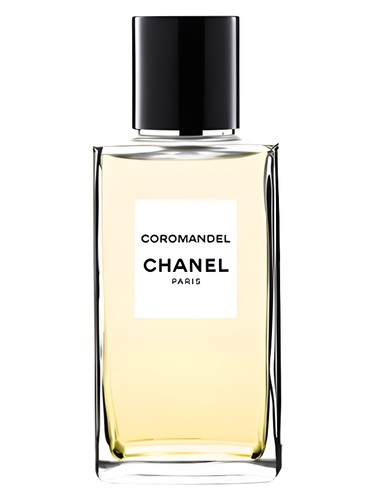
The first spray of Coromandel announces itself with a brightness that belies the depth to come. Bitter orange and neroli create a sparkling citrus veil, a momentary flash of sunshine before the curtain rises on something far more opulent. This isn''t the fresh, airy citrus of a summer cologne—it''s a prelude, a deliberate contrast to the rich amber-woody heart that begins to unfold within minutes. There''s an immediate sense that you''re experiencing something crafted with intention, a fragrance that knows exactly where it''s taking you and refuses to rush the journey.
The Scent Profile
Coromandel''s evolution is a masterclass in complexity without chaos. Those opening citruses—bitter orange, neroli, and supporting citrus notes—quickly give way to the fragrance''s true character. The heart reveals a sophisticated interplay between earthy patchouli and powdery orris, softened by whispers of rose and jasmine. This isn''t a floral fragrance by any measure, but rather one that uses florals as texture, adding dimension to the dominant patchouli accord that registers at 61% of the overall composition.
But it''s in the base where Coromandel truly distinguishes itself. Here lies a symphony of warmth: benzoin and Tahitian vanilla create a sweet, resinous foundation, while white chocolate adds an unexpected gourmand twist that never tips into dessert territory. Incense and olibanum weave through with smoky tendrils, grounding the sweetness with sacred, meditative depth. Woodsy notes and musk anchor everything, ensuring that despite the vanilla and chocolate, this remains firmly in amber-woody territory—the dominant accord at 100%—rather than straying into pure oriental sweetness.
The overall impression is one of warm spice (74%) and balsamic richness (53%), with that patchouli heart acting as the fragrance''s backbone. It''s simultaneously cozy and sophisticated, sweet but not cloying, woody without being austere.
Character & Occasion
Coromandel is unequivocally a cold-weather companion. The data speaks clearly: this is a fall (100%) and winter (99%) fragrance, one that wraps you in warmth when the temperature drops. While it can be worn in spring (40%) for cooler days, attempting this in summer (20%) would be fighting against its nature—this is a fragrance that wants to envelop, not refresh.
Interestingly, it straddles the day-night divide with remarkable versatility. While it performs slightly better at night (86% versus 81% for day wear), Coromandel adapts to both contexts. During daylight hours, its sophistication reads as polished confidence; after dark, that same richness becomes more intimate and seductive. This is the rare fragrance that can carry you from a winter afternoon meeting through an evening dinner without feeling out of place.
Though marketed as feminine, the woody-amber dominance and prominent patchouli give Coromandel a complexity that transcends traditional gender boundaries. This is a fragrance for someone who appreciates depth over prettiness, warmth over freshness.
Community Verdict
Here''s where the story becomes complicated. With a strong rating of 4.39 out of 5 from 4,626 voters, Coromandel is clearly beloved by those who wear it. The Reddit fragrance community expresses deep admiration—it''s described as "highly desirable," a scent people "fall in love with," something "memorable and distinctive" that''s genuinely "worth experiencing."
But sentiment sits at a middling 6.5 out of 10, and the reason becomes clear when you examine the concerns. The fragrance has been discontinued or significantly reformulated, creating a secondary market nightmare. Prices have inflated to $450-$1000 or more, transforming what should be a luxury purchase into a potentially regrettable investment. The community is torn: those who''ve experienced it treasure it, but many actively warn others away from chasing it.
The consensus among the 19 community opinions analyzed? Coromandel is caught between being a masterpiece and a cautionary tale. If you can secure a bottle at a reasonable price, it''s worth having for special occasions. But the risk of falling in love with something you cannot replenish—or worse, spending exorbitant amounts on the secondary market—makes this a fraught purchase. Some suggest seeking alternatives like Chanel Le Lion instead.
How It Compares
Coromandel occupies distinguished company among amber-woody powerhouses. Its closest relatives include Dior''s Dune (another amber-woody meditation), Chanel''s own Coco Noir and Coco Eau de Parfum (family resemblance in the warm, spicy territory), Tom Ford''s Black Orchid (sharing that dark, luxurious sensuality), and Guerlain''s Shalimar Eau de Parfum (the oriental-amber heritage connection).
What distinguishes Coromandel is its particular balance: more overtly woody than Shalimar, sweeter than Dune, less aggressively dark than Black Orchid. It carves out its own niche with that white chocolate-incense-patchouli combination, creating something that feels both classic and unexpected.
The Bottom Line
Coromandel presents a genuine dilemma. This is objectively excellent perfumery—the rating and passionate devotion prove it. If you encounter it at retail price or can sample it extensively, it''s absolutely worth experiencing. The amber-woody-patchouli construction is beautifully executed, the longevity and sillage are reportedly excellent, and it fills a specific cold-weather niche with sophistication.
But purchasing on the secondary market requires careful consideration. Can you justify spending $450-$1000 on a fragrance you may never be able to replace? Are you comfortable with the possibility of reformulation affecting what''s currently available? Will you resent the purchase if you fall completely in love and face that eventual empty bottle?
Perhaps the wisest approach is this: if you find it, enjoy it, but don''t let it become an obsession. Appreciate Coromandel for what it is—a beautifully crafted amber-woody fragrance—while accepting its impermanence. In some ways, that scarcity might even enhance its appeal. After all, the things we can''t quite hold onto are often the ones we remember most vividly.
KI-generierte redaktionelle Rezension