First Impressions
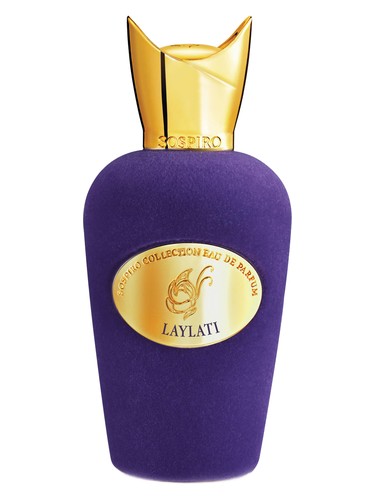
The first spray of Laylati reveals a perfume that refuses simple categorization. Despite its feminine designation, this is a fragrance that speaks in whispers of tobacco smoke and forest floor rather than floral pleasantries. That initial burst brings green notes forward—not the crisp, dewy green of spring gardens, but something darker, more vegetal. It''s the green of crushed stems and sap-stained fingers, a verdant opening that immediately signals this isn''t your typical women''s fragrance. Within moments, you sense the woody architecture beginning to assert itself, that dominant accord already making its presence known at a perfect 100% intensity rating.
There''s an immediate sense of density here, a richness that coats rather than sparkles. Laylati doesn''t announce itself with fanfare; it settles in like twilight, gradual and inevitable.
The Scent Profile
The green opening, while brief, serves as an essential counterpoint to what follows. It provides just enough brightness to prevent the composition from feeling oppressive, a breath of oxygen before diving into deeper waters. As these top notes recede—and they do so quickly—the heart reveals its true intention.
Virginia cedar and patchouli form the central pillar of Laylati''s structure, and they''re rendered with an almost architectural precision. The cedar brings a dry, pencil-shaving quality, slightly resinous but restrained. It''s not the aggressive cedar of some masculine fragrances; instead, it feels polished, almost meditative. The patchouli, registering at 62% in the accord breakdown, adds earthy depth without veering into headshop territory. Together, they create a woody foundation that feels both grounded and sophisticated, accounting for that commanding 100% woody accord rating.
But it''s in the base where Laylati truly reveals its seductive complexity. Tobacco emerges not as a sharp, freshly-lit cigarette note but as something more ambered and sweet—think dried tobacco leaves rather than smoke. At 63% prominence, it weaves through the composition with authority, adding warmth without heat. The musk (62%) provides an animalic undertow, that skin-like quality that makes the fragrance feel intimate, almost intrusive. And then there''s vanilla, the softening agent that rounds everything out, contributing to that 52% powdery accord and 44% sweetness rating. It''s not dessert-like vanilla; it''s the vanilla of aged wood and old books, subtle but essential.
The interplay creates something genuinely compelling: woody but not austere, sweet but not cloying, musky but not overwhelming.
Character & Occasion
The community data tells a clear story about when Laylati thrives. This is emphatically a cold-weather fragrance, rating 100% for winter and 92% for fall. As temperatures drop and skin becomes canvases for richer, more enveloping scents, Laylati comes into its own. The tobacco-vanilla-musk combination that might feel suffocating in July heat becomes a welcome cocoon in November rain.
Spring receives a middling 49% rating, suggesting it can transition into milder weather with some caution—perhaps on cooler evenings or overcast days. Summer, at just 27%, is clearly not this fragrance''s natural habitat.
The day-to-night breakdown is particularly telling: 70% day, but 90% night. While Laylati certainly functions in daylight hours—that woody-powdery quality keeps it office-appropriate—it truly awakens after dark. This is a fragrance for late dinners, gallery openings, evening walks through city streets. The musky, tobacco-rich character gains depth and mystery in darker hours, becoming more suggestive, more intentional.
Despite its feminine classification, the predominantly woody-tobacco-musky profile suggests this wears beautifully on anyone who appreciates darker, more androgynous compositions. This isn''t about gender; it''s about sensibility.
Community Verdict
With a rating of 4.13 out of 5 across 523 votes, Laylati has earned genuine respect from its wearers. That''s a solid score—not stratospheric, but comfortably above the threshold where fragrances become genuinely worth exploring. Over 500 votes provides a meaningful sample size, suggesting this isn''t a niche curiosity but a fragrance that''s found its audience.
The rating suggests a composition that delivers on its promises without necessarily breaking new ground. It''s well-crafted, satisfying, and reliable—qualities that shouldn''t be underestimated in a market saturated with provocative but unwearable experiments.
How It Compares
The list of similar fragrances reads like a who''s-who of sophisticated, woody-oriental compositions: Tom Ford''s Black Orchid and Tobacco Vanille, Lalique''s Encre Noire, Tiziana Terenzi''s Laudano Nero, and Tom Ford''s Oud Wood. This is elevated company, and the comparison is instructive.
Where Black Orchid leans more overtly floral-gourmand and Encre Noire goes darker and more austere, Laylati occupies a middle ground. It shares Tobacco Vanille''s warmth but with more prominent woody notes and less sweetness. Against Oud Wood, it feels less exotic, more grounded in familiar Western perfumery traditions. Laylati offers a more accessible entry point into this genre—sophisticated darkness without requiring a seasoned palate.
The Bottom Line
Laylati (Afgano Puro) is a fragrance that knows exactly what it is: a woody, tobacco-laced composition built for cooler weather and intimate settings. Its 4.13 rating reflects a well-executed vision rather than groundbreaking innovation, and there''s genuine value in that consistency.
This is the fragrance for someone who finds typical feminine perfumes too sweet, too floral, too predictable—but who isn''t ready to fully commit to challenging niche territories. It''s dark without being difficult, sweet without being cloying, musky without being confrontational. If you''ve admired Tom Ford''s darker offerings but found them either too expensive or too intense, Laylati deserves your attention. Spray it on a cool autumn evening and let its velvet shadows unfold.
KI-generierte redaktionelle Rezension