First Impressions
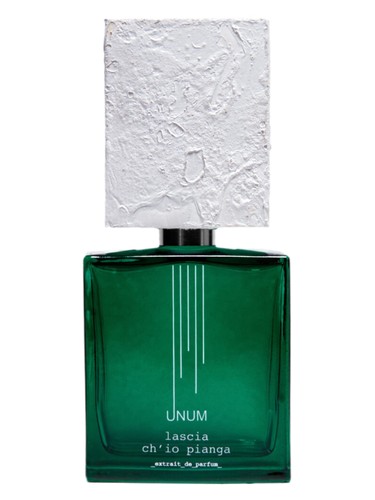
The first spray of Lascia Ch''io Pianga arrives like an intake of breath before song—hushed, trembling, expectant. Named after Handel''s aria "Let Me Weep" from the opera Rinaldo, Filippo Sorcinelli''s 2022 creation opens with a gardenia-led chorus that feels both pristine and emotionally charged. The jasmine and ylang-ylang immediately announce their presence alongside lilac and iris, creating an opening that reads as pure white floral without a single discordant note. There''s something almost devotional here, which makes perfect sense given Sorcinelli''s background as a liturgical organist and designer of sacred vestments. This is white flowers presented not as garden varietals but as altar offerings—intense, unapologetic, and surprisingly emotional for something so immaculately composed.
The Scent Profile
The architecture of this fragrance follows a deceptively simple blueprint: layer upon layer of white petals, each revealing slightly different facets as the composition evolves. The top notes present a gardenia that feels creamy rather than green, its indolic richness tempered by the cooler, almost soapy quality of lilac. Jasmine adds its honeyed warmth while ylang-ylang contributes a subtle banana-like sweetness that could overwhelm in lesser hands but here serves to round out the opening''s sharper edges. The iris, often a powdery presence, remains subtle in this initial phase—more felt than explicitly smelled, adding a soft-focus haze to the brighter florals.
As the fragrance settles into its heart, tuberose claims its throne with absolute authority. This isn''t tuberose as supporting player; this is tuberose as diva, and the 46% tuberose accord rating tells the story accurately. The carnation that accompanies it adds a clove-like spiciness, a warm peppery quality that prevents the composition from becoming too sweet or too overtly tropical. Together, these two create a heated, almost narcotic floral core that radiates from the skin with impressive tenacity. The animalic accord (24%) begins to emerge here—not as something overtly musky or challenging, but as a subtle warmth that gives these pristine flowers a pulse, a hint of skin beneath the petals.
The base reveals its intentions gradually. Tolu balsam, with its vanilla-cinnamon sweetness, wraps itself around the florals like amber resin, adding weight and longevity. The musk serves dual purposes: it amplifies that subtle animalic quality while also creating a soft, skin-like foundation that keeps the white florals from floating away into abstraction. The powdery accord (24%) becomes more pronounced in the dry-down, though this is powder in the classical sense—not baby powder, but the finely milled, slightly vanillic powder of vintage compacts and silk-lined drawers.
Character & Occasion
The community data tells an interesting story about this fragrance''s versatility. Spring registers at 100%, which tracks perfectly—this is fundamentally a celebration of blooming flowers, and it reaches its full glory when the air itself carries the promise of renewal. But the 82% fall rating reveals something more complex: this isn''t a lightweight floral eau. The warmth of the base notes, that touch of spice from the carnation, and the animalic undercurrent give it enough substance to transition into cooler weather without feeling misplaced.
Summer at 73% makes sense for those who gravitate toward richer florals even in heat, while the 53% winter rating suggests it can be worn year-round by true white floral devotees, though it may lack the heft some desire when temperatures plummet. The day/night split (87% day, 78% night) positions this as refreshingly wearable across settings. It''s polished enough for professional environments where you want to make an impression without overwhelming, yet it possesses sufficient depth and sensuality for evening wear.
This fragrance carries a feminine designation, and the composition certainly leans into traditionally feminine floral territory. But anyone drawn to opulent white florals—regardless of gender—will find something compelling here.
Community Verdict
With 4.16 out of 5 stars across 415 votes, Lascia Ch''io Pianga has earned genuine enthusiasm from a substantial community of wearers. This isn''t a niche curiosity with twelve rabid fans inflating the numbers; this is a fragrance that has been tested, worn, and recommended by hundreds. That rating places it firmly in "widely appreciated" territory—high enough to signal real quality and appeal, while the spread of votes suggests some nuance in how it lands on different skin and different preferences.
For a 2022 release to have garnered over 400 reviews already speaks to both Sorcinelli''s growing reputation and the fragrance''s inherent shareability. This is the kind of scent that makes people ask, "What are you wearing?"
How It Compares
The comparison to Carnal Flower by Frederic Malle is telling—both center tuberose as an almost overwhelming presence, though Sorcinelli''s interpretation feels more devotional, less carnal (despite the name coincidence). Where Malle goes for photorealistic tuberose with coconut-suntan-oil associations, Lascia Ch''io Pianga abstracts its florals slightly, adding that liturgical incense-adjacent quality through the iris and balsam.
The similarity to Alien by Mugler might initially seem odd until you consider that both achieve a certain otherworldly, almost cosmic floral intensity. Alien accomplishes this through jasmine and amber; Sorcinelli takes the white floral route but arrives at a similarly transportive result. Golestan by Tauer shares the rose-adjacent, spice-touched quality, while the mentions of Scusami and Opus 1144—both from Sorcinelli''s own line—suggest a coherent artistic vision across his work.
The Bottom Line
Lascia Ch''io Pianga succeeds as both an artistic statement and an eminently wearable fragrance—not always an easy balance. Sorcinelli''s background in sacred arts infuses this composition with a gravitas that elevates it beyond simple prettiness, while the technical execution ensures it remains approachable rather than conceptual. At 4.16 stars, it''s rating precisely where it should: as a very good to excellent fragrance with broad appeal among those who appreciate white florals.
The value proposition depends partly on concentration and pricing (data unavailable), but given the complexity of the composition and the staying power suggested by those base notes, this appears positioned as a serious fragrance worthy of investment. Who should try it? Anyone who loves tuberose, certainly. Those who find Carnal Flower too linear or Le Labo Tubereuse 40 too minimalist. Wearers seeking a white floral with substance, soul, and surprising versatility across seasons.
This is a fragrance that weeps, yes—but beautifully, operatically, with full emotional commitment and technical mastery.
KI-generierte redaktionelle Rezension