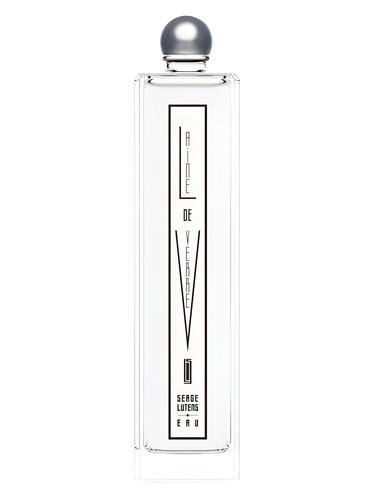
First Impressions
The name translates to "glass wool"—that peculiar insulation material that's both soft and sharp, tactile yet untouchable. It's a fitting paradox for what happens when you first spray Laine de Verre. The fragrance announces itself with a brilliant aldehydic shimmer, that champagne-fizz quality that defined classic perfumery's most glamorous moments. But this isn't your grandmother's aldehydic floral. Instead, Serge Lutens strips away the expected bouquet and leaves you with something more abstract: the smell of cleanliness elevated to art, the scent of light refracting through crystal.
That first encounter is arrestingly fresh, almost aggressively so, like stepping from a steam-filled bathroom into cold air. There's an brightness here that feels both vintage and thoroughly modern, as if Lutens took the architectural bones of mid-century perfumery and rebuilt them with minimalist sensibilities.
The Scent Profile
Without specific note breakdowns to guide us, Laine de Verre reveals itself through its dominant accords—and what a revealing structure it is. The aldehydic accord sits at full intensity, creating that distinctive soapy-metallic sparkle that makes the air around you seem to vibrate. These aldehydes aren't subtle; they're the starring performers, creating an almost effervescent quality that some will find exhilarating and others may perceive as too sharp.
As the fragrance settles, the freshness remains remarkably persistent at 93% intensity, supported by a robust musky foundation at 83%. This is where Laine de Verre establishes its identity: not as a traditional floral or oriental, but as an exploration of cleanliness itself. The musk here isn't animalic or warm—it's more like the ghost of skin after a long bath, that subtle human presence beneath scrubbed-clean surfaces.
Citrus notes weave through at 67%, adding a tart brightness that keeps the composition from becoming too soapy or monotonous. There's a suggestion of lemon peel or perhaps bergamot, though it's blended so seamlessly into the aldehydic framework that you sense it more than smell it distinctly.
The powdery accord at 51% softens the edges as the fragrance dries down, introducing a talc-like quality that evokes cosmetic rituals and vanity tables. A whisper of woodiness (31%) provides just enough structure to prevent the whole composition from floating away entirely, grounding all that ethereal freshness with a hint of cedar or pale sandalwood.
Character & Occasion
The community data speaks clearly: this is a warm-weather fragrance, with 84% favoring it for summer and 81% for spring. That aldehydic-fresh combination thrives in heat, where it can cut through humidity with its crisp, cool presence. In winter, at just 32% approval, Laine de Verre likely feels too brisk, too insubstantial for cozy sweater weather.
The day-to-night split is even more decisive—100% day versus a mere 17% night. This is unequivocally a daytime scent, the olfactory equivalent of white linen and natural light. It's for morning meetings, lunch dates, outdoor markets, and any occasion where you want to project freshness without the weight of traditional perfume. Evening wear would require a different mood entirely; Laine de Verre simply doesn't have the depth or warmth for candlelit dinners or cocktail hour.
Marketed as feminine, it wears in that modern, androgynous way that many Serge Lutens creations do. Anyone drawn to clean, minimalist scents will find something to appreciate here, regardless of gender categories.
Community Verdict
With a rating of 3.55 out of 5 from 628 votes, Laine de Verre occupies interesting middle ground. This isn't a crowd-pleaser or an instant classic—those typically score above 4.0. Instead, it's a fragrance that divides opinion, which makes perfect sense given its uncompromising freshness. The aldehydic accord at full intensity will enchant some and alienate others. There's no middle ground with aldehydes; you either love their sparkling, almost metallic brightness or find them too reminiscent of laundry detergent.
The substantial vote count suggests genuine interest and試wearability despite the moderate score. This is a fragrance people want to explore, even if they don't all fall in love with it.
How It Compares
The lineup of similar fragrances reveals Laine de Verre's position in a fascinating spectrum. Comme des Garcons 2 shares that abstract, aldehydic freshness, while Un Jardin Sur Le Nil by Hermès offers a parallel exploration of green, aquatic cleanliness. The inclusion of Shalimar—usually a warm, ambery oriental—might seem odd until you remember Shalimar's own aldehydic sparkle in its opening.
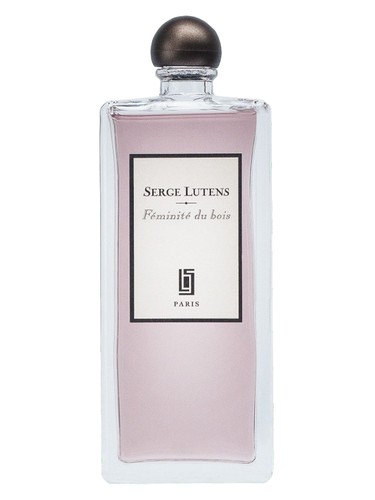
Most telling are the comparisons to other Lutens creations: Daim Blond and Feminité du Bois. These are all fragrances that take familiar concepts (suede, wood, freshness) and render them in Lutens' distinctively abstract, intellectual style. Laine de Verre is arguably the most minimalist of this group, the most focused on a single idea executed with precision.
The Bottom Line
Laine de Verre isn't an easy fragrance, and that rating of 3.55 reflects its specificity. This is perfume for those who find beauty in restraint, who appreciate cleanliness as an aesthetic rather than just a practical virtue. If you've ever been captivated by the smell of expensive soap, high-quality linen, or the particular freshness of a sun-drenched bathroom, Laine de Verre offers that sensation refined and amplified.
It's best suited for spring and summer days when you want presence without heaviness, projection without loudness. Those who prefer rich, warm, or traditionally pretty fragrances should sample before committing. But for admirers of aldehydic compositions, minimalist aesthetics, and Serge Lutens' more conceptual work, this glass wool offers a texture worth feeling.
KI-generierte redaktionelle Rezension