First Impressions
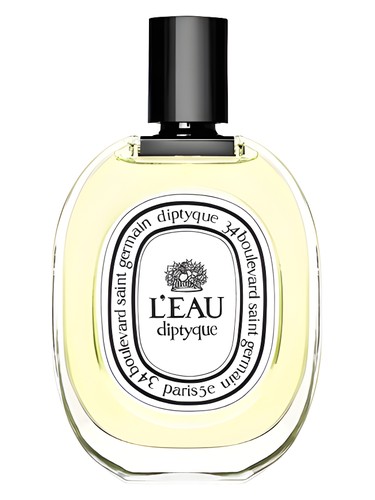
The first spray of L''Eau is a revelation that transports you to a Parisian apothecary in 1968, when Diptyque was just beginning to rewrite the rules of perfumery. This is cinnamon without pretense — not the syrupy, latte-scented interpretation we''ve grown accustomed to, but something far more sophisticated. The opening hits with an immediate warmth that''s both comforting and oddly daring, as rose petals emerge through a haze of spice. It''s the kind of fragrance that makes you pause mid-conversation, lift your wrist again, and wonder why something so boldly spicy feels so inherently wearable.
There''s an old-world elegance here that speaks to Diptyque''s heritage, yet nothing about L''Eau feels dated. Instead, it reads as quietly revolutionary — a reminder that the brand was crafting these warm, enveloping compositions long before "cozy" became a fragrance marketing buzzword.
The Scent Profile
L''Eau opens with a duo that could easily veer into potpourri territory in less skilled hands: cinnamon and rose. Yet Diptyque orchestrates these ingredients with remarkable restraint. The cinnamon announces itself immediately — this is, after all, a fragrance where the cinnamon accord registers at 47% — but it''s tempered by the powdery softness of rose petals. This isn''t the jammy, indolic rose of modern perfumery; it''s drier, more austere, with that slightly dusty quality of dried rose heads in an antique shop.
As the composition settles into its heart, geranium emerges as the quietly intelligent middle act. It bridges the opening''s theatrical spice with what''s to come, adding a green, slightly minty facet that prevents the warmth from becoming overwhelming. This is where you notice the fresh spicy accord that registers at 29% — a cooling counterpoint that gives the fragrance breathing room.
The base is where L''Eau reveals its true character. Cloves join the cinnamon in a spice cabinet duet, while sandalwood provides a creamy, woody foundation that grounds everything. This isn''t the sharp, medicinal clove of dental offices but rather the sweet, eugenol-rich warmth of pomander balls. The sandalwood here feels authentic — likely a characteristic of the original 1968 formulation — with that subtle pencil-shaving quality and buttery smoothness that''s become increasingly rare in contemporary perfumery.
Throughout its development, L''Eau maintains that 100% warm spicy accord rating it''s earned, never wavering from its core identity while allowing supporting players their moment in the spotlight.
Character & Occasion
This is unequivocally an autumn and winter fragrance, and the community data confirms it emphatically: 100% fall suitability and 87% for winter. While 41% of wearers find it works in spring, attempting L''Eau on a summer day (30% approval) would be akin to wearing cashmere in July — theoretically possible but somewhat masochistic.
The fragrance leans heavily toward daywear at 82%, and this makes intuitive sense. Despite its warmth and spice, L''Eau has a propriety about it, an intimacy that suits daylight hours beautifully. It''s the fragrance of museum visits, autumn walks through leaf-strewn parks, and afternoons spent in libraries with leather-bound books. That said, 59% find it suitable for evening wear, where it performs admirably in cooler months when you want presence without projection.
While classified as feminine, L''Eau belongs to that category of "feminine" fragrances from an era before gendered marketing became so rigid. Anyone drawn to warm spices and roses will find something to love here, regardless of how they identify. It''s mature without being matronly, warm without being suffocating, distinctive without screaming for attention.
Community Verdict
With a rating of 3.87 out of 5 from 580 votes, L''Eau occupies that interesting middle ground — well-liked and respected, but not universally adored. This isn''t a fragrance that inspires lukewarm reactions; rather, it seems to resonate deeply with those whose tastes align with classic, spice-forward compositions while potentially alienating those seeking fresher, more modern constructions.
The solid voting base of 580 reviewers suggests this isn''t an obscure curiosity but rather a fragrance that has maintained relevance over its 55-year existence. That it hasn''t achieved a higher rating likely speaks to its specificity rather than any inherent flaw. L''Eau knows exactly what it is and makes no apologies for its singular vision.
How It Compares
L''Eau exists in distinguished company. Its closest sibling is Diptyque''s own Eau Lente, which shares that warm, contemplative quality. But where L''Eau leads with cinnamon and rose, Eau Lente takes a different aromatic path. The comparison to Frederic Malle''s Musc Ravageur and Portrait of a Lady is telling — these are fragrances for those who appreciate warmth, spice, and unapologetic richness. Tom Ford''s Black Orchid represents the gothic, maximalist interpretation of this family, while L''Eau remains more restrained, more French in its approach.
What distinguishes L''Eau in this company is its age and relative accessibility. While Portrait of a Lady commands premium prices and Black Orchid makes bold, room-filling statements, L''Eau offers a more intimate, wearable take on the warm spicy genre. It''s the ancestor that modern spicy fragrances pay homage to, often unknowingly.
The Bottom Line
At 3.87 out of 5, L''Eau Eau de Toilette is a very good fragrance rather than a masterpiece, and there''s honor in that honesty. It delivers exactly what it promises: a warm, spicy embrace built around high-quality cinnamon, rose, and sandalwood. For those who thrill to autumn''s arrival and count down to sweater weather, this is a fragrance worth exploring.
The Eau de Toilette concentration means it won''t overwhelm, but it also means you''ll need to reapply for all-day wear. Consider this a feature rather than a bug — L''Eau is the kind of fragrance that rewards intimacy, revealing itself to those close enough to catch its warm spice cloud.
Who should seek this out? Those who appreciate perfume history, who value warm spices over aquatic freshness, and who understand that sometimes the most interesting fragrances aren''t trying to please everyone. If your collection leans toward Portrait of a Lady or Musc Ravageur but you want something slightly more approachable for daytime wear, L''Eau deserves your attention. At over half a century old, it remains remarkably relevant — a testament to Diptyque''s vision and to the timeless appeal of cinnamon, rose, and sandalwood done right.
KI-generierte redaktionelle Rezension