First Impressions
The first spray of L'Eau Bleue d'Issey Pour Homme hits like a walk through a Mediterranean herb garden after rain—intense, green, and unapologetically botanical. Rosemary dominates immediately, joined by a bright citrus chorus of lime, mandarin, and lemongrass that attempts to soften the herbal blow. This isn't the polite, office-friendly aromatics you might expect from the name. Instead, Issey Miyake's 2004 creation announces itself with conviction, perhaps too much conviction for some noses. The "bleue" in the name suggests something cool and aquatic, but what you get is far earthier, more grounded in the soil than the sea.
The Scent Profile
Those opening moments are a citrus-herb collision where rosemary takes center stage with almost medicinal intensity. The lime and mandarin orange provide brightness, while lemongrass adds a slightly soapy, clean edge. Orangewood rounds out the opening with subtle warmth, but make no mistake—rosemary is the star, whether you invited it or not.
As the fragrance settles into its heart, complexity builds through an impressive roster of ingredients. Cypress and juniper berries amplify the green, forest-floor character, creating an aromatic profile that feels simultaneously fresh and dense. Pink pepper and ginger introduce a spicy warmth (contributing to that 82% fresh spicy accord), while lavender attempts to bridge the gap between sharp herbaceousness and smoother florals. Star anise adds an unexpected licorice-like sweetness, and the inclusion of May rose and nasturtium—both uncommon in masculine fragrances—suggests a certain creative ambition, even if these notes struggle to emerge from under the rosemary's shadow.
The base is where L'Eau Bleue finally reveals its woody intentions. Atlas cedar and sandalwood provide the foundation for those dominant woody accords (rated at 100% in the profile), while patchouli and oakmoss contribute that 15% earthy character that grounds the composition. Amber and ambrette add a subtle warmth and skin-like quality, though by this stage, the fragrance has often exhausted its welcome on those who didn't connect with the opening.
The evolution from top to base is less a journey than a gradual softening—the rosemary never truly disappears, it simply becomes better supported by the woods and spices as hours pass.
Character & Occasion
According to the data, L'Eau Bleue d'Issey is overwhelmingly a spring fragrance (100%), though it holds its own in fall (81%) and summer (78%). Winter wearability drops to just 45%, which makes sense—this is a scent that wants air and space around it, not to be trapped under heavy coats. The day versus night split tells an even clearer story: 98% day, 60% night. This is a daytime fragrance through and through, best worn when you have room to move and the intensity can dissipate naturally.
The aromatic woody profile suggests it's aimed at those who appreciate fragrances with character and aren't looking for crowd-pleasers. This isn't a boardroom scent or a date-night safe choice. It's for moments when you want to smell interesting rather than agreeable—weekend errands, casual outdoor gatherings, creative work environments where individuality is valued over conformity.
Community Verdict
Here's where things get uncomfortable. Despite a respectable 4.2/5 rating from 3,657 votes on the broader fragrance database, the Reddit r/fragrance community tells a different story entirely, with a sentiment score of just 3.5/10. Based on 38 opinions, the consensus is largely negative, and the criticisms are specific and consistent.
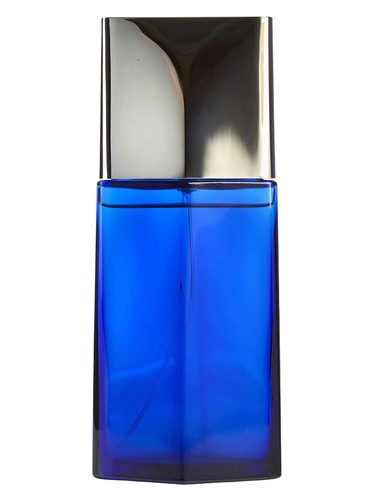
The pros? Some appreciate its "distinctive herbal and spicy green woody character with juniper and rosemary" and acknowledge it has an "interesting and unique scent profile with Issey Miyake DNA." The bottle design gets a nod as collection-worthy.
But the cons are more numerous and more passionate. Reviewers describe it as "overly herbal and rosemary-forward," to the point of feeling "overwhelming and saturating." Multiple users report headaches or discomfort from wearing it. Perhaps most damning, it's frequently characterized as "cheap-smelling and disappointing, especially for blind buys." The community's advice is clear: this is "not universally wearable due to strong herbal notes that many dislike."
The strongest recommendation from the community? Sample before you commit. This is explicitly described as a "polarizing scent" that requires "wearing multiple times to allow appreciation."
How It Compares
L'Eau Bleue d'Issey sits in interesting company among its similar fragrances. It shares DNA with Encre Noire Sport and the original Encre Noire by Lalique—both known for their uncompromising vetiver-forward profiles. Egoiste Platinum by Chanel and Terre d'Hermès offer more refined, accessible takes on aromatic woody themes. Bleu de Chanel rounds out the comparison set as perhaps the most mainstream and crowd-pleasing of the group.
What sets L'Eau Bleue apart—for better or worse—is that aggressive herbaceousness. Where Terre d'Hermès balances its minerals and citrus with restraint, L'Eau Bleue pushes its rosemary to the front and refuses to apologize.
The Bottom Line
L'Eau Bleue d'Issey Pour Homme is a fragrance with an identity crisis between its ambitions and its execution. On paper, it's a complex aromatic woody with impressive note diversity and respectable ratings. In practice, it's a litmus test for how much rosemary you can tolerate before reaching your breaking point.
Should you try it? Absolutely—but only as a sample, never as a blind buy. At nearly two decades old, this fragrance represents a different era of masculine perfumery, one that valued distinctiveness over wearability. If you're someone who finds most modern fragrances too safe, too synthetic, or too similar, L'Eau Bleue might be exactly the challenging, herbal experience you're seeking.
But if you've ever smelled rosemary and thought "I wish this would go away," save yourself the potential headache. This is a fragrance that demands commitment and patience, and not everyone will find the reward worth the effort. The 4.2 rating suggests plenty of people have made peace with its peculiarities. The Reddit community's cooler reception suggests just as many have not.
KI-generierte redaktionelle Rezension