First Impressions
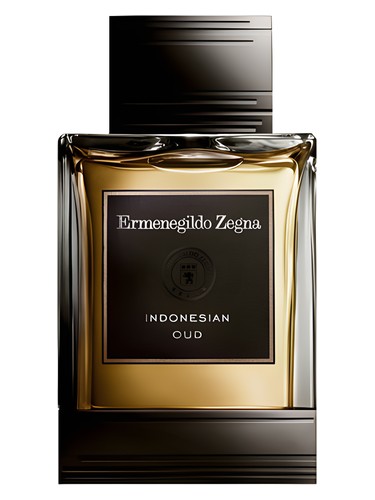
The first spray of Ermenegildo Zegna''s Indonesian Oud Eau de Toilette announces itself with surprising restraint for a fragrance bearing the oud name. This isn''t the medicinal, barn-like intensity that can make newcomers recoil. Instead, what emerges is a sophisticated interplay between the smoky depth of agarwood and an unexpectedly prominent rose accord that softens the wood''s sharper edges. There''s an immediate warmth here, touched with spice and brightened by citrus whispers that prevent the composition from becoming heavy-handed. For a house better known for impeccable tailoring than perfumery, this 2012 release demonstrates a remarkable understanding of how luxury translates across mediums—with quality materials handled with a light touch.
The Scent Profile
While the specific note breakdown remains closely guarded, the accord structure tells a revealing story. Oud dominates at full intensity, yet the 78% rose presence creates an unexpected romantic dimension that transforms what could have been a one-note woody exercise into something more nuanced and wearable. This is oud for the boardroom, not the souk.
The opening likely carries those citrus elements—registering at 34% in the accord profile—that provide an initial brightness, keeping the fragrance from landing too heavily on the skin. Fresh spicy notes at 35% add a certain masculine crispness, perhaps evoking cardamom or pink pepper, elements that have become signatures in contemporary masculine oud compositions.
As the fragrance settles, that prominent rose moves to center stage alongside the oud. This isn''t the green, dewy rose of English gardens but rather a darker, more resinous interpretation that complements rather than contrasts with the woody base. The result feels Middle Eastern in inspiration but decidedly European in execution—restrained where many oud fragrances go baroque.
The foundation reveals itself through amber (42%) and patchouli (42%), working in equal measure to create a warm, earthy drydown. The amber brings honeyed sweetness and radiance, while patchouli adds its characteristic earthiness and helps anchor the composition''s more volatile elements. This base gives Indonesian Oud its remarkable longevity and creates that enveloping warmth that makes it particularly suited to cooler weather.
What''s notable is how the eau de toilette concentration works in this fragrance''s favor. A lighter touch allows the various accords to remain distinct rather than melding into an indistinct woody haze, as can happen with oud-forward compositions in parfum concentrations.
Character & Occasion
The seasonal data speaks volumes: 97% of wearers favor this for fall, with winter close behind at 96%. Spring drops to 45%, and summer barely registers at 23%—and for good reason. This is a fragrance that needs cool air to truly shine, where its warmth feels like a welcome embrace rather than an overwhelming presence.
The day-night split is particularly interesting: while 52% find it appropriate for daytime wear, it scores a perfect 100% for evening occasions. This versatility makes Indonesian Oud something of a chameleon—refined enough for a business dinner, sophisticated enough for formal evening events, yet never so imposing that it feels out of place in daylight hours during cold months.
This is unambiguously masculine in its construction, designed for the man who appreciates quality and isn''t afraid of making a statement, albeit a well-mannered one. It suits someone who has moved beyond fresh aquatics and designer crowd-pleasers, ready to explore more complex, ingredient-focused compositions without diving into the deep end of challenging, unwearable niche territory.
Community Verdict
With a rating of 4.34 out of 5 based on 618 votes, Indonesian Oud has clearly resonated with its audience. This is a strong showing, particularly for a designer house fragrance in a category often dominated by niche brands. The number of votes suggests sustained interest well beyond the fragrance''s 2012 launch, indicating that this isn''t simply riding the initial wave of hype but has earned a loyal following over time.
That rating places it firmly in "excellent" territory—not quite reaching the stratospheric heights of all-time classics, but well above the average and indicating a fragrance that delivers on its promises. It''s worth seeking out, particularly for those interested in accessible oud compositions.
How It Compares
The comparison set reveals Indonesian Oud''s positioning within the modern oud canon. Tom Ford''s Noir de Noir and Oud Wood represent the aesthetic blueprint—luxurious, wearable oud for Western markets. The Amouage references (Jubilation XXV Man and Interlude Man) point to the more complex, traditional approach, while Terre d''Hermès seems an outlier until you consider the earthy, sophisticated masculinity that connects them all.
Where Indonesian Oud distinguishes itself is in that pronounced rose accord and its restraint. It''s more approachable than the Amouage powerhouses, less sweet than Noir de Noir, and more distinctly oud-forward than Oud Wood. It occupies a sweet spot: sophisticated enough for purists, wearable enough for oud newcomers.
The Bottom Line
Indonesian Oud Eau de Toilette succeeds because it knows exactly what it wants to be: a refined, wearable interpretation of one of perfumery''s most precious ingredients, tailored for the modern man who appreciates luxury without ostentation. At 4.34 out of 5, the community consensus confirms what the composition suggests—this is a well-executed fragrance that delivers quality and sophistication.
For those exploring beyond mainstream masculines or looking for a cold-weather signature that stands apart from the ubiquitous spice-and-woods crowd, this merits serious consideration. The eau de toilette concentration and designer pricing make it more accessible than many niche oud offerings, while the quality remains uncompromised. Just remember: save this for when the temperature drops and the nights grow long.
KI-generierte redaktionelle Rezension