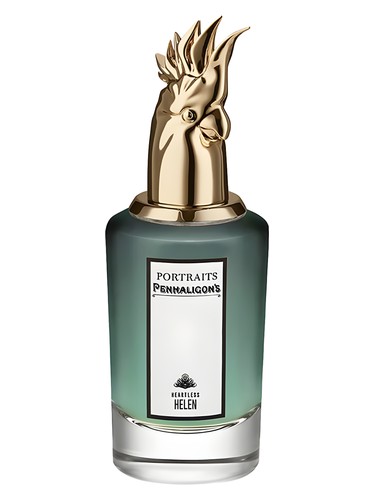
First Impressions
The name promises cruelty, but the first spritz of Heartless Helen tells a different story—or perhaps a more complex one. A bright burst of mandarin orange announces itself with cheerful abandon, seemingly at odds with its villainous moniker. Yet there''s something slightly sharp about that citrus opening, a flash of teeth behind a smile. Within moments, the tuberose begins its ascent, and you understand: this isn''t heartlessness. It''s self-possession. The fragrance doesn''t apologize for its presence. It simply exists, bold and unapologetic, like a woman who knows exactly what she wants and feels no need to justify it.
The Scent Profile
Heartless Helen''s architecture rests almost entirely on the shoulders of tuberose, and those shoulders are remarkably strong. The mandarin orange opening provides a fleeting moment of levity—a citrus prelude that''s gone almost as quickly as it arrives. This isn''t a fragrance that lingers in preliminary pleasantries.
The true performance begins when tuberose takes center stage, dominating the composition with the kind of commanding presence that makes this note either beloved or feared. Here, it''s rendered in full bloom: creamy, narcotic, and unabashedly white floral. At 100% accord strength, the tuberose doesn''t share the spotlight so much as it tolerates the presence of supporting players. There''s a richness to it, that characteristic buttery quality that makes tuberose so distinctive, coupled with the slightly green, almost rubbery facets that prevent it from becoming too sweet or powdery.
What keeps this from becoming a straightforward soliflore is the subtle complexity woven throughout. That animalic accord—registering at 30%—adds an intriguing undercurrent of warmth and sensuality. It''s not overtly musky or indolic, but rather a suggestion of skin, of something living and breathing beneath the flowers. The green notes provide botanical authenticity, reminding you that these blooms have stems and leaves, that they exist in nature rather than a laboratory.
The woody base notes emerge gradually, providing structure and longevity without overwhelming the floral heart. They''re soft and supporting rather than prominent, creating a foundation that allows the tuberose to bloom indefinitely without losing its shape. This is where Heartless Helen reveals its sophistication—in the restraint of those base notes, in knowing when to step back and let the star ingredient shine.
Character & Occasion
The data tells a clear story: Heartless Helen is quintessentially a spring fragrance, rating at 100% for the season of rebirth and renewal. This makes perfect sense. There''s something about its crisp brightness, that mandarin opening giving way to lush white florals, that captures spring''s particular magic—the warmth increasing, the flowers emerging, the world shaking off winter''s severity.
Summer claims 79% suitability, and again, the logic holds. This is a fragrance with enough freshness and brightness to wear in warmer weather without becoming cloying. The citrus and green notes provide breathing room, while the tuberose, for all its richness, maintains a certain freshness that suits sunny days.
At 96% day wear versus 35% night wear, Heartless Helen clearly knows its place. This is a fragrance for café terraces and garden parties, for lunch dates and afternoon shopping trips. It''s too bright, too forthright for evening''s mysteries and seductions—unless, of course, you''re the kind of person who enjoys subverting expectations.
The feminine classification fits, though anyone who loves a bold white floral could carry this off with confidence. This isn''t a shrinking violet fragrance. It requires a certain comfort with presence.
Community Verdict
With a rating of 3.66 out of 5 from 927 votes, Heartless Helen occupies interesting territory. This isn''t universal acclaim, but it''s solidly respectable—the kind of rating that suggests a fragrance with a clear point of view. Nearly a thousand people have weighed in, providing a substantial sample size, and they''ve arrived at a consensus: this is good, sometimes very good, but perhaps not transcendent.
That rating likely reflects tuberose''s polarizing nature. Those who love the note probably rate this significantly higher, while those who find tuberose challenging bring the average down. It''s a reminder that Heartless Helen makes no attempt to please everyone—a fitting character trait for something bearing such a name.
How It Compares
The company Heartless Helen keeps is impressive. Comparisons to Frédéric Malle''s Carnal Flower—perhaps the benchmark tuberose fragrance—suggest that Penhaligon''s offering operates in the same white floral territory, though likely with less intensity and complexity. The mention of Luna, another Penhaligon''s creation, points to family resemblance within the house style.
More surprising are the references to Baccarat Rouge 540 and Black Orchid—fragrances that don''t immediately conjure tuberose associations. This suggests that Heartless Helen shares something structural or atmospheric with these cult favorites, perhaps a certain richness or sophistication that transcends specific notes.
The Bottom Line
Heartless Helen deserves its place in Penhaligon''s portfolio of characterful fragrances. It''s a well-executed tuberose scent that knows exactly what it is and delivers on that promise without apology. The 3.66 rating reflects not mediocrity but specificity—this is a fragrance for tuberose lovers, for those who want their white florals bright and bold rather than soft and murmuring.
If you''ve ever loved Carnal Flower but wished for something slightly more wearable for daytime, or if you''re seeking a spring signature scent with genuine personality, Heartless Helen warrants exploration. Just don''t expect softness or compromise. Some hearts, after all, are heartless by choice—and all the more compelling for it.
KI-generierte redaktionelle Rezension