First Impressions
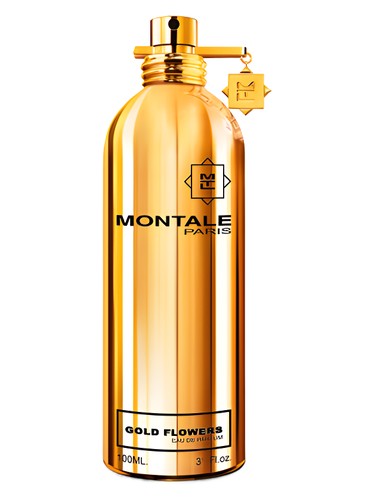
The first spray of Gold Flowers announces itself with the kind of confidence that makes you stand a little straighter. This is tuberose unleashed—not the demure garden variety, but tuberose draped in golden warmth and dressed for a grand entrance. Montale''s 2009 creation doesn''t ease you in gently; it envelops you immediately in a cloud of creamy white petals dusted with exotic spices. There''s an opulence here that feels deliberate, almost brazen. Within moments, you understand this isn''t a fragrance for wallflowers.
The dominant tuberose accord registers at full strength—100% on the intensity scale—and it shows. But this isn''t tuberose in isolation. A warm spicy character follows close behind at 94%, creating an intriguing tension between floral creaminess and heated depth. The overall impression is one of richness bordering on decadence, a white floral composition that refuses to play by polite rules.
The Scent Profile
Without specified notes to guide the journey, Gold Flowers reveals itself through its accord structure, and what a structure it is. The tuberose takes absolute center stage, delivering that characteristic buttery, almost narcotic quality that makes this flower both beloved and polarizing. At 80%, the white floral accord reinforces this dominance, suggesting the presence of other pale blooms that might include jasmine or gardenia, though they serve more as supporting players in tuberose''s theater.
What elevates Gold Flowers beyond a straightforward floral soliflore is that 94% warm spicy component. This isn''t just background warmth—it''s a substantial layer that weaves through the white petals, adding depth and preventing the composition from veering into soapy territory. The spice feels golden rather than sharp, perhaps suggesting hints of saffron or cardamom without the data to confirm specifics.
As the fragrance settles, a woody foundation emerges at 43%, providing structure beneath all that floral extravagance. This isn''t the crisp woods of a modern minimalist scent; it''s warmer, slightly resinous. The 38% amber accord reinforces this warmth, adding a sweet, slightly powdery glow that melds beautifully with tuberose''s natural creaminess.
Perhaps most intriguing is the 38% animalic accord—equal to the amber—which adds an element of skin-like intimacy and vintage character. This is the note that gives Gold Flowers its sultry undercurrent, that whisper of something primal beneath the flowers. It''s subtle enough not to shock, but present enough to add genuine intrigue.
Character & Occasion
Gold Flowers is classified for all seasons, and while this might seem like marketing speak, the fragrance''s structure actually supports year-round wear—provided you have the personality to match. The tuberose intensity and warm spicy elements give it enough body for cooler months, while white florals traditionally shine in warmth. That said, this is a bold choice for summer heat, where it might prove overwhelming in full doses.
Interestingly, the day/night data shows zero preference either way, suggesting the community finds it equally suitable—or perhaps equally challenging—at any hour. In practice, Gold Flowers leans formal rather than casual. This is evening gala material, date night armor, the fragrance equivalent of a statement necklace. It''s perhaps too assertive for conservative office environments, though creative workplaces might embrace its confidence.
This is decidedly feminine in its original positioning, but the spicy and animalic elements give it a complexity that transcends simple gender categorization. It requires a wearer who appreciates attention and isn''t afraid of making an olfactory statement.
Community Verdict
With 538 votes tallying to a 3.84 out of 5 rating, Gold Flowers occupies solid ground without reaching universal acclaim. This is telling. The rating suggests a fragrance that inspires strong reactions—those who love bold white florals rate it highly, while those seeking subtlety or modernity likely score it lower.
The substantial vote count indicates this isn''t an obscure offering; Montale''s fanbase has discovered and formed opinions on Gold Flowers. That it maintains a near-4 rating despite its intensity speaks to its quality execution. This isn''t a poorly made fragrance that happens to be loud—it''s a well-crafted fragrance that intentionally chooses volume over whisper.
How It Compares
The similar fragrances list reads like a who''s who of iconic white floral powerhouses: Organza by Givenchy, Poison by Dior, Coco Eau de Parfum by Chanel, Pure Poison by Dior, and Kenzo Jungle L''Elephant. This company reveals Gold Flowers'' true lineage—it''s a descendant of the opulent, unapologetic fragrances that dominated the 1980s and 1990s.
Where Gold Flowers distinguishes itself is in its laser focus on tuberose enhanced by Middle Eastern-inspired warmth, typical of Montale''s aesthetic. While Poison leans into berry and spice, and Coco wraps itself in baroque orientalism, Gold Flowers stays truer to its floral core while borrowing spicy warmth from the brand''s oud-centric DNA.
The Bottom Line
Gold Flowers is a fragrance that knows exactly what it is and makes no apologies. At 3.84 out of 5 from over 500 voters, it''s clear this isn''t for everyone—and that''s precisely the point. This is tuberose for those who want their white florals served with confidence, warmth, and a touch of vintage glamour.
Should you try it? If you''re drawn to the fragrances in its comparison set, absolutely. If you appreciate tuberose''s creamy intensity and don''t mind turning heads, Gold Flowers deserves a place on your testing list. However, if you prefer delicate florals or minimalist compositions, this will likely prove too much.
Sample before committing to a full bottle—this is a love-it-or-leave-it proposition. But for those who fall into the "love it" camp, Gold Flowers offers a luxurious, distinctive take on white floral perfumery that stands confidently in Montale''s diverse lineup.
KI-generierte redaktionelle Rezension