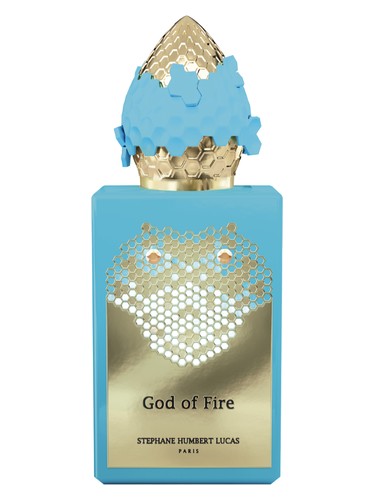
First Impressions
The first spray of God of Fire feels like standing at the edge of a volcanic island at sunrise—the air thick with ripened mango, the citrus-sharp bite of coastal winds, and something darker smoldering beneath. This is not your typical fruit cocktail fragrance. Within seconds, the opening announces its duality: succulent tropical mango collides with bright lemon and ginger's warming spice, while crimson berries add a tart, almost wine-like complexity. There's an immediate sense that Stéphane Humbert Lucas wasn't content to create just another summer freshie. The "Fire" in this perfume's name isn't metaphorical—there's heat here, both in the ginger's subtle burn and in the promise of something more primal waiting in the depths.
The Scent Profile
God of Fire opens with an exuberant tropical explosion that's simultaneously refreshing and indulgent. The mango dominates initially, but this isn't the synthetic, candy-sweet mango of budget fragrances. It's ripe and juicy, with that slightly fibrous, sun-warmed quality of fruit picked at peak ripeness. The lemon provides essential balance, its sharp citrus edge preventing the composition from tipping into cloying territory. Red berries flutter through like tropical birds, adding tart accents, while ginger introduces the first whisper of warmth—a hint that this paradise comes with complications.
As the fragrance settles into its heart, the composition reveals its sophisticated architecture. Jasmine emerges with its heady, indolic richness, tempering the fruit with floral elegance. But the real surprise is the coumarin-cedar pairing, which creates a creamy, almost hay-like sweetness underscored by dry, woody structure. This middle phase is where God of Fire earns its complexity stripes. The cedar isn't aggressive or pencil-shaving sharp; instead, it provides a subtle woody backbone that grounds the tropical exuberance and hints at the transformation to come.
The base is where the "fire" truly manifests. Oud and cypriol oil emerge from the embers, bringing earthy, slightly smoky depth that feels worlds away from that initial mango burst. The oud here isn't barnyard-heavy or medicinal—it's refined and integrated, adding a resinous darkness rather than dominating the composition. Amber provides golden warmth, while musk creates a skin-like softness that makes the fragrance feel intimate despite its bold opening. The genius of this base is how it maintains a conversation with those opening fruits; even hours in, there's a ghost of tropical sweetness dancing with the woods and resins.
Character & Occasion
God of Fire is unequivocally a summer fragrance, with the community data showing 100% summer suitability—and for good reason. This is liquid vacation, bottled sunshine with an edge. But at 80% spring wearability, it also transitions beautifully into those first warm days when winter's grip finally loosens. More surprisingly, 29% of wearers find it appropriate for fall, which speaks to that substantial woody-oud base that prevents it from being purely seasonal.
The day-to-night split tells an interesting story: 82% daytime versus 34% evening suggests this is primarily a sunshine companion, but that evening percentage indicates versatility. Wear it to beach clubs and garden parties, certainly, but the oud and amber give it enough gravitas for sunset cocktails or warm-weather dinner dates.
While marketed as feminine, the fruity-woody balance and that distinctive oud presence make this easily shareable. Those who love tropical fragrances but want something more substantial than your typical coconut-pineapple beachware will find God of Fire compelling. It's sophisticated enough for the office (in moderate doses) yet fun enough for weekend adventures.
Community Verdict
With a 4.27 out of 5 rating from over 3,400 voters, God of Fire has earned serious respect. In the fragrance community, anything above 4.0 indicates a well-crafted scent that resonates broadly, and with this many votes, we can trust the consensus isn't a fluke. This is particularly impressive for a niche house like Stéphane Humbert Lucas 777, where prices tend to be steep and expectations accordingly high. The rating suggests this fragrance delivers on its promise—tropical and fruity, yes, but executed with the artistry and complexity that justifies the niche price point.
How It Compares
The similar fragrances list reads like a who's-who of contemporary blockbusters: Aventus, Hacivat, Layton, Ani. What these share with God of Fire is that fruity-woody structure—bright, optimistic openings grounded by substantial bases. But where Aventus leans masculine with its pineapple-birch composition and Hacivat emphasizes pineapple-oakmoss, God of Fire carves its own territory with that distinctive mango-oud axis. Pacific Chill by Louis Vuitton is perhaps the closest cousin in terms of tropical vibes, but God of Fire is sweeter and more overtly fruity. Ani's vanilla-ginger brings some conceptual overlap, but God of Fire is fresher and less gourmand. In this prestigious company, Stéphane Humbert Lucas holds its own by being unabashedly tropical while refusing to sacrifice sophistication.
The Bottom Line
God of Fire is a paradox wrapped in a tropical breeze: accessible yet complex, sweet yet smoky, playful yet refined. That 4.27 rating from a substantial voting base confirms what the composition itself reveals—this is expert perfumery that doesn't take itself too seriously. Yes, it's primarily a warm-weather fragrance, but the quality of ingredients and thoughtful construction make it worth the investment for anyone who lives for summer or simply wants to capture some solar warmth during darker months.
The value proposition depends on your perspective. Stéphane Humbert Lucas 777 isn't a budget brand, but for lovers of tropical fragrances who've grown tired of generic coconut-sunscreen compositions, this offers genuine artistry. If you've enjoyed Aventus or Hacivat but want something fruitier and more feminine-leaning, God of Fire deserves a test drive. Those seeking a signature summer scent that won't smell like everyone else at the beach club should absolutely sample this.
Who should try it? Anyone who wants their tropical fragrances with a side of smoke, who appreciates when mango and oud shake hands, who believes summer scents can be complex. God of Fire proves that fruity doesn't mean simple, and tropical doesn't mean throwaway. Sometimes paradise needs a little fire to keep things interesting.
KI-generierte redaktionelle Rezension