First Impressions
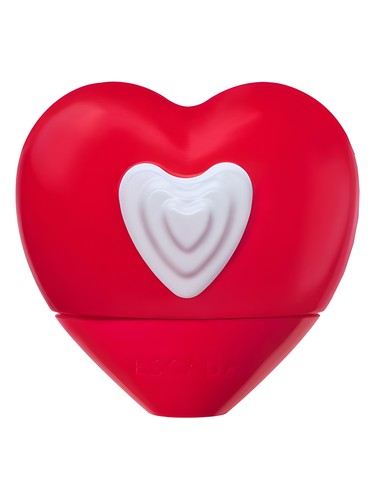
The first spritz of Fairy Love transports you straight into Escada''s signature world of unabashed sweetness and fruit-forward exuberance. Nashi pear leads the charge with its delicate, watery crispness, immediately joined by a raspberry burst that teeters on the edge of candy. A whisper of orange tries to cut through with citrus brightness, but make no mistake—this opening is pure confection. It''s the olfactory equivalent of walking past a gelato shop on a summer afternoon, all sticky-sweet promise and pastel-hued fantasy. The bottle suggests whimsy, and the juice delivers exactly that, for better or worse.
The Scent Profile
Fairy Love opens with a triumvirate of fruit that wastes no time announcing its intentions. The nashi pear—that Asian pear with its characteristic juiciness—provides a softer, less cloying foundation than the standard pear note often found in fruity florals. It''s quickly overtaken by raspberry, which here reads less like the fresh berry and more like raspberry syrup, bringing that characteristic sweetness that dominates the composition. Orange rounds out the top notes with a citrus accent, though it struggles to assert itself against the more assertive fruit players. This accord scores a full 100% on the fruity scale, and within moments of wearing it, you understand why.
As the fragrance settles, jasmine emerges as the singular heart note—a brave choice that should theoretically ground all that fruit with floral sophistication. The jasmine here is clean rather than indolic, aiming for accessibility over complexity. It registers as a white floral accord at 40%, which feels about right; the jasmine never truly takes center stage but rather acts as a softening agent, a bridge between the candy-sweet opening and what''s to come. It''s pleasant enough, though those seeking the lush, heady jasmine of more sophisticated florals will find this iteration rather timid.
The base reveals hazelnut as its sole anchor—an intriguing choice that contributes to the fragrance''s 47% nutty accord rating. This isn''t the roasted, coffee-adjacent hazelnut you might expect. Instead, it presents as a creamy, almost praline-like sweetness that extends the gourmand qualities established at the opening. Combined with the lingering fruit and floral elements, you get a composition that maintains its 57% sweet accord throughout the entire wear, with subtle woody undertones (28%) providing just enough structure to prevent the whole thing from collapsing into pure dessert territory.
Character & Occasion
Escada positions Fairy Love as an all-season fragrance, and technically, the composition could work year-round—if you''re someone who gravitates toward sweet, fruity scents regardless of weather. The lightweight fruitiness won''t suffocate in summer heat, while the nutty base provides just enough warmth for cooler months. That said, this versatility comes from the fragrance''s overall lack of intensity rather than any particularly clever seasonal adaptability.
The community data reveals an interesting absence of strong day or night preferences, suggesting that Fairy Love exists in a sort of temporal limbo—safe for any time, memorable at none. Given its crowd-friendly profile and sweet accessibility, this makes sense as a choice for special occasions where you want to smell pleasant without making a bold statement. The community specifically mentions it as suitable for bridal wear and events, which tracks perfectly. This is a fragrance that photographs well in concept but doesn''t demand attention in practice.
Community Verdict
Here''s where things get revealing. With a rating of 3.49 out of 5 from 538 votes, Fairy Love sits firmly in "perfectly fine" territory—neither loved nor loathed. The Reddit community sentiment scores a middling 5.5 out of 10, based on 22 opinions, and the lack of enthusiasm speaks volumes.
The pros are telling in their restraint: it''s suitable for special occasions, has pleasant aesthetic appeal (read: the bottle looks nice on a vanity), and maintains a crowd-friendly profile. These are the compliments you give a fragrance when you''re searching for something positive to say. The cons are equally instructive: limited specific feedback, unclear performance and longevity details, and minimal discussion of distinctive characteristics. In other words, the community doesn''t have much to say because there isn''t much to say. Fairy Love doesn''t offend, but it also doesn''t inspire.
How It Compares
Escada places Fairy Love alongside fragrances like Moschino''s Toy 2 Bubble Gum, Britney Spears'' Midnight Fantasy, and Dolce & Gabbana''s L''Imperatrice 3. This company reveals both the fragrance''s target demographic and its market position—accessible, sweet, unapologetically fruity compositions aimed at those who prioritize wearability over complexity. The comparison to Very Good Girl by Carolina Herrera and La Vie Est Belle by Lancôme feels more aspirational than accurate; those fragrances deliver richer, more developed compositions with better performance profiles. Fairy Love exists in the category''s entry-level tier, perfect for someone building their first collection or seeking an uncomplicated crowd-pleaser.
The Bottom Line
Fairy Love is exactly what Escada does best and, simultaneously, evidence of why the brand sometimes frustrates fragrance aficionados. It''s pretty, sweet, and harmless—a fairytale without any darkness, conflict, or memorable plot. For someone seeking an inoffensive fruity-floral for occasional wear at events where you don''t want to make waves, it delivers adequately. The nashi pear and raspberry opening has charm, and the hazelnut base adds an interesting gourmand twist.
However, at a 3.49 rating with lukewarm community reception, it''s hard to argue this should be anyone''s priority purchase. The unclear performance details mentioned by the community suggest longevity may be an issue, though without concentration information, it''s difficult to set appropriate expectations. If you stumble across it at a discount, it''s worth a sniff—particularly if you''re drawn to Escada''s house style. Just don''t expect the magic the name promises. Sometimes fairy tales are better left to storybooks.
KI-generierte redaktionelle Rezension