First Impressions
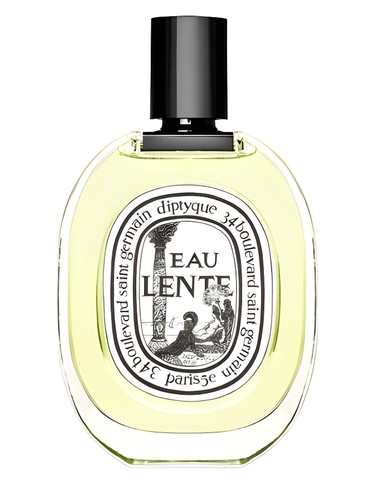
The name says it all: Eau Lente translates to "slow water," and this 1986 Diptyque creation lives up to its nomenclature with deliberate, unhurried grace. The first spray delivers an unmistakable wallop of warmth—clove and cinnamon announce themselves without apology, creating an opening that feels less like a polite introduction and more like stepping into a spice merchant''s inner sanctum. There''s an immediate enveloping quality here, a denseness that seems almost anachronistic in today''s world of translucent musks and watery florals. This is perfumery from another era, when fragrances were allowed to take their time and demand your attention.
What strikes you initially isn''t aggression, despite the potency of those opening spices, but rather a kind of meditative intensity. The cinnamon doesn''t scream Red Hots candy; the clove doesn''t evoke dental offices. Instead, they interweave with a sophistication that speaks to careful composition and quality materials. This is the kind of fragrance that makes you pause mid-stride, wondering what just shifted in the air around you.
The Scent Profile
Eau Lente''s architecture is deceptively simple on paper—clove and cinnamon leading into a heart of unspecified spices, settling into an opoponax base—but the lived experience reveals considerably more nuance. Those top notes of clove and cinnamon create a warm, almost medicinal opening that feels simultaneously ancient and comforting. The clove brings its characteristic eugenol bite, slightly numbing and aromatic, while cinnamon adds sweetness and a gentle heat that never quite tips into bakery territory.
As the fragrance settles—and it does take its time—the heart reveals itself as a continuation and deepening of that spiced theme rather than a departure. The main accords tell the story clearly: this is 100% warm spicy, with cinnamon representing 41% of the character, amber at 40%, and balsamic notes comprising 27%. There''s a sweetness present (22%), but it''s the sweetness of resins and balsams rather than sugar or vanilla.
The base is where Eau Lente truly earns its name. Opoponax, also known as sweet myrrh, unfolds with a honeyed, ambery richness that feels ancient and almost incense-like. It''s here that the fragrance reveals its full amber character, creating a skin-close warmth that persists for hours. The woody undertones (9% of the accord profile) provide just enough structure to keep all that spice and resin from becoming too soft, too yielding. The drydown is where you understand why this fragrance has endured since 1986—it''s that rare thing, a spice fragrance with genuine depth and staying power.
Character & Occasion
This is unequivocally a cold-weather companion. The seasonal data speaks clearly: 100% suited for fall, 92% for winter, with spring (24%) and summer (15%) trailing far behind. Eau Lente is the olfactory equivalent of a cashmere wrap worn against autumn''s first chill, or the warmth that radiates from a wood stove on a January evening.
Interestingly, while classified as feminine, Eau Lente transcends traditional gender boundaries with its spice-forward, resinous composition. The day/night split (68% day, 77% night) suggests versatility, though the slightly higher night rating makes sense—this is a fragrance that shines in intimate settings, in candlelit spaces, during evenings that stretch long and unhurried.
Who is this for? Someone who appreciates fragrance as meditation rather than decoration. Someone comfortable with warmth and presence, who doesn''t need their scent to whisper when it can speak with confidence. It suits the person who treats getting dressed as a ritual, who understands that sometimes the best things require patience.
Community Verdict
With a rating of 3.88 out of 5 based on 709 votes, Eau Lente occupies that interesting middle ground—respected and appreciated, but not universally adored. This is actually a point in its favor. The score suggests a fragrance with character and conviction, one that knows what it is and doesn''t try to please everyone. Those 709 voters represent people who sought out a vintage Diptyque spice composition, and nearly four stars from that self-selected group indicates genuine quality and satisfaction among those who understand what they''re getting into.
This isn''t a crowdpleaser in the way a fresh citrus or soft musk might be. It''s a specific statement, and the rating reflects both its strengths and its deliberately narrow focus.
How It Compares
The list of similar fragrances reads like a who''s who of sophisticated spice compositions: Portrait of a Lady and Musc Ravageur by Frederic Malle, Feminité du Bois by Serge Lutens, Chanel''s Coromandel, and Coco Eau de Parfum. These are serious, complex fragrances for people who take perfume seriously.
Where Eau Lente distinguishes itself is in its relative restraint and its focus on that cinnamon-to-opoponax trajectory. While Portrait of a Lady leans heavily into rose, and Musc Ravageur into lavender and musk, Eau Lente stays committed to its spice-and-resin story. It''s perhaps closest in spirit to Feminité du Bois, sharing that woody-spicy-ambery DNA, though Eau Lente feels warmer and less cedar-forward.
At eau de toilette concentration, it also offers a somewhat lighter experience than many of its parfum or eau de parfum cousins, though "lighter" is relative when discussing a fragrance this rich.
The Bottom Line
Eau Lente deserves its place in the Diptyque canon as a testament to the house''s willingness to pursue interesting directions regardless of trends. Its 3.88 rating from over 700 votes suggests solid appreciation without hype, which feels appropriate for a fragrance this deliberately paced and unapologetically specific.
Should you try it? If you''ve found yourself nodding along while reading this review, absolutely. If you love any of its similar fragrances, particularly Coromandel or Feminité du Bois, Eau Lente offers a related but distinct experience worth exploring. If you''re new to spicy amber fragrances and want an entry point, this might actually be gentler than starting with a heavy-hitting parfum concentration.
Who should skip it? Anyone seeking freshness, anyone uncomfortable with warmth and spice, anyone who needs their fragrances to evolve quickly or project dramatically. This is contemplative perfumery for patient souls. It asks you to slow down, to pay attention, to let it unfold on its own schedule. For the right wearer, that''s not a limitation—it''s the entire point.
KI-generierte redaktionelle Rezension