First Impressions
The first spray of Eau de Minuit feels like stepping into a velvet-draped room at the stroke of midnight—mysterious, plush, and utterly unexpected. This is not the Lolita Lempicka of fairy-tale bottles and licorice-sweet accessibility. Instead, what emerges is something darker, more contemplative, even spiritual. The opening announces itself with the solemn richness of myrrh, tempered by the cool, green whisper of ivy and punctuated by anise''s distinctive licorice brightness. It''s an intriguing juxtaposition: the sacred and the botanical, the sweet and the shadowed, all converging in those crucial first moments on skin.
There''s an immediate sense that this fragrance knows exactly what it wants to be—a creature of twilight hours and cooler seasons, uninterested in playing by the rules of conventional feminine perfumery. The myrrh-led opening sets a tone that''s almost meditative, yet the anise prevents it from becoming too serious, adding just enough sweetness to remind you this is still a Lolita Lempicka creation at heart.
The Scent Profile
As Eau de Minuit settles into its heart, the composition reveals its true architectural brilliance. The transition from those resinous, herbaceous top notes into a lush floral core happens gradually, almost imperceptibly. Violet takes center stage here, bringing its characteristic powdery softness and slightly nostalgic quality. This isn''t violet as a shy supporting player—it''s fully realized, backed by iris''s elegant rootiness and jasmine''s gentle indolic warmth.
The floral heart manages something quite special: it maintains the mysterious quality established by the opening while introducing genuine softness and femininity. The iris adds a lipstick-like quality that bridges the gap between the unconventional myrrh-anise beginning and what''s to come. The jasmine, rather than shouting for attention, weaves through like incense smoke, adding texture and depth without overwhelming the violet-iris partnership.
Then comes the drydown, where Eau de Minuit reveals why amber registers at a perfect 100% in its accord profile. The base is a masterclass in ambery vanilla perfumery—warm, enveloping, and thoroughly addictive. Vanilla and tonka bean create a sweet foundation that''s kept interesting by the persistent presence of resinous elements that echo the myrrh from the opening. This isn''t candy-shop vanilla; it''s the vanilla of antique wood, aged resins, and something almost incense-like in its density.
The powdery aspect (62% in the accord profile) becomes more apparent as the fragrance wears, creating a soft-focus effect around all that amber richness. It''s this combination—the 72% vanilla working with that dominant amber and substantial powdery quality—that gives Eau de Minuit its signature nocturnal warmth.
Character & Occasion
The community data speaks clearly here: this is overwhelmingly a night fragrance, scoring a perfect 100% for evening wear compared to 43% for daytime. That assessment makes perfect sense. Eau de Minuit carries a weight and intensity that feels better suited to lamplight than sunlight, to intimate dinners than office meetings.
Seasonally, it''s a cold-weather champion. Winter claims 84% suitability, with fall following at a strong 66%. This is a fragrance that thrives when there''s a chill in the air, when you want something that creates its own warmth against your skin. Spring (29%) and summer (19%) are possible but pushing against the perfume''s natural inclinations—those rich amber-vanilla-resin combinations can feel heavy in heat.
The ideal wearer? Someone who appreciates vintage-inspired compositions but wants something less expected than another oriental. Someone comfortable with sweetness but seeking it in a more sophisticated, less obvious form. This is for the person who finds Lolita Lempicka''s original too playful, who wants the brand''s creative DNA but filtered through a more mature, contemplative lens.
Community Verdict
With a rating of 4.34 out of 5 from 348 votes, Eau de Minuit has clearly resonated with those who''ve discovered it. That''s a genuinely impressive score, suggesting strong appreciation rather than polarization. The vote count, while not massive, indicates a fragrance that may have flown under the radar commercially but has earned devoted admirers among those who''ve given it a chance.
This isn''t a fragrance that everyone has tried, but those who have clearly found much to love. The rating suggests quality, careful composition, and a successful execution of its unusual concept—a nocturnal violet-amber creation anchored by myrrh.
How It Compares
The comparison list reads like a who''s who of sophisticated amber and oriental fragrances. Chanel''s Coco Eau de Parfum, Guerlain''s Samsara and Shalimar, YSL''s Cinéma—these are serious, well-respected compositions with vintage sensibilities. That Eau de Minuit shares DNA with these classics speaks to its ambitions and, based on its rating, its successful execution.
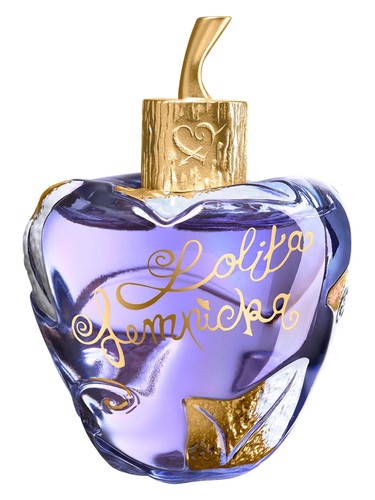
Where it distinguishes itself is in that unusual opening—the myrrh and ivy combination isn''t something you''ll find in those comparisons. It''s also generally more violet-forward than most of its listed peers, making it softer and perhaps more approachable than something as powerful as Shalimar or as heavy as Samsara. The inclusion of the original Lolita Lempicka in the comparison list is telling: there''s a through-line of anise sweetness and creative confidence that marks them as siblings, even if Eau de Minuit has taken a much darker path.
The Bottom Line
Eau de Minuit deserves more attention than it seems to have received. A 4.34 rating from those who''ve experienced it suggests a fragrance that over-delivers, that surprises and satisfies in ways its relatively modest profile might not suggest. This is sophisticated without being stuffy, sweet without being cloying, unusual without being unwearable.
It''s particularly worth seeking out if you love violet fragrances but want something with more backbone, or if you''re drawn to amber-vanilla compositions but have grown tired of the category''s predictability. The myrrh-touched opening alone makes this worth exploring for anyone interested in resinous, spiritual-leaning elements in their perfume.
Given its 2009 release date and relatively low vote count, availability may be a concern—this isn''t sitting on every department store counter. But for those who track it down, you''re getting a thoughtfully composed, well-executed fragrance that punches well above its weight class. It''s a midnight bloom that deserves to be discovered.
KI-generierte redaktionelle Rezension