First Impressions
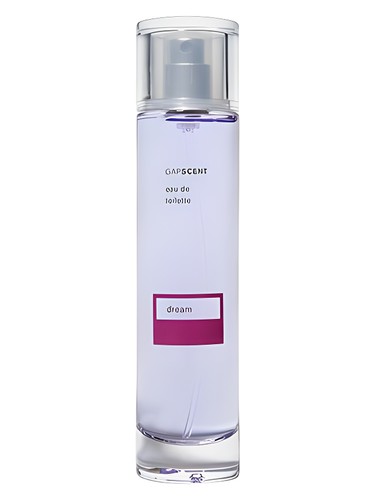
The first spray of Dream transports you instantly to 1995—not through dated nostalgia, but through an approach to freshness that feels both timeless and distinctly of its moment. Osmanthus and tangerine burst forth in a luminous cloud, their meeting point somewhere between apricot skin and citrus zest kissed by morning dew. This is not the aggressive, scrubbed-clean freshness that would dominate the late ''90s, but something softer, more naturally radiant. It''s the olfactory equivalent of cotton voile curtains billowing in spring air, or sunlight filtering through white petals. From that opening moment, Dream announces itself as unapologetically optimistic—a fragrance that believes in beauty without complication.
The Scent Profile
Dream''s architecture reveals a masterclass in white floral composition, though it never feels heavy or cloying in the way that descriptor might suggest. The osmanthus established in the opening continues its presence into the heart, creating a seamless transition where the tangerine''s brightness gradually gives way to a more complex floral bouquet. Here, freesia and orange blossom form the backbone—freesia lending its peppery, almost metallic greenness, while orange blossom contributes honeyed warmth and indolic depth.
The supporting cast of jasmine, lily-of-the-valley, and violet weaves through this central duo with remarkable restraint. The jasmine never screams; instead, it hums quietly in the background, adding creaminess without weight. Lily-of-the-valley brings its characteristic clean sparkle, that slightly soapy quality that reads as pure rather than detergent-like. The violet, meanwhile, adds a powdery softness that begins to hint at the drydown to come.
As Dream settles into its base, carnation emerges—not the spicy, clove-heavy carnation of vintage perfumes, but a gentler, more floral interpretation. It mingles with musk that reads as skin-like and comforting rather than animalic or dense. This foundation allows the white florals to continue radiating for hours, though in increasingly intimate whispers rather than the opening''s confident declaration. The entire evolution feels natural, like watching flowers move through their daily cycle from dawn brightness to twilight softness.
Character & Occasion
With its white floral dominance (100%) backed by robust floral (99%) and citrus (48%) accords, Dream is unequivocally a warm-weather fragrance. The community data confirms this intuition: 88% recommend it for spring, with summer close behind at 84%. These aren''t arbitrary numbers—Dream''s composition actively resists colder weather, where its delicate brightness might feel lost or inappropriately cheerful against winter''s weight.
The day/night split is even more pronounced: 100% day wear versus just 22% night. This isn''t a weakness; it''s clarity of purpose. Dream knows exactly what it wants to be—a daylight companion for casual moments, whether that''s weekend errands, outdoor brunches, or office environments that call for approachability over sophistication. The 26% fresh accord ensures it never feels too dressy or formal, while the modest 22% sweetness keeps it from veering into dessert territory.
Gap''s accessible retail presence in the ''90s meant Dream found its audience primarily among younger wearers, and that demographic imprint has remained part of its identity. This is a fragrance that speaks to optimism, simplicity, and an uncomplicated approach to beauty—qualities often (though not exclusively) associated with youth.
Community Verdict
The Reddit fragrance community''s sentiment toward Dream scores a solid 7.5/10, with opinions skewing notably positive. Based on 15 community voices, a clear narrative emerges: this is a beloved nostalgic scent with powerful emotional resonance for those who wore it in their formative years.
The pros center on three key themes. First, that emotional attachment—Dream represents a specific moment in personal history for many wearers, making it more than just a pleasant smell. Second, the fragrance profile itself earns consistent praise for being light, airy, and bright. Third, its affordable and accessible price point (at least when it was widely available) made it democratic perfumery at its finest.
The cons, however, reveal the challenges of loving a discontinued fragrance. Many community members report that Dream now feels too youthful for their current stage of life—their tastes have evolved toward more complex or sophisticated compositions. Availability issues plague those seeking to repurchase, with online sources limited or inconsistent. And there''s an honesty in the community acknowledgment that while Dream holds nostalgic value, its scent profile may not appeal to those with "evolved taste preferences"—a diplomatic way of saying that what charmed us at 20 might feel simplistic at 40.
The frequently mentioned alternative? Miss Dior Blooming Bouquet, suggested as a more mature interpretation of Dream''s essential character.
How It Compares
Dream''s similarity profile places it among iconic ''90s and early 2000s freshness: J''adore by Dior, Tommy Girl by Tommy Hilfiger, L''eau d''Issey by Issey Miyake, and Clinique Happy. This is illustrious company—fragrances that defined an era''s approach to accessible, optimistic femininity. Gap''s own Heaven appears as a sister scent, suggesting the brand briefly understood how to execute this aesthetic.
Where Dream distinguishes itself is in that osmanthus presence, giving it a slightly fruity-floral character that sets it apart from Tommy Girl''s grassier freshness or Happy''s citrus-forward brightness. It''s less aquatic than L''eau d''Issey, less solar than J''adore, occupying a middle ground that emphasizes softness over statement.
The Bottom Line
A 4.26/5 rating from 470 votes is remarkably strong, especially for a discontinued mall-brand fragrance from nearly three decades ago. That Dream maintains this reputation speaks to genuine quality in its formulation—this wasn''t just marketing magic, but a well-constructed white floral that understood its assignment perfectly.
The value assessment is complicated by discontinuation. When available, Dream represented extraordinary value—Gap pricing with surprisingly sophisticated execution. Today, hunting down bottles online becomes an exercise in nostalgia-driven archaeology, with prices and availability varying wildly.
Who should try Dream? Certainly anyone who wore it originally and wants to reconnect with that memory. But also curious fragrance explorers interested in understanding what mall perfumery could achieve at its peak, before corporate consolidation and cost-cutting diminished the category. If you love the fragrances in its similarity cluster but find them too expensive or too everywhere, Dream offers a road less traveled to that same sunny destination. Just don''t expect it to be your signature scent at 45—embrace it for what it is: a beautiful, uncomplicated moment captured in glass, forever young.
KI-generierte redaktionelle Rezension