First Impressions
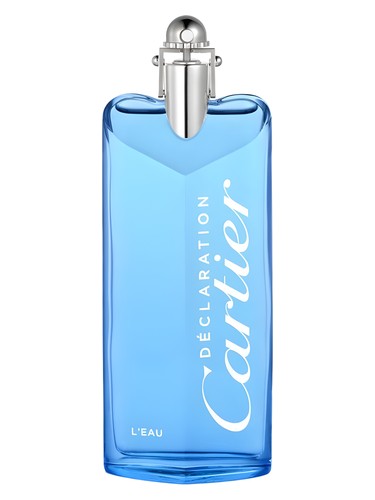
The first spray of Declaration L''Eau feels like opening windows on the first genuinely warm day of the year. Where Cartier''s original Declaration announced itself with spiced woods and cardamom swagger, this 2014 flanker takes a decisive left turn toward brightness. The citrus hits immediately—not the sharp, aggressive burst of cologne, but something rounder, more diffused, like sunshine filtering through sheer curtains. There''s an ease here that the Declaration lineage doesn''t typically embrace, a deliberate shedding of intensity in favor of approachability. Within seconds, you understand this isn''t meant to make statements in boardrooms; it''s engineered for linen shirts and outdoor lunches where heaviness has no place.
The Scent Profile
Declaration L''Eau commits fully to its citrus identity—the data shows this accord at full saturation, and your nose confirms it without question. While specific note breakdowns remain undisclosed, the fragrance architecture reveals itself through wear. The opening sustains its citrus dominance longer than typical eau de toilettes, suggesting a careful layering of different citrus facets rather than a single lemon or bergamot blast. There''s a slightly bitter edge that hints at grapefruit or yuzu, balanced by sweeter orange-family notes.
As the citrus begins its inevitable fade, the woody backbone emerges at 59% strength—substantial but never overwhelming. This isn''t the cedar intensity of the original Declaration; instead, it reads as a lighter, airier wood structure. Think sun-bleached driftwood rather than freshly-cut timber. The soft spicy accord (40%) weaves through this transition, providing just enough warmth to prevent the composition from becoming two-dimensional. It''s likely where traces of the Declaration DNA persist—perhaps a whisper of cardamom or a ghost of pepper, rendered in watercolor rather than oil paint.
The fresh spicy notes (30%) and aromatic elements (26%) create a bridge between the bright opening and the subtle musky drydown (17%). This final phase settles close to skin, a clean, barely-there presence that suggests freshly laundered fabric more than traditional masculine musk. The overall impression is remarkably linear—this fragrance doesn''t evolve dramatically so much as it gradually softens, like watching daylight fade through a long summer evening.
Character & Occasion
The community data tells a clear story: this is summer personified, scoring 100% for the season, with spring trailing respectably at 73%. Fall and winter barely register—and rightfully so. Declaration L''Eau would be utterly lost in cold weather, swallowed by heavy coats and central heating. But in warmth? It thrives.
The day-to-night split is even more decisive: 92% day versus a mere 16% night. This is a fragrance that respects the rhythm of sunlight hours. Imagine it during morning meetings that extend onto sunny patios, at weekend farmers markets, during afternoon sailing, or at casual garden parties where dress codes lean toward smart-casual at most. It''s the fragrance equivalent of removing your tie—still put-together, but consciously relaxed.
The masculine designation feels accurate but not aggressively so. There''s nothing here that would clash with modern gender-fluid fragrance sensibilities, but the woody-citrus construction follows recognizably classic masculine templates. It''s built for men who want to smell intentional without seeming like they tried—the fragrance equivalent of a perfectly broken-in Oxford shirt.
Community Verdict
With a solid 4.13 rating from 560 votes, Declaration L''Eau occupies comfortable territory: well-liked without being universally worshipped. This isn''t the polarizing artistic statement that earns either passionate devotion or outright rejection. Instead, it''s garnered respect as a reliable performer within its specific niche. The rating suggests a fragrance that does exactly what it promises—no more, no less—and does it well enough that hundreds of wearers have found value in the experience.
That lack of controversy is itself telling. This isn''t a fragrance people debate; it''s one they recommend for specific situations and then move on. It''s the kind of scent that earns its place through consistent competence rather than breakthrough innovation.
How It Compares
The similar fragrances list reads like a who''s-who of refined masculine freshness: Versace Man Eau Fraiche, L''Eau d''Issey Pour Homme, and both Terre d''Hermès variations. These aren''t accidents of association. All occupy the same sweet spot of citrus-forward, woody-backed compositions designed for warm weather and daytime wear. All prioritize elegance over projection, sophistication over boldness.
Where Declaration L''Eau distinguishes itself is in its particular balance. It''s warmer than the aquatic-leaning Versace Man Eau Fraiche, less ozonic than L''Eau d''Issey, and more traditionally citrus-forward than the mineral-vetiver character of Terre d''Hermès. It''s perhaps the safest of this distinguished company—which could be either its greatest strength or its fundamental limitation, depending on what you''re seeking.
The Bottom Line
Declaration L''Eau succeeds because it understands its assignment completely. This is Cartier acknowledging that not every moment requires the original Declaration''s intensity, that sometimes refinement means knowing when to whisper rather than speak. For warm-weather daytime wear, it delivers exactly what the data promises: bright citrus, supportive woods, and enough subtle complexity to feel grown-up without requiring contemplation.
Should you buy it? If you need a reliable summer office scent, something for warm-weather travel, or simply want the Declaration name without its characteristic boldness, absolutely. The 4.13 rating from 560 users suggests you''ll likely find it pleasant and wearable. Just understand what you''re getting: this is competence and comfort, not revolution. Sometimes, especially on hot days when anything heavier feels like a burden, that''s precisely enough.
KI-generierte redaktionelle Rezension