First Impressions
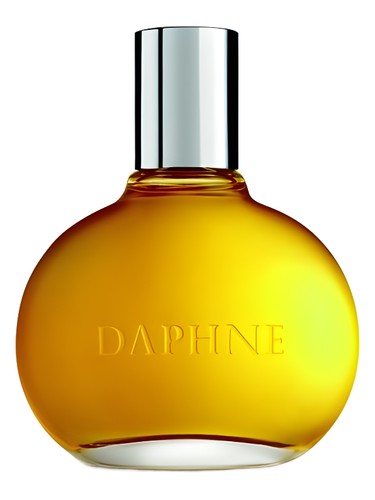
Spritz Daphne and you''re immediately transported into a mythology written in smoke and flowers. This is not the fresh, green laurel of the nymph''s transformation—instead, Comme des Garçons has conjured something far more intriguing: the moment between flesh and bark, between warmth and wood, captured in olfactory amber. The opening defies easy categorization, presenting a wall of honeyed resin shot through with white floral opulence and an unexpected veil of smoke that feels both ancient and utterly modern. It''s dense, golden, and unapologetically rich—the kind of fragrance that announces itself before you enter a room and lingers long after you''ve left.
The Scent Profile
Without specified note breakdowns, Daphne reveals itself through its dominant accords, and what a revealing performance it is. The amber accord—registering at full intensity—forms the backbone of this composition, but this isn''t your grandmother''s powdery amber. It''s viscous and almost molten, enriched by a warm spicy component (84%) that adds depth and a subtle bite to the sweetness. Think cardamom-laced honey, cinnamon bark steeped in resin, the kind of spice that warms rather than overwhelms.
The white floral heart (76%), anchored specifically by tuberose (61%), creates the fragrance''s most compelling tension. Tuberose typically veers toward the narcotic, the creamy, the overtly seductive—but here it''s tempered and transformed by those smoky (51%) and balsamic (51%) elements. The result is a tuberose that feels less like a hot-house flower and more like blossoms fossilized in amber, their sweetness preserved but darkened, their creaminess cut with incense smoke.
As Daphne evolves on skin, that smokiness becomes increasingly prominent, creating an almost chiaroscuro effect—light and dark, sweet and sharp, floral and woody all at once. The balsamic quality adds a resinous smoothness that ties everything together, preventing the composition from becoming either too cloying or too austere. This is a fragrance that doesn''t so much progress through traditional top-heart-base development as it does gradually reveal different facets of a singular, complex vision.
Character & Occasion
The seasonal data tells a compelling story: this is autumn and winter bottled, scoring perfect marks for fall (100%) and near-perfect for winter (93%). Those cooler months provide the ideal canvas for Daphne''s richness to unfold without overwhelming. In spring (38%) it might feel too heavy, too insistent; in summer (30%) it would be nearly unwearable unless you''re in aggressive air conditioning or evening coastal breezes.
Interestingly, while it performs admirably during the day (75%), Daphne truly comes alive at night (92%). This makes perfect sense—the amber and tuberose combination creates that golden-hour glow that transitions seamlessly from late afternoon meetings to evening dinners. It''s sophisticated enough for professional settings but possesses an underlying sensuality that makes it equally at home in more intimate contexts.
This is decidedly feminine in its presentation, but not in a demure way. Daphne suits someone who appreciates fragrance as statement rather than suggestion, who understands that true elegance sometimes requires a bit of edge. It''s for the woman who wears silk with leather, who quotes both poetry and philosophy, who knows that transformation—like the myth suggests—is never simple or sweet.
Community Verdict
With a rating of 4.25 out of 5 based on 502 votes, Daphne has clearly resonated with those who''ve encountered it. This is a substantial sample size, and the high rating suggests a fragrance that delivers on its promises. It''s not universally beloved—nothing this bold could be—but for those whose tastes align with rich, ambery, floral-spicy compositions, it''s evidently hitting the mark consistently. The fact that it maintains this rating more than a decade after its 2009 release speaks to its quality and staying power in a market constantly chasing the next new thing.
How It Compares
Daphne sits in distinguished company among its comparisons. The kinship with Chanel''s Coromandel makes perfect sense—both explore that amber-patchouli-incense territory with sophistication. The Shalimar and Coco references position it firmly in the grand amber tradition, while the Dune comparison suggests a certain warmth and complexity. The Black Orchid connection is perhaps the most telling—both fragrances take opulent florals and darken them with unexpected elements, creating something neither purely floral nor purely oriental.
Where Daphne distinguishes itself is in its smokiness and that particular treatment of tuberose. It''s less overtly sweet than Shalimar, less powdery than Coco, more wearable than Black Orchid''s heavy drama. It occupies a middle ground—approachable enough for amber lovers to embrace, interesting enough for avant-garde seekers to appreciate.
The Bottom Line
Daphne represents Comme des Garçons at their most accessible while still maintaining their conceptual edge. The 4.25 rating reflects a well-executed fragrance that knows exactly what it is and delivers consistently. While specific pricing and concentration information aren''t available, the general positioning of Comme des Garçons fragrances suggests this sits in the mid-to-upper contemporary range—investment territory, but not stratospheric niche pricing.
Who should seek this out? If you''re drawn to amber fragrances but find them often too linear or sweet, Daphne offers compelling complexity. If you love tuberose but want it presented in a less conventional context, this delivers. If you appreciate fragrances that reference mythology without being literal about it, you''ll find much to admire here.
Skip it if you prefer fresh, minimalist, or citrus-forward scents, or if you need something versatile across all seasons. This is a specialist fragrance for cooler weather and confident wearers. But for those whose taste runs toward the rich, the warm, and the deliberately complex, Daphne is absolutely worth the exploration.
KI-generierte redaktionelle Rezension