First Impressions
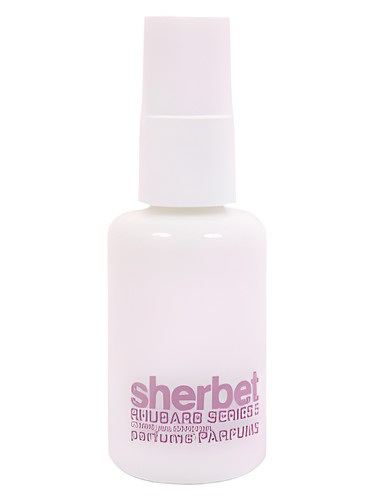
The first spray of Comme des Garçons Series 5 Sherbet: Rhubarb lands like a spoonful of something forbidden from the garden—simultaneously tart, sweet, and startlingly green. This isn't the polite, parlor-ready rhubarb of grandmother's pie; it's the raw stalk snapped fresh from the earth, still retaining its vegetal bite beneath a dusting of crystallized sugar. The litchi and bergamot create a shimmering halo around that central rhubarb note, adding a juicy translucence and citrus sparkle that feels like sunlight filtering through a greenhouse glass. There's an immediate freshness here that announces itself with confidence—this is a fragrance that knows exactly what it wants to be, and wastes no time in declarations.
What strikes you isn't just the fruitiness (which dominates at 100% in the accord profile), but the sophisticated green undertone running at 86%. This dual personality—candy-sweet yet garden-crisp—defines the entire composition and sets it apart from typical fruit-forward feminine fragrances of its era.
The Scent Profile
The opening trio of rhubarb, litchi, and bergamot creates a complex fruit salad that's more interesting than pretty. The rhubarb provides that distinctive sour-sweet profile, almost celery-like in its greenness, while litchi adds an exotic, rose-tinged juiciness. Bergamot keeps things bright and slightly bitter, preventing the composition from tumbling into simple sweetness. This top note phase is where the fragrance shines most brilliantly—it's vibrant, unusual, and thoroughly modern even two decades after its 2003 release.
As the initial burst settles, camellia and orchid emerge in the heart, though they whisper rather than shout. These aren't the heady, indolic florals of classic perfumery. Instead, they function almost as textural elements, adding a soft, watery quality that extends the fruity-green theme rather than redirecting it. The floral accord registers at just 48%—present but not dominant, which feels intentional. This is a fragrance where flowers play a supporting role, adding sophistication without stealing the show from the rhubarb star.
The base of vanilla and oak tree provides the most unexpected turn. The vanilla (measuring at 46% in the accord breakdown) adds that sherbet-like creaminess promised in the name, while oak tree—an unusual choice—grounds everything with a subtle woody dryness. It's here that the 75% aromatic accord reveals itself, giving the fragrance an herbal, almost cologne-like quality that prevents it from becoming too dessert-like. The drydown is softer, sweeter, but retains enough of that green backbone to remain refreshing rather than cloying.
Character & Occasion
This is unequivocally a warm-weather fragrance, and the community data confirms it emphatically: 85% summer, 80% spring, with sharp drop-offs to 22% fall and a mere 10% winter. It's easy to understand why. The bright, juicy character and green freshness practically demand sunshine and bare skin. This is a poolside fragrance, a farmers market fragrance, a sundress-and-sandals fragrance.
The day versus night breakdown tells an even clearer story: 100% day, 17% night. There's nothing mysterious or seductive about Rhubarb—it's transparent, cheerful, and unapologetically bright. Wear this to brunch, to a garden party, to an afternoon spent reading in the park. Don't reach for it when you're dressing for evening cocktails or a romantic dinner.
Who is this for? The woman who appreciates Comme des Garçons' conceptual approach but wants something more immediately wearable than some of their more challenging offerings. Someone who finds typical fruity florals boring but still wants approachability. It skews youthful in spirit without being juvenile, fresh without being simple.
Community Verdict
With a solid 4.12 rating from 335 voters, Rhubarb sits comfortably in "very good" territory. This isn't a polarizing masterpiece that inspires equal parts devotion and hatred, nor is it a forgettable crowd-pleaser. Instead, it occupies that sweet spot of being distinctive enough to interest adventurous wearers while remaining accessible enough to garner broad appreciation.
The healthy vote count suggests this has maintained relevance despite being over twenty years old—no small feat in the fast-moving fragrance world. People are still discovering it, still rating it, still finding value in its particular take on fruity freshness.
How It Compares
The similar fragrances list reads like a who's who of sophisticated garden scents: multiple entries from Hermès' Jardin collection (Un Jardin Sur Le Nil, Un Jardin en Méditerranée), Hermès' Eau de Rhubarbe Écarlate (an obvious comparison given the shared star ingredient), Diptyque's Philosykos, and Etat Libre d'Orange's Tilda Swinton Like This.
What's revealing about these comparisons is that they're all from niche or avant-garde brands known for artistic integrity over commercial appeal. Rhubarb doesn't compete with mainstream fruity fragrances—it exists in a more conceptual space, where the goal is evocation and idea rather than mass appeal. Against Hermès' Eau de Rhubarbe Écarlate, it's sweeter and less austere. Compared to the Jardin series, it's more singularly focused, less about an entire landscape and more about one perfectly captured ingredient.
The Bottom Line
Comme des Garçons Series 5 Sherbet: Rhubarb delivers exactly what it promises: the scent of rhubarb transformed into something wearable, sweet, and surprisingly sophisticated. At 4.12 out of 5, it's clearly succeeding with those who try it, though its specific character—bright, green, determinedly daytime—means it won't be everyone's everyday fragrance.
This is a warm-weather specialist, perfect for those seeking an alternative to citrus colognes or standard fruity florals. If you appreciate fragrances that capture a single idea beautifully rather than trying to be all things to all people, Rhubarb deserves your attention. It's particularly worth exploring if you've enjoyed the Hermès garden collection or find yourself drawn to fragrances that balance sweetness with freshness.
Two decades on, it remains a compelling example of how conceptual perfumery can still be perfectly wearable—avant-garde in spirit, but utterly approachable in execution.
KI-generierte redaktionelle Rezension