First Impressions
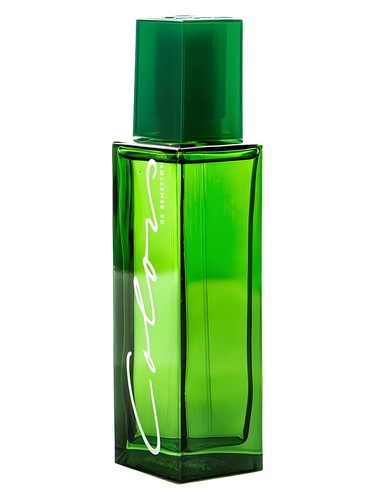
The first spray of Colors de Benetton announces itself with the kind of confident complexity that defines late-80s perfumery—before minimalism became the guiding principle, before focus groups smoothed every edge. Israeli basil and Egyptian sage collide with French hyacinth and neroli in an opening that refuses to choose between fresh, spicy, and floral. It''s green and sharp, yet sweet and inviting, like walking into a Mediterranean herb garden where someone''s inexplicably left a fruit salad and a bouquet of white flowers. This is a fragrance that knew exactly what it wanted to be: everything, all at once, unapologetically.
That 100% fresh spicy accord rating makes perfect sense within seconds. The basil doesn''t whisper—it speaks clearly, supported by sage''s silvery-green aromatics. But just as you''re settling into this herbal landscape, the 99% fruity accord begins its ascent, hinting at the tropical explosion waiting in the wings.
The Scent Profile
The evolution from top to heart happens with theatrical flair. Those aromatic herbs and bright neroli establish the stage, but it''s the heart notes that truly define Colors de Benetton''s character. Pineapple and passionfruit bring a juicy, almost effervescent quality that should clash spectacularly with tuberose and jasmine—yet somehow doesn''t. This is where the fragrance earns its 98% sweet accord rating, though it''s not the simple sweetness of candied fruits. Peach adds a soft, fuzzy texture to the composition, while Bulgarian rose attempts to ground the exuberance with classical elegance.
The tuberose deserves special mention: it''s creamy and heady, threading through those tropical fruits like vanilla through a piña colada. This heart phase is where Colors reveals its true personality—bold, optimistic, perhaps a touch naive in its willingness to throw every delicious note into the mix. It''s perfumery as abundance rather than restraint.
The base brings unexpected sophistication to this fruit-forward journey. Madagascar vanilla provides the sweetness you''d expect, but it''s the Chinese patchouli, oakmoss, and cedar that add genuine depth. The 74% woody accord isn''t just decorative—it''s structural, giving the composition a foundation substantial enough to support all that fruit and florals. Opoponax adds a warm, balsamic resinousness, while civet (likely synthetic by 1987, but present nonetheless) contributes an animalic warmth that prevents the vanilla from becoming too dessert-like. This base is what transforms Colors from a simple fruity-floral into something more enduring and complex.
Character & Occasion
Colors de Benetton''s data shows equal suitability across all seasons, and that versatility stems from its multifaceted personality. The fresh, aromatic opening makes it perfectly viable in spring and summer, while the vanilla-patchouli-oakmoss base provides enough warmth for cooler months. This is a fragrance from an era when perfumes were expected to work year-round, before the concept of "fragrance wardrobes" became standard.
The lack of specific day/night leaning (0% for both categories) suggests genuine versatility, though the 97% aromatic and 80% green accords make this feel more naturally suited to daytime wear. This isn''t a fragrance that fades into the background—it creates a distinctive presence, the olfactory equivalent of Benetton''s colorful knitwear campaigns.
Who is this for? Anyone drawn to the maximalist approach of 80s and 90s perfumery, where complexity was celebrated rather than simplified. It''s for those who find modern fruity florals too thin, too focused-grouped, too safe. The fresh spicy and aromatic elements make it particularly appealing to those who want sweetness with an herbal edge, fruit with a green counterpoint.
Community Verdict
The fragrance community''s sentiment scores Colors de Benetton at 7.5 out of 10, with a notably positive overall feeling despite—or perhaps because of—its discontinued status. Based on 30 community opinions, the strongest theme is nostalgia: this is a fragrance that evokes powerful memories for those who wore it during its heyday. Its distinctive scent profile left lasting impressions, the kind that people remember decades later.
The pros are clear: it''s a unique composition that captures a specific moment in perfumery history, offering a scent experience notably different from contemporary releases. Its longevity on skin and in memory alike speaks to genuine quality.
But there''s a significant frustration thread running through community discussions. Colors de Benetton is discontinued and increasingly difficult to find in most markets. Perhaps more tellingly, the community hasn''t identified any widely agreed-upon dupes or satisfactory alternatives. This leaves fans in a challenging position—they remember and want this specific experience, but accessing it requires hunting through vintage sellers or settling for something that doesn''t quite capture what made the original special.
The 3.91 out of 5 rating from 610 votes suggests solid appreciation without universal acclaim—respectable for a discontinued fragrance that relies on memory and occasional vintage bottles.
How It Compares
The similar fragrances list reads like a who''s-who of 80s and 90s powerhouses: Laguna by Salvador Dali, Angel by Mugler, Poison by Dior, Amarige by Givenchy, and Eternity by Calvin Klein. What these share with Colors de Benetton is unabashed boldness and complexity. Where Angel goes gourmand with patchouli and chocolate, where Poison opts for dark plum and spice, Colors chooses the herb-garden-meets-fruit-market route.
It occupies an interesting middle ground: more accessible than Poison''s gothic intensity, more complex than Eternity''s fresh florals, less avant-garde than Angel''s patchouli-caramel experiment. Colors was the fragrance for someone who wanted presence without intimidation, sweetness with an intellectual aromatic edge.
The Bottom Line
Colors de Benetton represents a fascinating snapshot of late-80s perfumery ambition—the belief that you could layer herbs, tropical fruits, white florals, and woody-animalic bases into a single composition and have it work. The remarkable thing? It did work, for many people, creating memories strong enough to last decades.
The 3.91 rating reflects both genuine appreciation and the limitations of discontinued availability. This isn''t a perfect fragrance—its maximalism won''t appeal to those trained on modern minimalist compositions—but it''s an honest one, executed with quality ingredients and genuine personality.
Should you try it? If you''re a collector of vintage fragrances or someone fascinated by 90s nostalgia, absolutely—if you can find it. For those seeking the fresh-spicy-fruity-woody experience, be prepared to hunt through vintage sellers or estate sales. The lack of satisfactory dupes means you''re either experiencing the real thing or accepting something different.
For everyone else, Colors de Benetton serves as a reminder that perfumery once embraced abundance over editing, confident that wearers could handle complexity. Whether that''s your preference is a matter of taste, but there''s something undeniably charming about a fragrance that believed more could genuinely be more.
KI-generierte redaktionelle Rezension