First Impressions
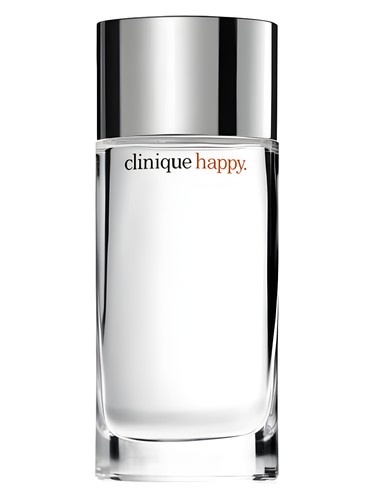
The first spray of Clinique Happy promises exactly what its name suggests: an unapologetic burst of optimism captured in liquid form. This is citrus at maximum volume—a sunburst of orange, blood grapefruit, and Indian mandarin that greets you with the kind of cheerful enthusiasm that defined late-''90s fragrance sensibilities. There''s something wonderfully uncomplicated about that opening, a 100% commitment to the citrus accord that feels both refreshing and, in today''s niche-obsessed landscape, almost charmingly straightforward. Apple and plum add a fruity sweetness to the introduction, while bergamot provides a touch of sophistication to what is otherwise pure, undiluted joy in a bottle.
Or at least, that''s what Happy once was.
The Scent Profile
The composition unfolds as a textbook example of the fresh floral genre that dominated department store counters at the turn of the millennium. Those initial citrus notes—orange, grapefruit, mandarin, bergamot, apple, and plum—create an effervescent opening that should sparkle like champagne in sunshine. The sweetness is present but restrained at 23%, enough to make the fragrance approachable without veering into dessert territory.
As the citrus settles, the heart reveals a bouquet of white and pastel florals: lily-of-the-valley, freesia, orchid, and rose. These notes comprise the 45% floral accord and 35% white floral presence, creating a soft, feminine core that tempers the zesty opening. The freesia adds a subtle soapiness, while the orchid contributes a creamy texture that should bridge the gap between the sparkling top and the warmer base.
The foundation rests on mimosa, lily, magnolia, musk, and amber—a surprisingly elaborate base for what presents itself as such a straightforward fragrance. The amber and musk should provide warmth and longevity, while the trio of mimosa, lily, and magnolia extends the floral theme through to the finish. There''s a 21% green accord woven throughout that adds a fresh, slightly sharp edge to prevent the composition from becoming too sweet or cloying.
Character & Occasion
Happy positions itself as an all-season fragrance, designed for maximum versatility. It''s the kind of scent that should transition seamlessly from spring mornings to summer afternoons, from autumn errands to winter pick-me-ups. This is decidedly daytime territory—a scent for coffee dates, office environments, casual weekends, and any moment that calls for approachable freshness rather than dramatic presence.
The intended wearer is someone who values optimism and accessibility over complexity. This isn''t a fragrance that demands contemplation or rewards deep analysis. It''s meant to be the olfactory equivalent of a smile—uncomplicated, friendly, and universally pleasant.
Community Verdict
Here''s where the story takes a darker turn. Based on 80 community opinions, Clinique Happy scores a notably negative sentiment of just 3.5 out of 10—a striking disconnect from its respectable 3.56 overall rating from 8,195 votes. The discrepancy tells a tale of two fragrances: the beloved original and its disappointing successor.
Long-time wearers speak fondly of the original 1997-2007 formulation, praising its fresh citrus character, impressive longevity, and compliment-generating presence. That version, by all accounts, delivered on its sunny promise.
The reformulated version, however, draws consistent criticism. The most damning comparison? Multiple users describe the current formula as smelling like "hand sanitizer" or appearing "watered down." Performance has reportedly plummeted, with the fragrance fading within an hour of application—a death sentence for any perfume. Perhaps most troubling, wearers report a "rubbery or balloon-like dry down" in newer versions, a note that certainly wasn''t part of the original brief. Some users even report developing headaches from the reformulated version.
The consensus is unambiguous: what was once a signature scent has been fundamentally degraded. Those seeking the Happy they remember are advised to hunt down vintage bottles from before 2007, though the community acknowledges this is an imperfect solution.
How It Compares
Clinique Happy sits in the company of other fresh, accessible fragrances like Light Blue by Dolce&Gabbana, Chance Eau Tendre by Chanel, and Elizabeth Arden''s Green Tea. These are the reliable wardrobe staples, the fragrances that prioritize wearability over daring creativity. In its original formulation, Happy held its own in this category. The current version, however, appears to have fallen behind competitors that have maintained their quality through the years.
The comparison to Coco Mademoiselle and Miracle by Lancôme suggests Happy once occupied a sweet spot between fresh simplicity and polished sophistication. Whether it still does is a matter of considerable debate.
The Bottom Line
Clinique Happy presents a cautionary tale about reformulation. A 3.56 rating from over 8,000 votes suggests many people still find something to appreciate here, likely those encountering it for the first time without the context of what came before. But the passionate disappointment from the community—those who knew and loved the original—cannot be ignored.
If you''re curious about Happy, understand you''re likely experiencing a shadow of its former self. For those who wore and loved the original, seeking out vintage bottles may be the only way to recapture that sunshine. For newcomers, there are fresher, better-performing citrus florals available at similar price points. The fragrance might still live up to its name for some, but for the community that championed it for years, Clinique Happy has become a bittersweet reminder that not all reformulations preserve the magic that made a fragrance special in the first place.
KI-generierte redaktionelle Rezension