First Impressions
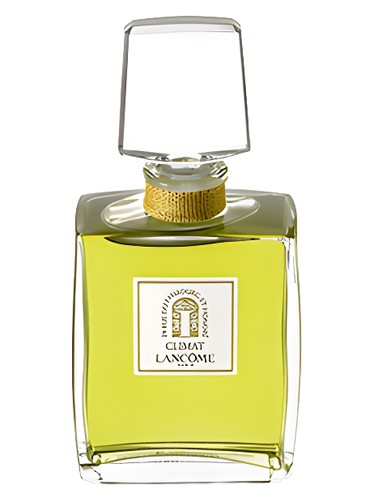
The first spray of Climat transports you to a dew-laden morning garden where lily-of-the-valley pushes through cool earth. This is not a tentative introduction—it''s an effervescent declaration, where aldehydes lift a bouquet of white flowers into a sparkling, almost champagne-like brightness. The opening feels both vintage and timeless, with violet and narcissus lending a green, slightly melancholic sweetness that''s immediately recognizable as late-1960s French perfumery at its finest. There''s a crispness here, a freshness that belies the fragrance''s age, while bergamot adds just enough citric tang to keep the florals from becoming too solemn. Peach whispers at the edges, softening what could otherwise be an austere composition into something more approachable, more human.
The Scent Profile
Climat unfolds like a slow reveal of light through morning mist. Those opening moments—dominated by lily-of-the-valley, narcissus, and violet—establish this as firmly white floral territory, yet the composition refuses to be merely pretty. Bergamot provides a sophisticated counterpoint, while jasmine and rose add depth without overwhelming the cooler, greener aspects. The peach note is subtle, almost subliminal, adding a velvet texture rather than overt fruitiness.
As the fragrance settles into its heart, the aldehydes step forward more assertively. This is where Climat reveals its vintage DNA most clearly—that soapy, waxy, effervescent quality that defined an era of perfumery. But Lancôme''s perfumers were clever here: rosemary appears as an unexpected aromatic element, adding an herbal brightness that keeps the composition from becoming too powdery or dated. Tuberose brings creamy opulence, its indolic richness carefully measured to enhance rather than dominate.
The base is where Climat shows its complexity and longevity. Civet and musk provide an animalic warmth that grounds all that ethereal floral brightness, while sandalwood and vetiver contribute woody dryness. The inclusion of bamboo—unusual for its time—adds a fresh, almost aqueous greenness that extends the spring garden metaphor into the drydown. Amber and tonka bean round everything out with soft, powdery sweetness, creating a skin-like finish that feels both intimate and refined.
Character & Occasion
Climat is overwhelmingly a spring fragrance, and the data bears this out decisively—89% of wearers associate it with that season. This makes perfect sense: everything about this perfume evokes renewal, fresh blooms, and that particular quality of light that arrives after winter''s end. It performs admirably in fall as well (64%), where its woody and powdery aspects find harmony with cooler temperatures and changing leaves.
This is quintessentially a daytime scent, suited to moments that call for elegance without drama. Think morning meetings, garden parties, museum visits, or lunch with someone who matters. While it can certainly be worn in the evening (57% say it works for night), its character is inherently suited to daylight—it wants to catch the sun, to interact with fresh air, to accompany rather than announce.
The fragrance skews feminine in its original conception, but its aromatic and woody elements, combined with that green freshness, make it approachable for anyone who appreciates classic white florals with substance. This isn''t a fragrance for those seeking bold projection or sweet accessibility. It rewards patience and asks for a certain confidence—the wearer who understands that elegance doesn''t need to shout.
Community Verdict
With a rating of 4.09 out of 5 from 1,134 votes, Climat has earned its place as a beloved classic. This isn''t a niche curiosity with a cult following; it''s a time-tested composition that has found genuine appreciation across generations. The consistency of that rating—neither sky-high nor disappointing—suggests a perfume that delivers exactly what it promises: refined, wearable sophistication without pretension.
How It Compares
Climat exists in the same conversation as Chanel No. 5 and No. 19—those defining aldehydic florals that shaped modern perfumery. Where No. 5 is warmer and more opulent, and No. 19 is greener and more austere, Climat strikes a middle ground. It shares DNA with Fidji by Guy Laroche and Paloma Picasso, yet maintains its own identity through that distinctive lily-of-the-valley prominence and the unusual freshness that carries through to the base. The vintage version intensifies these characteristics, but the current formulation remains remarkably true to the original vision—a rarity in an age of reformulations.
The Bottom Line
Climat deserves its 4.09 rating and the continued devotion of over a thousand reviewers. This is not a safe, crowd-pleasing fragrance, nor is it deliberately challenging. Instead, it occupies that rare space of sophisticated accessibility—immediately recognizable as quality, rewarding on repeated wearings, and versatile enough for regular rotation without becoming boring.
Should you buy it? If you appreciate classic French perfumery, if white florals speak to you, if you want something appropriate for professional settings that still feels special—absolutely. If you''re seeking sweet, fruity, or overtly sensual, look elsewhere. Climat is for the person who understands that true elegance often arrives quietly, dressed in lily-of-the-valley and morning light.
KI-generierte redaktionelle Rezension