First Impressions
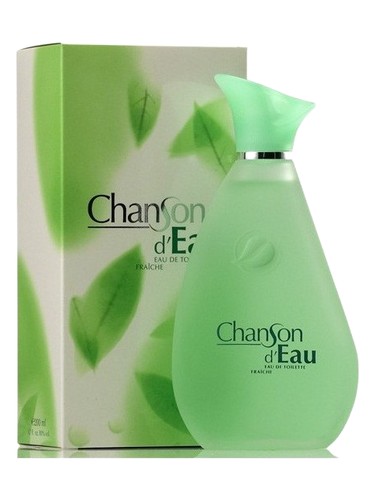
The first spray of Chanson d''Eau feels like stepping into a sun-drenched herb garden on a crisp morning. There''s an immediate brightness—not the sharp citrus burst of typical fresh fragrances, but something more nuanced and herbal. The basil announces itself with green confidence while mandarin orange weaves through with gentle sweetness, and lavender adds its calming, aromatic signature. This opening is decidedly unconventional for a 1990s feminine fragrance, eschewing the decade''s usual fruity florals for something more sophisticated and grounded. It''s both invigorating and contemplative, the kind of scent that makes you pause and breathe deeply.
The Scent Profile
Chanson d''Eau''s composition tells a story of contrasts beautifully balanced. Those opening moments belong entirely to the aromatic accord—rating at a perfect 100%—with basil leading the charge alongside mandarin orange and lavender. The combination creates a fresh, green atmosphere (53% green accord) that feels Mediterranean in spirit, though the lavender brings a distinctly French sensibility to the blend.
As the fragrance settles into its heart, the narrative takes an unexpected turn. Cardamom introduces a warm spiciness (93% fresh spicy accord, 50% warm spicy), adding dimension and intrigue to the composition. Jasmine provides the traditional floral element expected in a feminine fragrance, but it''s restrained here, playing a supporting role rather than dominating. The most surprising addition is mango—a tropical fruit note that could easily veer sweet or cloying, but instead adds a subtle, juicy quality that keeps the aromatic elements from becoming too austere.
The base reveals sandalwood and tonka bean working in tandem to create warmth without heaviness. The sandalwood offers its characteristic creamy woodiness, while tonka bean contributes gentle vanilla-like sweetness and depth. This foundation allows the brighter top notes to gradually soften into something comforting and skin-close, though the aromatic character never fully dissipates.
Character & Occasion
The data tells a clear story: Chanson d''Eau is overwhelmingly a warm-weather, daytime fragrance. With summer scoring 99% and spring at 85%, this is a scent designed for sunshine and casual ease. The daytime rating of 100% versus a mere 8% for night confirms its informal, approachable nature—this isn''t a fragrance for candlelit dinners or formal events.
The aromatic-citrus profile makes perfect sense for these occasions. It''s light enough not to overwhelm in heat, fresh enough to feel appropriate for casual settings, and distinctive enough to feel intentional rather than generic. The lavender and basil combination suggests this would excel in outdoor settings—garden parties, farmers market strolls, weekend brunches on patios.
That said, the fall and winter scores (16% and 8% respectively) indicate this isn''t a fragrance that translates well to cooler months. The fresh, green character that thrives in warmth likely feels thin and out of place when temperatures drop.
Community Verdict
The Reddit fragrance community''s relationship with Chanson d''Eau is complicated, reflected in a sentiment score of 6.5/10—decidedly mixed. The conversation around this fragrance is less about its olfactory merits and more about its heartbreaking unavailability.
The pros center almost entirely on emotional value. Long-time users cherish it for nostalgic and sentimental reasons, and there''s a particular devotion from the Spanish market, where older generations hold it dear. This is a fragrance that triggers memories, that connects people to earlier versions of themselves or to loved ones who wore it. That kind of attachment transcends typical fragrance discussions about projection and longevity.
But the cons are significant and practical: Chanson d''Eau is discontinued, making it extremely difficult to find and source legitimately. International shipping availability is limited, and stock levels are uncertain at best. The community''s summary is telling—the primary challenge isn''t deciding whether to buy it, but rather locating legitimate sources in the first place.
Based on five community opinions, the consensus is clear: this fragrance is best suited for those seeking nostalgia and personal memories, for the Spanish market where it remains beloved, or as a gift for long-time users desperately hunting down their discontinued favorite.
How It Compares
Chanson d''Eau shares DNA with several better-known fragrances. Elizabeth Arden''s Green Tea offers similar fresh, aromatic simplicity, though it leans more tea-focused than herbal. Light Blue by Dolce&Gabbana occupies the same casual, daytime, warm-weather territory, though with a more explicitly fruity-floral profile. The comparison to Cerruti 1881 makes sense given both fragrances'' green, aromatic sensibilities.
More surprising is the connection to Kenzo Jungle L''Elephant and Coco Mademoiselle—these are bolder, more complex fragrances. Yet perhaps the comparison speaks to Chanson d''Eau''s unexpected depth, that interplay of aromatic freshness with warm spices that gives it more character than a simple fresh scent.
The Bottom Line
With a rating of 3.87 out of 5 from 687 votes, Chanson d''Eau sits comfortably in "good but not exceptional" territory—and that seems fair. This isn''t a groundbreaking masterpiece, but rather a well-crafted, pleasant aromatic fragrance that found its audience.
The tragedy is that its audience can no longer easily access it. If you''re a long-time wearer searching for a bottle, the hunt may prove frustrating and potentially expensive. For those curious based on the note profile alone, you''re likely better served exploring the similar fragrances still in production—Green Tea or Light Blue will scratch a similar itch with far less hassle.
But if you encounter a legitimate bottle at a reasonable price, especially if you have Spanish heritage or memories tied to this scent, it''s worth securing. Some fragrances are more than the sum of their notes—they''re time capsules, emotional anchors, connections to people and places. Chanson d''Eau, for its devoted following, is exactly that: a song that still resonates, even as it fades from the market.
KI-generierte redaktionelle Rezension