First Impressions
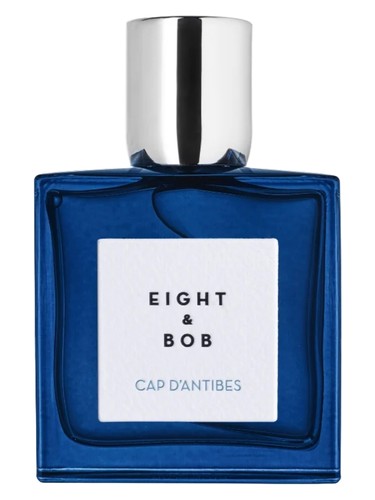
The first spray of Cap d''Antibes delivers a jolt of verdant intensity that feels miles away from the sun-soaked glamour its name suggests. Instead of champagne terraces and yacht clubs, this opening conjures dense forest undergrowth after rain—violet leaf and birch creating a crisp, almost bitter greenness that vibrates with mineral freshness. There''s mint too, but not the sweet mojito variety; this is crushed stems and bruised leaves, sharp and alive. It''s an unexpectedly rugged introduction from a brand better known for romantic legend than raw naturalism, and it sets the tone for a fragrance that refuses to play by conventional Mediterranean rules.
The Scent Profile
That aggressive green opening—which the community data confirms as the dominant accord at 100%—gradually softens as Cap d''Antibes settles into its heart. The violet leaf''s metallic edge persists, but now it mingles with expanses of moss and what can only be described as "green notes" in their purest form. There''s something ozonic here, a quality that suggests both forest air and sea spray, bridging the gap between the fragrance''s woodland character and its coastal namesake. The cinnamon appears as more of a textural element than a spice bomb, adding warmth without sweetness, a subtle friction against all that verdant coolness.
The woody accord, rating at 74%, becomes increasingly prominent as the fragrance dries down. Cedar emerges as the backbone—clean, pencil-shaving cedar rather than anything overtly masculine or aggressive. What''s fascinating is how the base develops: incense threads smoke through the composition (that 64% smoky accord making perfect sense), while vanilla provides the barest hint of comfort without ever veering into dessert territory. This isn''t gourmand vanilla; it''s the whisper of sweetness you might detect in aged wood or tree resin.
The leather and aquatic accords (47% and 41% respectively) hover at the edges throughout the wear, never taking center stage but adding complexity—a slightly tanned, salted quality that perhaps nods to those Côte d''Azur origins after all.
Character & Occasion
Cap d''Antibes is definitively a warm-weather fragrance, and the community has spoken clearly on this point: spring scores 100%, summer 99%, while winter limps in at just 18%. This makes sense. The green freshness and ozonic lift require warmth to truly shine; in cold weather, that beautiful crispness might simply read as thin or sharp. Fall, at 62%, represents a transitional sweet spot—those early autumn days when mornings are cool but afternoons still hold summer''s memory.
The day/night split (98% day, 46% night) tells an equally clear story. This is fundamentally a daylight scent, suited to activities rather than occasions—hiking coastal trails, browsing farmers markets, weekend drives with the windows down. That''s not to say it can''t work for evening, but its character is fundamentally casual, outdoorsy, unselfconscious.
The masculine designation fits, though not because of any barbershop clichés or aggressive swagger. Cap d''Antibes feels masculine in the way a well-worn linen shirt or quality leather boots do—understated, functional, genuine. It''s for someone who wants presence without announcement, who values quality over projection.
Community Verdict
With a rating of 3.69 out of 5 from 438 votes, Cap d''Antibes occupies interesting middle ground. This isn''t a consensus masterpiece, nor is it a disappointment. Instead, it appears to be a fragrance that rewards specific tastes—those who appreciate green scents in all their challenging, uncompromising glory will rate it higher, while those seeking crowd-pleasing accessibility might find it too austere, too committed to its vision. That''s actually encouraging. A 3.69 with nearly 450 votes suggests a fragrance with character and conviction, one that doesn''t try to please everyone and succeeds in delighting its intended audience.
How It Compares
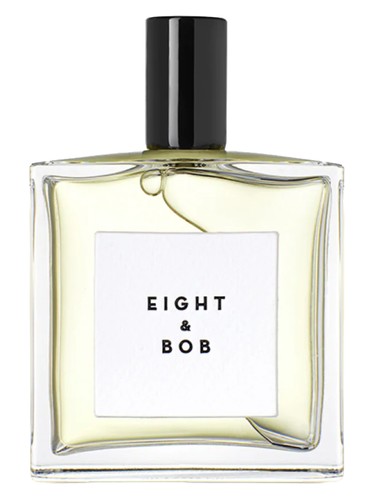
The similar fragrances list is revealing. Green Irish Tweed by Creed makes obvious sense—both traffic in that aristocratic-green-cologne territory, though Cap d''Antibes skews darker and smokier. The inclusion of Encre Noire and Tauer''s L''Air du Desert Marocain suggests Cap d''Antibes shares something of their uncompromising character and earthy depth. Oud Wood''s presence in the comp set is more puzzling until you consider the smoky, incense-laden base—both fragrances prioritize woody sophistication over easy charm.
What becomes clear is that Cap d''Antibes occupies a niche: green fragrances with backbone, scents that use freshness as a starting point rather than an end goal. It''s less polished than Green Irish Tweed, more wearable than Encre Noire, and distinctly less exotic than the Tauer.
The Bottom Line
Cap d''Antibes succeeds by knowing exactly what it wants to be: a green, woody fragrance with Mediterranean inspiration filtered through a darker, more complex lens. That 3.69 rating reflects honest assessment—this won''t be everyone''s signature scent, but for those drawn to verdant, naturalistic compositions with smoky depth, it offers genuine appeal.
The ideal wearer appreciates niche sensibilities without requiring extreme uniqueness, wants warmth-weather freshness that goes beyond citrus and marine clichés, and values evolution and complexity over linear simplicity. If you''ve worn Green Irish Tweed to death or find most fresh fragrances too sweet or synthetic, Cap d''Antibes deserves your attention. Just save it for spring mornings and summer days—this is one fragrance that knows its season.
KI-generierte redaktionelle Rezension