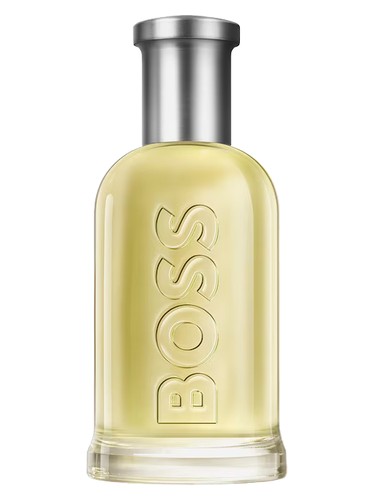
First Impressions
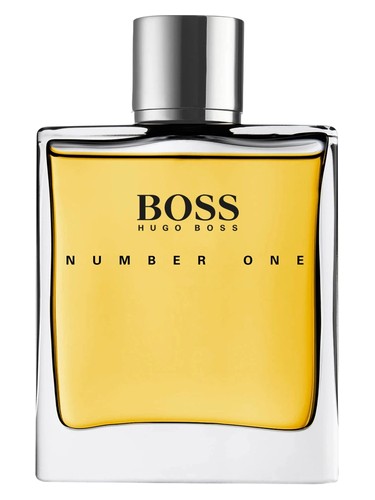
The first spray of Boss Number One feels like stepping into a corner office with mahogany paneling and leather-bound books. There''s an immediate jolt of crisp juniper and bergamot, softened by an unexpected whisper of green apple that keeps the opening from veering into austere territory. This is aromatic confidence distilled—herbal, slightly medicinal, unapologetically masculine in that late-''80s way that never apologized for anything. The artemisia and caraway add a peculiar, almost digestif-like quality, as if someone decided to splice a bracing gin and tonic with a traditional fougère. It''s brisk without being cold, complex without being fussy, and unmistakably a statement fragrance from an era when men''s perfumery wasn''t afraid to take up space.
The Scent Profile
Boss Number One announces itself with a verdant, sharp-edged fanfare. The top notes combine citrus brightness—bergamot, lemon, and grapefruit—with aromatic herbs like basil and that distinctive artemisia bitterness. The juniper adds an almost gin-like crispness, while caraway introduces an unexpected spicy-sweet undertone that hints at the complexity waiting beneath. That green apple note, likely an early-adopter move in 1985, provides just enough sweetness to temper what could otherwise be a bracingly bitter opening.
As the scent settles, the heart reveals Boss Number One''s true character: a honey-lavender combination that shouldn''t work as well as it does. This is where the fragrance earns its 69% honey accord rating, though it''s not cloying or gourmand. Instead, the honey acts as golden thread weaving through classic aromatic florals—rose, jasmine, geranium, and lily-of-the-valley—while sage and orris root maintain an herbal, powdery refinement. The lavender bridges the gap between the green opening and this surprisingly lush middle phase, keeping one foot in traditional fougère territory while the other ventures into richer, more opulent spaces.
The base is where Boss Number One plants its flag firmly in power-scent terrain. Tobacco and oakmoss form the backbone—that latter note placing this squarely in the pre-IFRA restriction era when oakmoss could be used with abandon. Patchouli adds earthiness, sandalwood provides creamy woodiness, and a triumvirate of musk, amber, and cedar creates a warm, enveloping foundation. The cinnamon appears as a spicy accent rather than a dominant player, adding subtle warmth without tipping into oriental territory. This base is built to last, to make an impression in the elevator and linger in the conference room long after you''ve left.
Character & Occasion
The community has spoken clearly on this one: Boss Number One is a cold-weather champion. With perfect scores for fall (100%) and near-perfect for winter (98%), this is emphatically not a fragrance for humid days or beach vacations. Its 29% summer rating tells you everything you need to know—save this for when temperatures drop and you need something substantial layered over wool and cashmere.
Spring gets a respectable 65%, suggesting those crisp early-spring mornings when the air still has bite. But this fragrance truly comes alive when leaves start turning and the first frost appears on windshields.
Interestingly, while Boss Number One skews slightly more evening (90%) than day (79%), both ratings are strong enough to make this a versatile option. The aromatic freshness keeps it office-appropriate, while the tobacco-honey-oakmoss base has enough depth for dinner and drinks. This is a boardroom-to-bar scent in the most literal sense, designed for the man whose ambitions don''t clock out at 5 PM.
Community Verdict
With a 3.94 out of 5 rating across 1,950 votes, Boss Number One has earned solid if not exceptional marks from the fragrance community. This rating suggests a well-respected classic rather than a universally beloved masterpiece—fitting for a fragrance that''s unapologetically assertive rather than crowd-pleasing. The substantial vote count indicates this isn''t a forgotten relic but rather a scent that continues to find its audience nearly four decades after launch.
How It Compares
Boss Number One sits comfortably in the pantheon of 1980s aromatic powerhouses alongside Paco Rabanne Pour Homme, Polo by Ralph Lauren, and Drakkar Noir. Where Polo leans into pine and leather, and Drakkar Noir emphasizes lavender and citrus brightness, Boss Number One carves out its niche with that distinctive honey-tobacco combination and the herbal complexity from artemisia and caraway.
The comparison to Guerlain''s Vetiver might seem odd given the different focus, but both share an uncompromising masculinity and aromatic freshness. Azzaro pour Homme shares the lavender-anise aromatic DNA, though Boss Number One is ultimately woodier and less overtly fresh.
What distinguishes Hugo Boss''s offering is its balance—it''s powerful without being a nuclear projector, complex without being confused, classic without feeling dated.
The Bottom Line
Boss Number One represents 1985''s vision of masculine sophistication, and remarkably, much of that vision still holds. This isn''t a fragrance for everyone—its aromatic intensity and old-school masculinity won''t appeal to those seeking subtle skin scents or modern aquatics. The oakmoss-heavy base might smell archaic to noses raised on ISO E Super and ambroxan.
But for anyone curious about the building blocks of masculine perfumery, or seeking a fragrance with genuine character and presence, Boss Number One remains worth exploring. Its 3.94 rating reflects honest appraisal: this is very good rather than transcendent, a professional workhorse rather than a artistic statement.
Best suited for those who appreciate aromatic fragrances, don''t mind projection, and have use for a cool-weather scent that commands respect without shouting. At its likely price point as a legacy scent, it offers solid value for those seeking an alternative to the endless flankers and reformulations that dominate modern shelves. Sometimes being Number One means staying true to your original formula.
KI-generierte redaktionelle Rezension