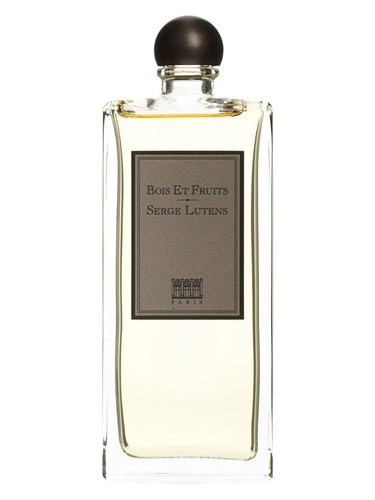
First Impressions
The first spray of Bois et Fruits feels like stepping into an orchardist''s dream—not the sun-drenched, tourist-friendly version, but the private, shadowed corner where overripe fruit mingles with weathered wood and the air grows thick with possibility. Created in 1992 by Serge Lutens during his legendary tenure at Shiseido''s Palais Royal boutique, this is a fragrance that refuses easy categorization. It announces itself with that distinctly Lutensian philosophy: take an accord everyone thinks they understand—in this case, fruit—and deconstruct it until it becomes something altogether more complex, more adult, more interesting.
The fruit here isn''t the candied, synthetic explosion that would later dominate the market. Instead, it arrives with weight and texture, shadowed by cedar and an almost creamy richness that suggests both indulgence and restraint. There''s an immediate warmth, a sense of being enveloped rather than announced.
The Scent Profile
While Serge Lutens has kept the specific note breakdown close to the chest—a characteristic move for a perfumer who preferred discussing emotion over ingredient lists—the fragrance''s DNA reveals itself clearly through wear. The dominant fruity accord (registering at full intensity) manifests as a dried, almost compote-like fruitiness rather than anything fresh or juicy. Think figs split open on a wooden board, plums left to concentrate in the autumn air, perhaps a whisper of apricot''s fuzzy sweetness.
This fruit is immediately supported by a substantial woody backbone (50% intensity), likely cedar given Lutens'' well-documented obsession with the material during this period. The wood doesn''t compete with the fruit—it provides architecture, a frame that prevents the composition from collapsing into simple sweetness. At 47%, the sweet accord is present but measured, never tipping into dessert territory.
What makes the fragrance fascinating is its supporting cast: a powdery quality (25%) that adds softness and vintage elegance, and a lactonic element (13%) that brings an almost milky, skin-like warmth. There''s even a subtle sour note (5%)—barely perceptible but crucial—that adds tension and prevents the sweetness from becoming monotonous. As it develops, these elements weave together into something that feels less like distinct phases and more like a continuous evolution, the fruit slowly caramelizing against the wood, the powder emerging like a whisper in the base.
Character & Occasion
Bois et Fruits is unequivocally an autumn fragrance, with community consensus pointing to fall as its ideal season (100%). This makes perfect sense—it captures that liminal moment when summer''s abundance gives way to winter''s introspection, when fruit becomes richer and air grows cooler. Winter follows as a strong secondary season (54%), while spring (47%) and summer (41%) are certainly possible for those who love its warmth year-round, though the richness might feel heavy in genuine heat.
The fragrance skews heavily toward daytime wear (97%), making it an excellent choice for work, creative pursuits, or those long autumn walks where you want something comforting but not cloying. That said, 39% night-time suitability suggests it has enough depth and sophistication for evening occasions—perhaps dinner parties or cultural events where you want presence without bombast.
This is decidedly marketed as feminine, and its character supports that positioning with its fruit-forward sweetness and powdery softness. However, those familiar with Lutens'' work know his "feminine" fragrances often transcend gender conventions through their intellectual construction and refusal to flatter cheaply.
Community Verdict
With a solid 4.04 out of 5 rating across 604 votes, Bois et Fruits enjoys strong appreciation from those who''ve encountered it. This is a respectable score that suggests consistent satisfaction rather than polarizing love-or-hate reactions. The sample size is meaningful—604 reviewers represent a substantial community voice, particularly for a fragrance from the early 1990s that wasn''t subjected to massive commercial distribution.
The rating suggests a fragrance that rewards those who seek it out, that delivers on its promise without necessarily causing obsessive devotion. It''s the work of a mature artist confident enough not to shout.
How It Compares
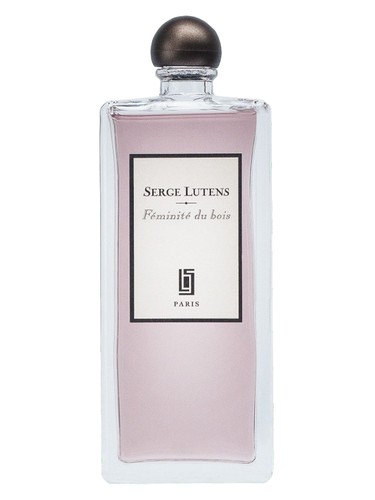
Bois et Fruits exists within a fascinating constellation of perfumes. Its closest relative is obviously Feminité du Bois (also Serge Lutens/Shiseido), which shares the cedar foundation and explores similar fruity-woody territory. Where this fragrance distinguishes itself is in its fuller embrace of fruit—Feminité maintains more restraint, more focus on the wood itself.
The comparison to Arabie (another Lutens creation) points to shared warmth and spice potential, while the mentions of Poison and Dolce Vita by Dior suggest a kinship with the opulent, unapologetic femininity that defined luxury perfumery in the late ''80s and early ''90s. The Angel comparison is particularly telling—both fragrances reimagined sweetness for a sophisticated audience, though they took radically different paths to get there.
The Bottom Line
Bois et Fruits represents Serge Lutens at a pivotal moment—working within the confines of Shiseido''s brief but already developing the distinctive voice that would define his independent line. At 4.04 out of 5, it''s a fragrance that delivers consistent pleasure without claiming masterpiece status, and there''s honesty in that positioning.
The challenge for modern wearers is availability—this isn''t widely distributed, and tracking it down requires commitment. For those who manage it, you''ll find a fragrance that feels simultaneously of its era and timelessly constructed. It''s for those who want fruit without juvenility, sweetness without simplification, warmth without weight.
If you''ve ever wished your fruity fragrances had more substance, more shadow, more story—this is your answer. Not every perfume needs to be revolutionary to be worth wearing. Sometimes being beautifully, intelligently itself is enough.
KI-generierte redaktionelle Rezension