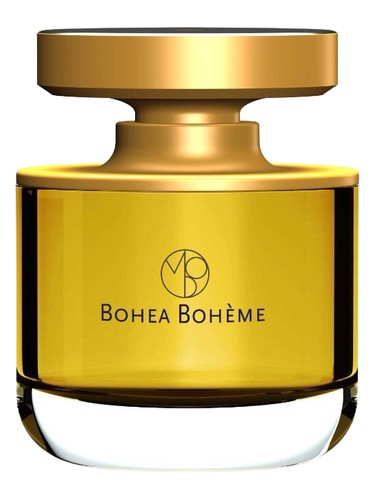
First Impressions
Bohea Bohème announces itself with an authority that would make lesser fragrances blush. The opening is a study in contrasts — simultaneously sharp and soft, familiar yet utterly strange. There''s an immediate woodiness that dominates the composition, not the polished cedar of a gentleman''s study, but something wilder, more primal. It arrives with aromatic intensity, cutting through the air with fresh spicy facets that suggest crushed herbs and bark stripped from living trees. This is Mona di Orio''s posthumous love letter to the unconventional, released in 2016 as part of her legacy collection, and it wears its bohemian heart on its sleeve from the very first moment.
The name itself — Bohea Bohème — conjures images of the black tea that once commanded astronomical prices in European salons, merged with the artistic rebellion of La Bohème. It''s a fitting marriage, because this fragrance smells like someone steeped rare tea leaves in forest resin and called it art.
The Scent Profile
Without the roadmap of specified notes, Bohea Bohème reveals itself through its accord architecture — and what architecture it is. The woody accord registers at full intensity, creating a backbone that never wavers throughout the wear. But this isn''t monolithic; it''s a woody composition with layers.
The aromatic character, scoring at 85%, provides the intellectual edge. There''s something medicinal in the best possible way, reminiscent of pine needles crushed underfoot, perhaps sage smoldering in a copper bowl. The fresh spicy element at 78% weaves through these woods like smoke, adding dynamism and preventing the composition from settling into drowsy woodiness. It prickles and stimulates, keeping you alert to every shift.
What makes Bohea Bohème particularly interesting is what lurks beneath the dominant accords. Green notes emerge at 39%, suggesting sap and broken stems rather than lawn clippings. There''s a living quality here, as if the woods are still growing rather than already chopped and cured. The fresh accord at 38% keeps everything from becoming too heavy or resinous, while warm spices at 37% add just enough heat to remind you that someone human passed through these woods and left a trace.
The evolution isn''t so much a journey from top to base as it is a slow revelation — like walking deeper into a forest as your eyes adjust to the dim light. The intensity remains constant, but your perception shifts. What seemed sharp becomes comforting. What felt green becomes amber-tinged. It''s a perfume that rewards patience.
Character & Occasion
Here''s where Bohea Bohème breaks the mold entirely. The data shows this as an all-seasons fragrance, and for once, that''s not marketing speak. The woody-aromatic core provides enough substance for winter while the fresh and green accords keep it from suffocating in summer heat. Spring and autumn seem like natural homes, but summer evenings and winter afternoons work equally well.
The day-night data tells an interesting story: there''s no clear preference, suggesting this is a fragrance that transcends temporal boundaries. It''s equally at home in a morning meeting as it is at a midnight gallery opening. This is clothing for the mind rather than the occasion.
Marketed as feminine, Bohea Bohème laughs at such constraints. This is a fragrance for anyone who finds traditional gendered scents too limiting, who wants their perfume to suggest complexity rather than compliance. It''s for the wearer who views fragrance as artistic expression rather than social lubricant.
Community Verdict
With a rating of 3.97 out of 5 from 342 votes, Bohea Bohème occupies interesting territory. It''s not a crowd-pleaser racing toward universal acclaim, nor is it a polarizing experiment. Instead, it''s found its audience — people who understand what Mona di Orio was attempting and appreciate the execution. The vote count suggests a dedicated following rather than mass-market appeal, which feels entirely appropriate for a fragrance this uncompromising.
This rating indicates a fragrance worth exploring rather than blind-buying, one that demands sampling and consideration. The near-four-star consensus suggests quality and craft, with the slight restraint likely coming from those expecting something more conventional or immediately accessible.
How It Compares
The comparison set reads like a syllabus for Advanced Woody Aromatics. Serge Lutens'' Fille en Aiguilles shares the coniferous intensity, while Lalique''s Encre Noire explores similar dark forest territory. Tauer''s 02 L''Air du Desert Marocain and L''Artisan Parfumeur''s Timbuktu both trade in exotic, aromatic woodiness that refuses easy categorization.
What distinguishes Bohea Bohème is its particular balance — it''s greener than Encre Noire, less overtly desert-inspired than the Tauer, more cohesive than Timbuktu''s scattered spice-market energy. The inclusion of Vanille by Mona di Orio in the comparison set is telling; it shares the brand''s signature approach to familiar materials, treating them as starting points for abstraction rather than destinations.
The Bottom Line
Bohea Bohème isn''t trying to be your everyday signature scent, and that''s precisely its strength. This is a fragrance for those moments when you want to wear your complexity on your skin, when generic appeal feels like defeat. At just under four stars from a community that''s actually sampled it, you''re looking at a well-executed artistic vision rather than a safe commercial bet.
The price point for Mona di Orio fragrances reflects niche positioning, so approach this as an investment in olfactory education rather than casual pleasure. It''s worth exploring if you find yourself drawn to the intersection of woods, aromatics, and just enough spice to keep things interesting. Sample first — this isn''t love at first sniff for everyone, but for those it speaks to, it speaks volumes.
KI-generierte redaktionelle Rezension