First Impressions
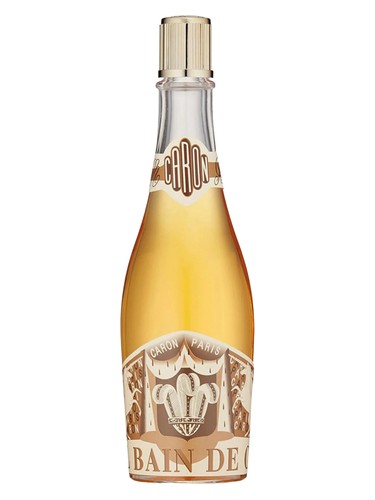
The first spray of Bain de Champagne—also known as Royal Bain de Caron—feels like stepping into a grand Parisian salon in the 1920s, where silk rustles against mahogany and champagne bubbles catch the light. But don't let the effervescent name fool you: this is no light, sparkling affair. Within moments, the delicate lilac and rose opening reveals its true intention, a prelude to something far richer and more mysterious. These florals arrive with an almost Victorian propriety, soft and genteel, before the fragrance begins its transformation into something altogether more seductive. It's a champagne bath, certainly, but one infused with amber honey and resins that cling to the skin like liquid gold.
The Scent Profile
Caron's composition opens with a distinctive pairing of lilac and rose that immediately announces its heritage. The lilac is particularly notable—a note that was having its moment in the 1920s but has since become relatively rare in modern perfumery. It brings a fresh, slightly green floral quality that feels both nostalgic and refined. The rose adds depth without dominating, creating a floral bouquet that reads as polished rather than overtly romantic.
But the real magic happens as the heart notes emerge. Opoponax, benzoin, and incense form a resinous trinity that transforms this fragrance from a simple floral into an amber powerhouse. The opoponax, sometimes called sweet myrrh, brings a warm, slightly spicy balsamic quality that bridges the floral opening with what's to come. Benzoin adds a vanilla-adjacent sweetness with hints of caramel and cinnamon, while the incense weaves through with its smoky, slightly mystical character. This heart is where Bain de Champagne reveals its century-old sophistication—these aren't mere supporting players, but the structural pillars of the entire composition.
The base is where the fragrance settles into its true identity as an amber-dominant experience. Vanilla, amber, sandalwood, musk, and cedar create a foundation that's simultaneously plush and grounded. The vanilla reads as rich rather than gourmand, supported by the amber's golden warmth. Sandalwood and cedar provide a woody backbone that prevents the sweetness from becoming cloying, while musk adds skin-like intimacy. The result is a base that envelops rather than projects, creating an aura of understated luxury that can last for hours.
Character & Occasion
With fall wearing suitability at 87% and winter at 81%, Bain de Champagne clearly thrives in cooler weather. The amber and vanilla accords—registering at 100% and 45% respectively—demand the crisp air of autumn or the bite of winter to truly shine. In the heat of summer (52% suitability), those same qualities that make it enchanting in November might feel heavy. Spring at 72% represents a sweet spot for those who want to carry this warmth into milder days.
The day/night data reveals something intriguing: this is overwhelmingly a daytime fragrance (100%) that still maintains 60% appeal for evening wear. This versatility speaks to Bain de Champagne's restraint—despite its amber dominance and resinous heart, it never becomes a bombastic statement scent. Instead, it offers sophistication suitable for both a museum afternoon and a intimate dinner. It's the rare fragrance that can accompany you from a business meeting to evening cocktails without feeling out of place in either context.
This is a feminine fragrance for someone who appreciates vintage sensibilities without being constrained by them. If you're drawn to the elegance of classic perfumery but want something less obvious than the mainstream options, Bain de Champagne offers complexity without ostentation.
Community Verdict
With a rating of 4.04 out of 5 based on 724 votes, Bain de Champagne enjoys solid appreciation from those who've discovered it. This is a respectable rating that suggests consistent quality rather than polarizing controversy. The fragrance seems to deliver on its promises—those who seek out a vintage Caron amber generally find satisfaction. The vote count itself indicates that while this isn't a mainstream blockbuster, it has found its devoted audience over the past century. For a fragrance that's been in circulation for 100 years, maintaining this level of approval suggests remarkable staying power in both formulation and appeal.
How It Compares
Bain de Champagne sits comfortably among the amber elite. Its kinship with Chanel's Coco Eau de Parfum makes sense—both offer baroque richness tempered by French refinement. The comparison to Yves Saint Laurent's Opium (1977) highlights the spicy, resinous aspect, though Bain de Champagne is generally softer and more demure. Dior's Dune shares that balsamic quality, while Estée Lauder's Youth-Dew and Cacharel's LouLou represent the broader family of warm, enveloping orientals.
What distinguishes Bain de Champagne is its vintage authenticity—this isn't a modern interpretation of classic perfumery, but the real thing, with all the polish and presence that implies. Where many similar fragrances lean heavily into either the floral or the amber aspects, Caron manages to balance both throughout the entire development.
The Bottom Line
Bain de Champagne is a masterclass in vintage French perfumery that has earned its 4.04 rating through a century of consistent elegance. At its core, this is an amber-vanilla experience elevated by masterful use of resins and a surprisingly fresh floral opening. It won't revolutionize your fragrance wardrobe, but it will add depth and historical continuity to any collection that values craftsmanship.
If you're someone who finds Coco too powdery, Opium too spicy, or Youth-Dew too heavy, Bain de Champagne might be your Goldilocks solution. It offers vintage character without feeling dated, warmth without weight, and complexity without confusion. Best suited for fall and winter days when you want to feel simultaneously cocooned and polished, it's a fragrance that whispers rather than shouts—and sometimes, that's exactly the right volume.
KI-generierte redaktionelle Rezension