First Impressions
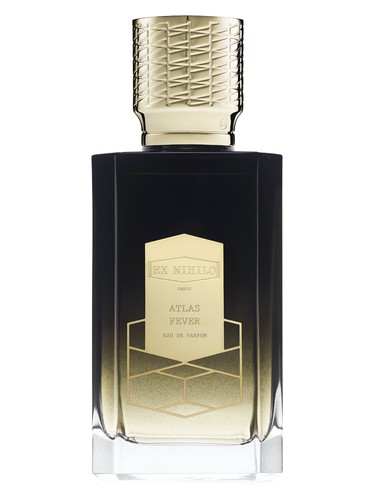
The first spray of Atlas Fever delivers an arresting contradiction: the sacred solemnity of church incense colliding with the bright tartness of crushed red berries. It''s an unexpected pairing that Ex Nihilo executes with remarkable finesse. The incense doesn''t brood in heavy, resinous darkness—instead, the berries lift it, adding a jammy sweetness that suggests mulled wine simmering on a winter stove. Within moments, you understand this isn''t a fragrance that plays by conventional rules. It''s both austere and indulgent, spiritual and sensual, managing to feel like a cashmere blanket draped over cathedral stone.
This opening acts as both invitation and warning: Atlas Fever demands your full attention. It''s too complex for background wear, too distinctive to fade into the olfactory wallpaper of daily life. From that first moment, it announces itself as a fragrance with something to say.
The Scent Profile
The journey from top to base reveals Ex Nihilo''s architectural vision. Those opening notes of incense and red berries create an intriguing tension that refuses to resolve quickly. The incense carries a smoky, almost mystical quality—think of frankincense in a brass thurible, wisps of gray smoke curling upward. The red berries, meanwhile, provide acidity and brightness, preventing the composition from collapsing into somber heaviness.
As the fragrance settles into its heart, narcissus emerges with its characteristic green-floral-slightly narcotic personality. It''s a subtle transition rather than a dramatic shift, adding a delicate honeyed depth that bridges the gap between the animated opening and the enveloping base. Narcissus can be tricky—too much and it becomes soapy or overwhelming—but here it serves as an elegant connector, its powdery facets beginning to hint at what''s to come.
The base is where Atlas Fever truly reveals its identity as a woody-vanilla powerhouse. Vanilla and tonka bean create a creamy, almost gourmand foundation, but they''re kept firmly in check by an impressive roster of woods: sandalwood brings its characteristic smooth creaminess, while oak, guaiac wood, and cedar provide structure, depth, and a subtle smokiness that echoes the opening incense. This isn''t vanilla as dessert—it''s vanilla as architecture, supporting and supported by woody bones that keep everything grounded. The result is a scent that''s 100% woody in its soul, with vanilla playing an essential but supporting role at 55%, creating a balance that feels both cozy and sophisticated.
Character & Occasion
Atlas Fever is unambiguously a cold-weather fragrance. The community data tells a clear story: this is a perfume born for winter (100%) and fall (99%), with only modest relevance for spring (37%) and minimal presence in summer (17%). It makes perfect sense—this is a fragrance of fireplaces and wool coats, of evenings when breath turns visible and skin craves warmth.
The day-versus-night split reveals interesting versatility. While it performs admirably during daylight hours (56%), Atlas Fever truly comes alive after dark (78%). Those woody-vanilla-amber accords gain depth and intimacy as temperatures drop and lights dim. Picture it for dinner reservations at that new bistro, gallery openings on crisp autumn evenings, or simply as your signature scent for winter weekends when you want to feel wrapped in something beautiful.
Though marketed as feminine, Atlas Fever occupies that increasingly common territory where gender distinctions feel irrelevant. The woody dominance and incense-berry opening give it a unisex appeal that will attract anyone drawn to sophisticated, complex compositions that lean warm and enveloping rather than fresh or floral.
Community Verdict
With a solid 4.16 out of 5 rating based on 841 votes, Atlas Fever has clearly resonated with a substantial audience. This isn''t a niche curiosity with a tiny cult following—it''s a fragrance that''s been tested, worn, and appreciated by hundreds of evaluators who''ve collectively affirmed its quality. That rating suggests broad appeal without being so universally beloved as to feel safe or boring. There''s character here, and while it may not be for everyone, those who connect with its woody-vanilla-incense personality tend to connect deeply.
How It Compares
Ex Nihilo positions Atlas Fever in conversation with some of the most celebrated woody-vanilla fragrances of the modern era. The comparison to Maison Martin Margiela''s By the Fireplace is apt—both evoke warmth and coziness, though Atlas Fever takes a more complex, incense-driven route rather than the straightforward chestnut-vanilla approach. The mention of By Kilian''s Angels'' Share speaks to shared DNA in the woody-spirit category, while Gypsy Water by Byredo suggests common ground in balancing sweetness with smoke.
The nod to Baccarat Rouge 540 is particularly interesting, as that Maison Francis Kurkjian phenomenon has become the touchstone for modern woody-amber-vanilla compositions. Atlas Fever offers a less saccharine, more overtly woody alternative for those who find BR540 too sweet or ubiquitous. And the connection to Nishane''s Ani reinforces the vanilla-spice warmth these fragrances share.
What distinguishes Atlas Fever is that unusual opening—the incense-berry combination gives it a unique entry point that none of its competitors quite replicate.
The Bottom Line
Atlas Fever succeeds as a sophisticated cold-weather fragrance that delivers complexity without confusion. It''s proof that Ex Nihilo understands how to construct perfumes that feel both artistic and wearable—challenging enough to hold your interest, but never so abstract that they alienate. The 4.16 rating reflects honest quality: this is a very good fragrance, well-executed, with a clear point of view.
Who should seek this out? Anyone building a winter fragrance wardrobe deserves to test Atlas Fever, particularly if you''re drawn to woody-vanilla compositions but want something with more edge than typical comfort scents provide. If you''ve loved any of its comparable fragrances but crave something slightly left of center, this deserves a wearing.
It''s not the most groundbreaking fragrance Ex Nihilo has produced, but it''s a confident, well-crafted addition to the modern woody-vanilla canon—one that proves you can be both cozy and complex.
KI-generierte redaktionelle Rezension